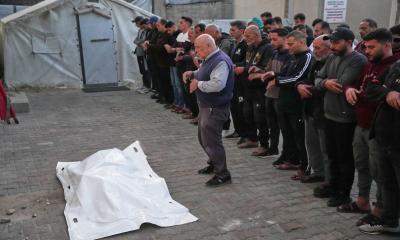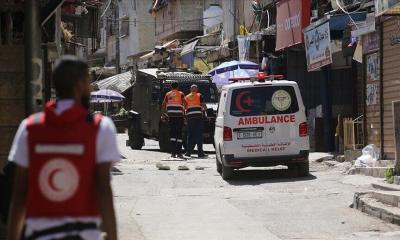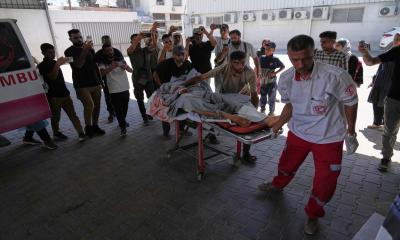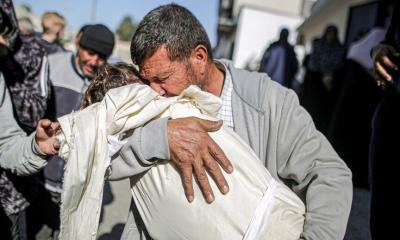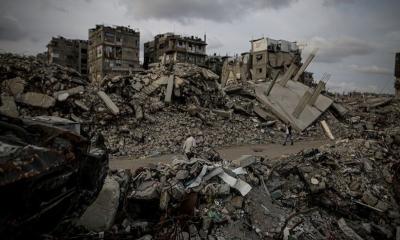
Palestinian Civil Defence crews in Gaza City heard an explosion nearby on November 3 and rushed to respond. Instead of taking a fire engine, which was the only vehicle available at the time, they had to grab their equipment and run on foot.
Abdullah al-Majdalawi, a Civil Defence field officer, described responding to an Israeli attack near the al-Qattan Centre. It took about 10 minutes for the crew to reach the site on foot, carrying their equipment, and then carrying injured people back alongside recovering a body.
Al-Majdalawi said the breakdown of emergency vehicles severely affects rescue teams’ ability to reach people quickly. In a separate incident in southern Gaza City’s Sabra neighbourhood, the vehicle a team was using broke down while responding to an air strike, leading to delays that left several people dead and others critically injured.
During another mission in 2024, the crew had to rely on a man with a donkey-drawn cart to transport them and their equipment. The only dedicated rescue vehicle in Gaza governorate, a 20-year-old Toyota Hilux pick-up truck, has been out of service for weeks after being worn down by years of use and intense workload during the war.
Crews have tried patching tyres with flour dough when proper repairs were impossible. The vehicle needs a power steering pump, tyres, a turbo system, and proper lights for night missions.
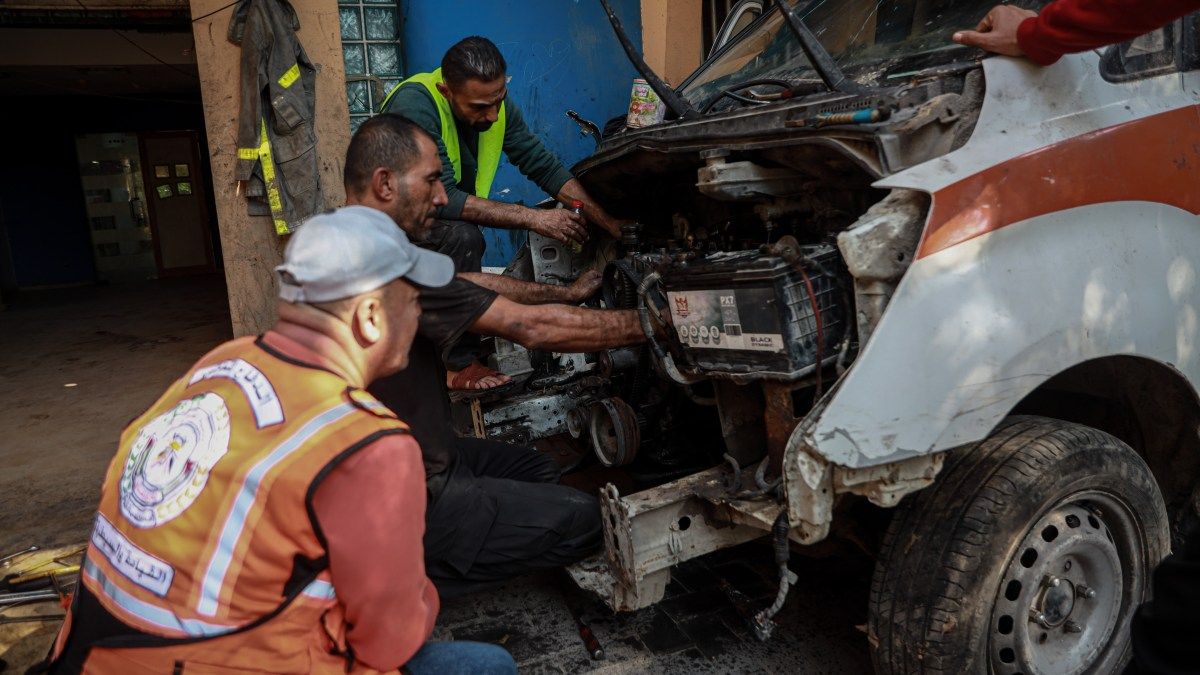
Raed al-Dahshan, director of Gaza City’s Civil Defence, said more than 85 percent of the department’s vehicles are out of operation, leaving only about 15 percent working across the territory. Many vehicles have been in service since 1994, when the Palestinian Authority was established.
International fire-service guidelines recommend replacing front-line fire engines after 15 to 20 years of operation. Repairing the vehicles has become difficult because local workshops have limited capacity and replacement parts are unavailable.
Abd al-Fattah al-Nimra, a maintenance officer at the department’s workshop, said mechanics resort to temporary fixes because parts are blocked from entering. Israeli restrictions on spare parts and engine oil since October 2023 have crippled the fleet.
The United Nations Office for the Coordination of Humanitarian Affairs warned in a May 1 report that restrictions on engine oil and spare parts were severely impacting humanitarian operations and causing vehicles to break down beyond repair.
With winter under way, officials fear heavy rain and strong winds will weaken damaged structures and create more emergencies. Heavy rains in early November already caused building collapses and flooded displacement sites, forcing Civil Defence teams to handle most distress calls with guidance over the phone.