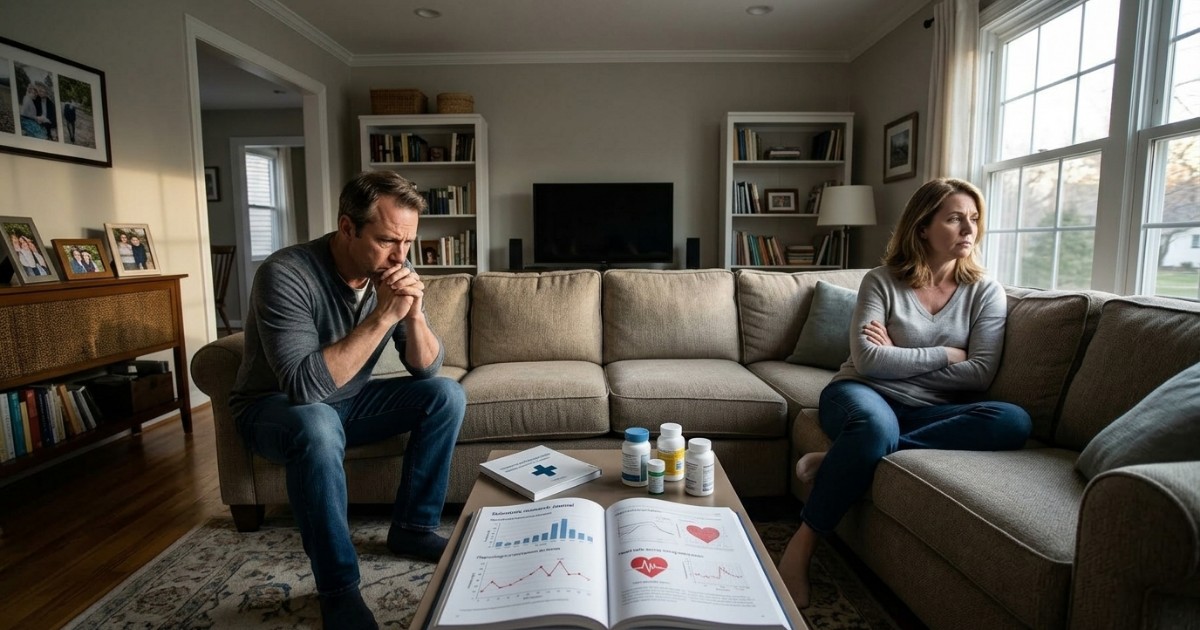
Marital conflict and chronic relationship distress inflict severe, measurable damage on human physical and psychological health, according to contemporary psychological research. Repeated toxic disputes trigger insomnia, muscular strain, and elevated cardiovascular complications. Family researchers confirm that these volatile domestic environments leave children and adults vulnerable to acute emotional disorders. Medical assessments now classify prolonged relational distress as a mortality risk factor equal to or exceeding chronic smoking or lack of physical exercise.
Healthy marital partnerships actively extend human longevity.
Carrie Cole, a research director and psychologist at The Gottman Institute in Seattle, identified four specific relational habits that accelerate structural breakdowns: contempt, excessive criticism, aggressive defensiveness, and complete stonewalling. Empirical research demonstrates that persistent criticism from a partner significantly elevates the statistical probability of an earlier death. Cole noted that these harmful behavioral patterns remain reversible whenever both parties deliberately commit to mutual remediation.
Longitudinal findings directed by psychologist John Gottman revealed that sixty-nine percent of couples continue arguing over identical unresolved disagreements four years after initial assessments. Recurring friction points typically involve domestic finances, parenting strategies, personal intimacy, and household maintenance. Unequal division of physical chores directly increases divorce rates, whereas cooperative labor and joint financial planning foster long-term emotional resilience.
Clinical trials establish that couples therapy delivers positive outcomes for approximately seventy percent of participating partners. Jay Lebow, a clinical professor of psychology at Northwestern University`s Family Institute, explained that chronic distress fundamentally erodes natural empathy between partners. Re-establishing basic communication mechanics becomes the primary clinical hurdle, requiring individuals to analyze collective dynamics rather than personal grievances. Lebow stressed that participant motivation functions as the definitive variable governing lasting clinical recovery.
Specific communicative behaviors provide objective evidence of therapeutic progression. Progress appears when a partner openly acknowledges their spouse`s emotional reality despite personal disagreement, signaling authentic acceptance of influence.
A second critical indicator emerges when couples preserve intellectual curiosity by asking questions rather than leveling accusations. Cole cited a clinical case involving spouses raised in severe poverty who clashed over spending and saving priorities. Once therapy illuminated how childhood privation dictated their adult philosophies, both individuals constructed a collaborative budgetary compromise. Even during unavoidable separations, professional mediation systematically minimizes hostility, directly insulating dependent children from severe emotional trauma.