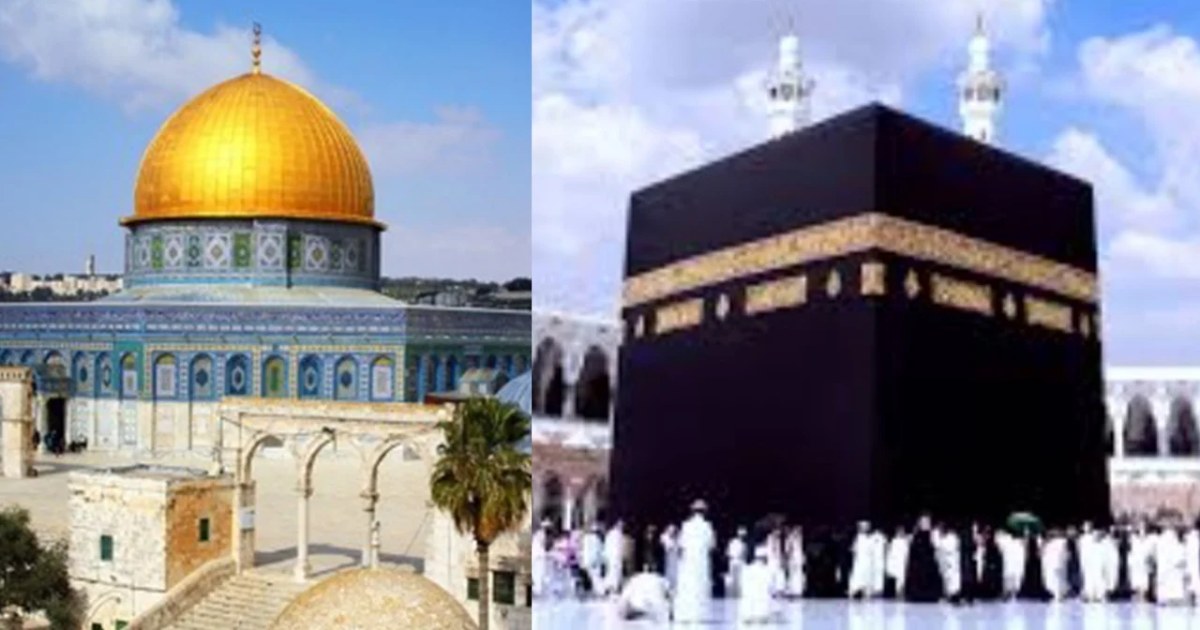
The change of the Qibla (the direction of prayer) from Jerusalem to Makkah is one of the most transformative events in Islamic history. Occurring approximately sixteen months after the Hijrah (migration) to Madinah, during the middle of the month of Shaban, this was not merely a change in physical orientation. Rather, it represented a profound spiritual milestone that finalized the identity of the Muslim Ummah and established a central point for Islamic worship. This divine directive redefined the spiritual map of the world and linked the final message of Islam with the ancient legacy of the House of Allah.
Two events in the life of Prophet Muhammad (peace be upon him) hold the highest significance regarding Salah (prayer): the Miraj (Ascension) and the Change of Qibla. Most Islamic scholars agree that the Miraj occurred about a year before the Hijrah, during which the five daily prayers were established. For about sixteen months in Madinah, the early Muslims faced Al-Aqsa Mosque in Jerusalem during their prayers. However, the Prophet (peace be upon him) held a deep, silent longing to face the Kaaba in Makkah, the house built by his forefather, Prophet Ibrahim (AS). The revelation to change the direction finally came during a congregational prayer in Madinah, marking a pivotal shift for the believers.
The Qibla is more than just a direction; it is a symbol of global unity for the Muslim Ummah. Regardless of nationality, race, or ethnicity, millions of Muslims across the globe align themselves toward the same center five times a day. This practice acts as the "heartbeat" of the Ummah, maintaining a rhythmic spiritual connection that transcends geographic boundaries. It is the ultimate manifestation of Monotheism (Tawhid)—one God, one religion, and one united community facing one sacred house. The Kaaba serves as an anchor for the soul, ensuring that every Muslim, no matter how far from the desert of Arabia, remains connected to the spiritual roots of their faith.
The transition from Jerusalem to Makkah also created a beautiful bridge between the various lineages of the Prophets. On the night of Miraj, the Prophet Muhammad (peace be upon him) led all the previous Prophets in prayer at Al-Aqsa Mosque. This event connected the center of the Ishmaelite lineage in Makkah with the center of the Israelite lineage in Jerusalem. By initially praying toward Jerusalem and then shifting toward Makkah, Islam integrated the teachings of all previous Prophets while establishing its final, complete form. This change was also a test of faith, as mentioned in the Quran, to distinguish those who followed the Messenger of Allah without hesitation from those who clung to old tribal or religious prejudices.
According to the Quran, the change of Qibla also marked the declaration of Muslims as a "Midmost Nation" (Ummatan Wasatan)—a balanced community of moderation. It signaled that the Prophet (peace be upon him) was not sent for a specific tribe or region but as a mercy to all of humanity. Makkah, being the center, now serves as the platform from which this Ummah calls the world to the path of Allah. Ultimately, the change of Qibla was a divine announcement of the completion of Islam, establishing the Holy Kaaba as the focal point of the world’s most final and perfected religion. It was a call to return to the pure, original faith of Ibrahim (AS), now finalized for all generations to come.