Kamal Mohammed has spent years managing his diabetes, but prolonged power cuts in the al-Taqaddum neighbourhood of Port Sudan have made his life catastrophic. Kamal relies on regular insulin injections to manage his condition. Unstable electricity supplies make it difficult for him to keep track of his doses or store the medication at the required temperature.
"I need an insulin dose every day, but sometimes I have to skip it when power cuts last so long that the refrigerator loses its cooling," he said on Saturday.
Kamal is one of millions of civilians affected by the war between the Rapid Support Forces and the Sudanese Armed Forces, which broke out in April 2023. More than 14 million people have been displaced since the conflict began, including about 4.5 million who fled to neighbouring countries. More than 150,000 people are believed to have been killed in the fighting.
The conflict between the two former military allies has increasingly turned into a campaign where civilians and civilian infrastructure are targets. Drone attacks killed more than 160 people in western Sudan in October. Hospitals, displacement camps and markets have also come under fire.
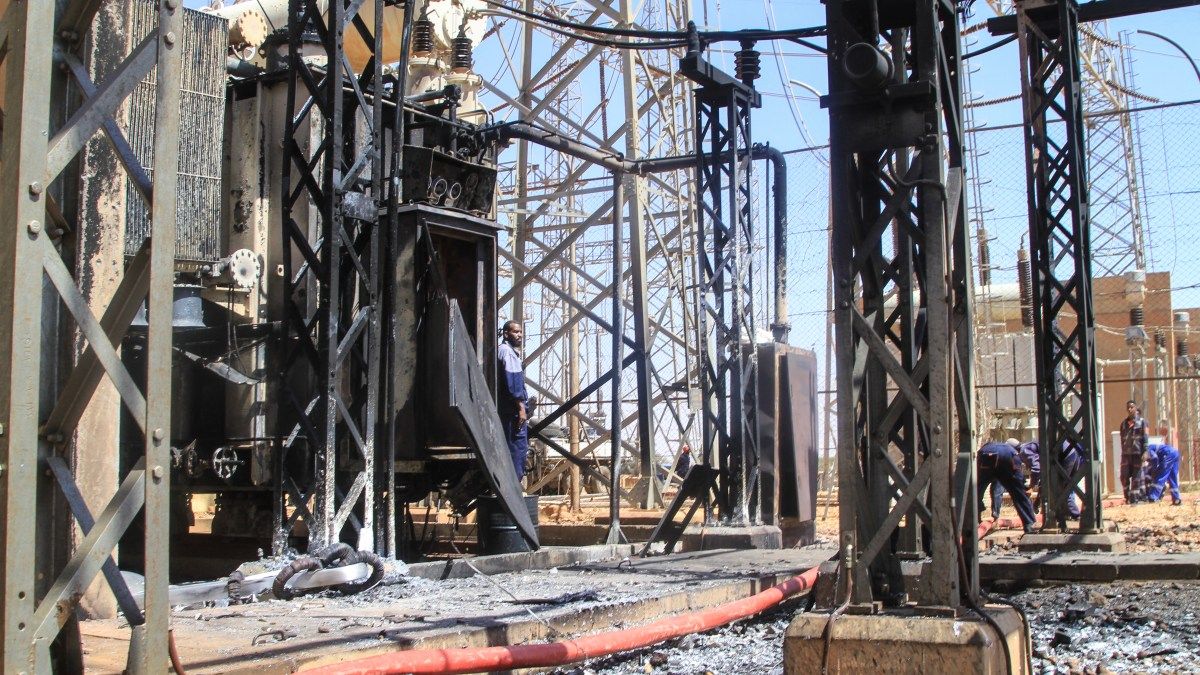
The Rapid Support Forces have intensified attacks on power stations around Khartoum state over the past month, creating an energy crisis in the capital. Blackouts can last anywhere between six hours and a day, with no clear schedule for power restoration. Between October 20 and November 2, at least 18 attacks struck electricity infrastructure across at least nine states, leading to declining generation capacity and fuel shortages.
Repeated drone strikes have seen electricity generation fall from about 4,400 megawatts before the war to about 1,100 megawatts today. Political analyst Mohammed al-Husseini said the Rapid Support Forces stepped up attacks on civilian infrastructure after the Sudanese Armed Forces captured strategically important towns in the Kordofan region and other areas.
The attacks on power stations aimed to weaken Sudan’s economy and disrupt agricultural and industrial production, both heavily dependent on a reliable electricity supply, al-Husseini said. The strikes also sought to disrupt essential services and deepen humanitarian pressures, given electricity’s role in supplying water, maintaining communications and keeping medical facilities, including dialysis centres, operational.
The United Nations has warned about the effect these attacks are having on civilians already plunged into poverty by the war. Denise Brown, UN resident and humanitarian coordinator, urged an end to the strikes. She stated that people who need lifesaving dialysis cannot get it, women are giving birth with no lights in the hospital, and operations cannot take place.
With refrigeration no longer viable for storing insulin, some residents are buying ice to keep medicine cool, but not everyone can afford the daily expense. Kamal said his salary is no more than 150,000 Sudanese pounds, equivalent to 14.40 US dollars, while buying a small block of ice costs 7,000 pounds a day. Before the war, his monthly electricity bill was no more than 3,000 pounds, but it can now reach 100,000 pounds.
Businesses are also struggling to operate. Osama Omar, a 22-year-old engineering student, opened a laundry in the Deim Madina neighbourhood of Port Sudan six months ago to cover his living expenses. For nearly a month, supply has become increasingly unreliable, with outages lasting more than 24 hours.
"Running my business in Sudan already comes with many challenges because of the war, the unstable exchange rate and rising operating costs," Omar said, adding that power cuts have become another war that Sudanese people are being forced to fight.