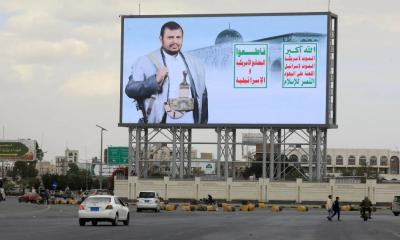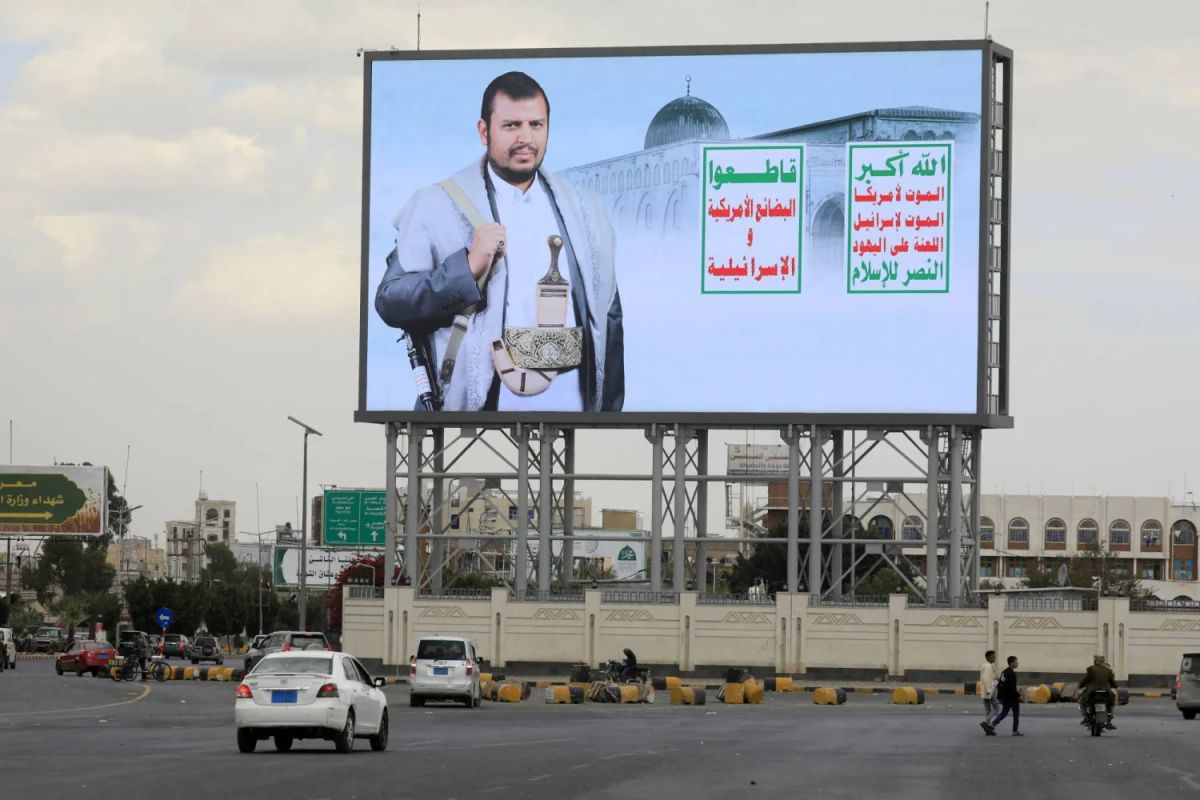
Yemen has moved beyond simply designating the Houthi movement as a terrorist organization by establishing a comprehensive legal framework to prosecute its leaders, financiers, and affiliated entities. The legislation brings weapons supply networks, recruitment, financing, and attacks on civilians and international shipping under criminal accountability. State authorities now have legal mechanisms to trace funds and assets inside Yemen and abroad.
Rashad al-Alimi, Chairman of Yemen’s Presidential Leadership Council, issued Law No. 1 of 2026 on Wednesday. The move followed formal approval by the Cabinet and Parliament. The legislation enforces the terrorist designation across the group’s political, security, military, and administrative structures, introducing administrative and financial measures alongside tools for international judicial cooperation.
The law reaches beyond direct military actions to target the organizational, economic, and media networks operating on behalf of the group. It establishes institutional and individual responsibility according to proven connections and roles. At the same time, the text introduces legal safeguards to stop the designation from imposing collective liability on civilians or legitimate activities in areas under Houthi control.
Article 4 designates the Houthi group, which calls itself Ansar Allah, as a terrorist organization across all its formations and organizational structures. This classification extends to affiliated entities, including political, security, and administrative leadership, as well as economic, media, social, cultural, civil, and partisan organizations that maintain established links to the movement.
The legislation applies regardless of whether the group uses official names or front organizations. An entity is deemed affiliated if evidence shows the Houthis created it, manage it, or exercise direct or indirect control over it. However, the law places strict restrictions on liability. The designation does not constitute an automatic conviction for any individual, nor does it remove the requirement to prove the elements of an alleged offense.
The legislation defines multiple acts as terrorist offenses. These include using armed force to seize state authority, besieging villages and cities, starving populations, planting landmines, targeting public and private property, and disrupting international shipping. Penalties range from prison terms of 20 to 30 years to the death penalty, which applies if the offenses result in permanent disability or death.
Membership in the Houthi group carries prison sentences of 10 to 15 years. Individuals holding effective leadership roles face the death penalty, whether or not they occupy a publicly declared position. Similar capital punishments apply to financing the group, supplying weapons, providing logistical support or intelligence, and recruiting individuals into military formations.
The legislation mandates severe punishment for child recruitment, defined as involving anyone under the age of 18. It targets the exploitation of schools, educational institutions, summer camps, and religious facilities for military training. The law prioritizes the rehabilitation and reintegration of exploited children and exempts them from adult standards of criminal responsibility.
To dismantle the group’s financial networks, the legislation prohibits providing premises, services, or economic resources, and bans attempts to circumvent asset freezing orders. A permanent technical unit will be established within the Office of the Prosecutor General to manage terrorist lists, examine organizational ties, and gather information with representatives from multiple government ministries and the central bank.