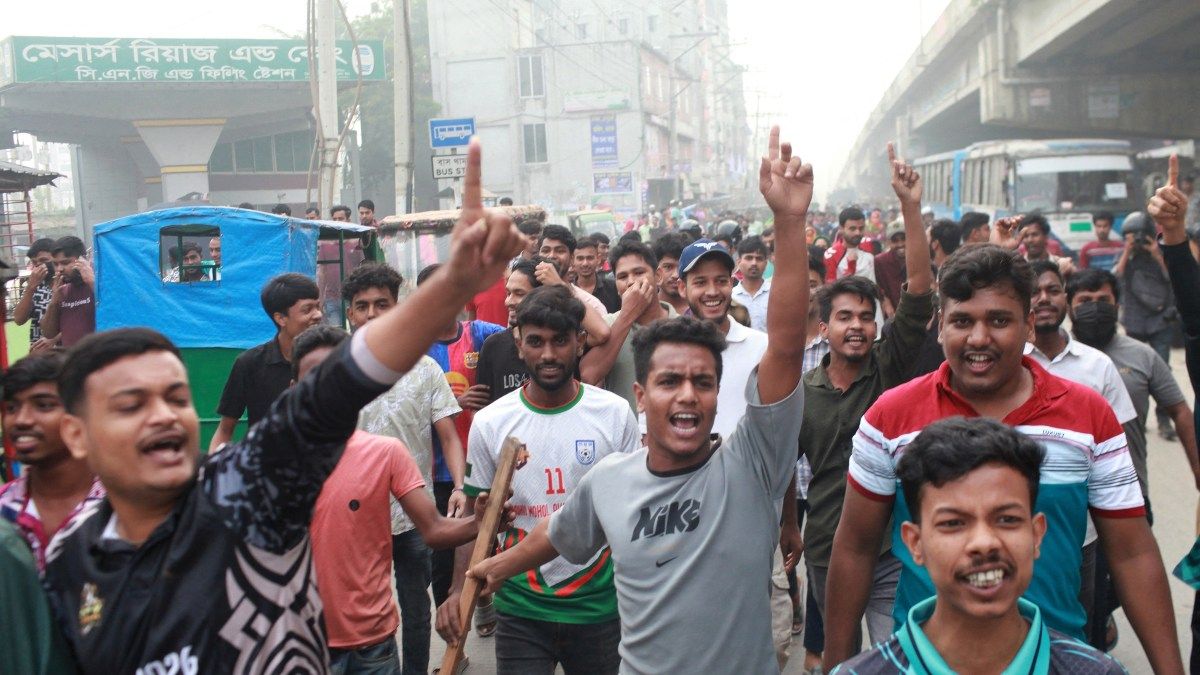
Bangladeshi police fired tear gas and stun grenades at thousands of garment workers on Tuesday. The clashes erupted after a key wage board meeting was postponed, leaving protesters angry about their pay demands.
Protesters hurled bricks, torched vehicles and blocked the main highway connecting Dhaka to the financial district of Mymensingh. Bangladesh is the world’s second-biggest garment exporter behind China, producing clothes for major international brands such as Fruit of the Loom and Levi Strauss.
Worker unrest over wages began last month and has disrupted the $38bn industry, which employs more than four million people. Employees demand a minimum monthly wage of 30,000 taka, or $240. This is a 140-percent increase from the current 12,500 taka minimum.
Workers stated they are struggling to cope with surging costs for food, housing, transport and healthcare. Sources told the AFP news agency that about 500 of the country’s 4,500 garment factories are currently shut, which has stoked unrest.
Local labour laws contain a no-work, no-pay provision. This rule permits factory owners to suspend operations and withhold wages when production suffers disruption.
"The owners seem unwilling to meet our salary demands," a 24-year-old worker named Khanom told AFP. "They are already dragging their feet."
Tensions ran high in Savar and Ashulia, two key garment hubs situated on the outskirts of Dhaka. The government established a wage board earlier this month to negotiate the pay rise, including representatives from both employers and workers.
A newly revised minimum wage is scheduled for announcement in December and will take effect in January next year. A scheduled meeting on Monday was postponed after a worker representative fell ill, according to a source from the Bangladesh Garment Manufacturers and Exporters Association.
The wage board announced that the next meeting will take place on November 23.
"We want to return to our machines," 28-year-old garment worker Rakib told AFP.
"We are not sure if the wage board members are aware of our demands," Rakib said, adding that workers feared their concerns might be left out of the revised proposal. Most factories opened on Tuesday morning before shutting down as protests spilled onto the highway.
Border Guard Bangladesh stepped up patrols across the industrial zone by deploying hundreds of personnel. "BGB headquarters has been closely observing the situation from a monitoring cell," the force said in a statement, adding that it is using drones, body-worn cameras and other devices to monitor demonstrations.
In a joint statement, the Bangladesh Garment Manufacturers and Exporters Association and the Bangladesh Knitwear Manufacturers and Exporters Association called for wage negotiations to resume as soon as possible.