Gulf Cooperation Council Secretary-General Jasem Mohamed Albudaiwi called for deeper regional and international cooperation on Thursday. He pointed to Iranian attacks on Gulf states and Houthi assaults on Saudi Arabia as proof that security, maritime navigation, and economic stability face ongoing threats.
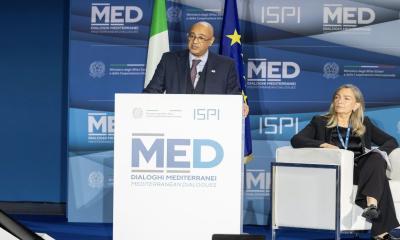
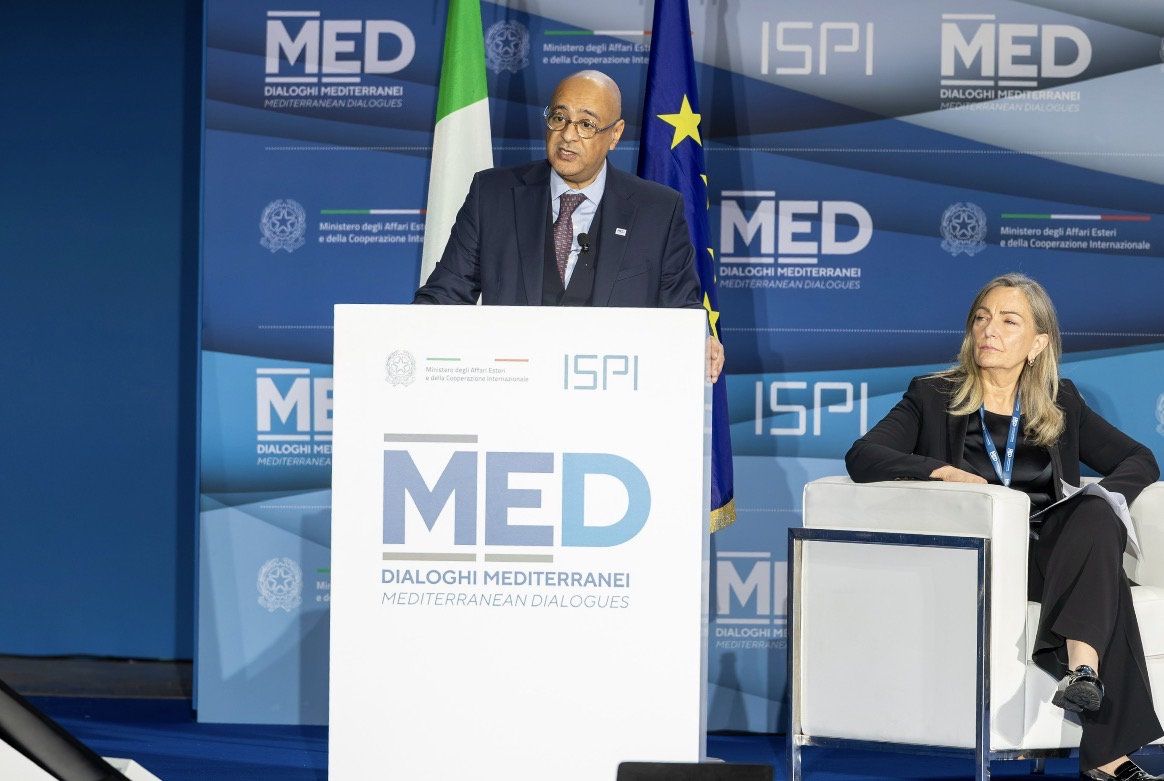
Speaking at the opening of the Mediterranean Dialogues 2026 forum in Naples, Italy, Albudaiwi argued for closer strategic ties between Gulf and Mediterranean nations. He stated that their security interests are intertwined through energy supplies, trade, investment, and vital shipping routes.
Albudaiwi thanked Mediterranean countries for standing with GCC states against Iranian and Houthi aggression. These stances reflect the depth of friendship and embody the importance of international solidarity in confronting threats targeting state security, sovereignty, and stability, he stressed.
The Gulf and Mediterranean can no longer be viewed as separate geopolitical regions, according to Albudaiwi. Their connected interests and exposure to regional crises can disrupt global energy markets, supply chains, and food security.
Developments in the Gulf directly affect energy prices in Europe, supply chains across the Mediterranean, and food security in Africa. Albudaiwi stressed that regional security and economic prosperity have become inseparable.
Securing freedom of navigation through the Strait of Hormuz, the Bab al-Mandab Strait, and the Suez Canal is a shared international interest rather than a limited regional concern. Albudaiwi said that GCC states pursue de-escalation, dialogue, and diplomacy while supporting mediation efforts and humanitarian responses.
Addressing the wider geopolitical context, Albudaiwi reiterated that lasting peace in the region requires a just settlement of the Palestinian issue based on a two-state solution. This includes establishing an independent Palestinian state along the June 4, 1967 borders with East Jerusalem as its capital.
Turning to economic ties, Albudaiwi pointed to growing cooperation between the GCC and Mediterranean countries. This includes a memorandum of understanding signed in July between the GCC General Secretariat and Italy’s Foreign Ministry covering strategic dialogue and economic cooperation.
A proposed GCC-Med9 ministerial trade meeting in Italy in January is expected to expand avenues for trade, investment, and economic integration. Albudaiwi outlined three priorities for the partnership: strengthening existing cooperation frameworks, recognising the link between security and economic prosperity, and ensuring balanced strategic relations.
Gulf-European ties already rest on established foundations, including a 1989 cooperation agreement and the recent GCC-EU summit in Brussels. He urged leaders to reinforce these mechanisms and give them greater political momentum.
European Mediterranean countries can play a larger role in strengthening GCC relations within EU institutions, Albudaiwi said. Political will is needed to turn historical ties and shared interests into concrete results.