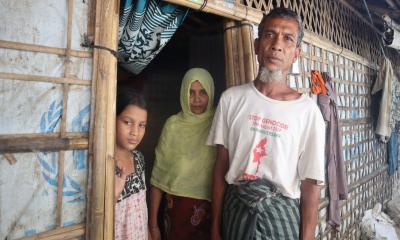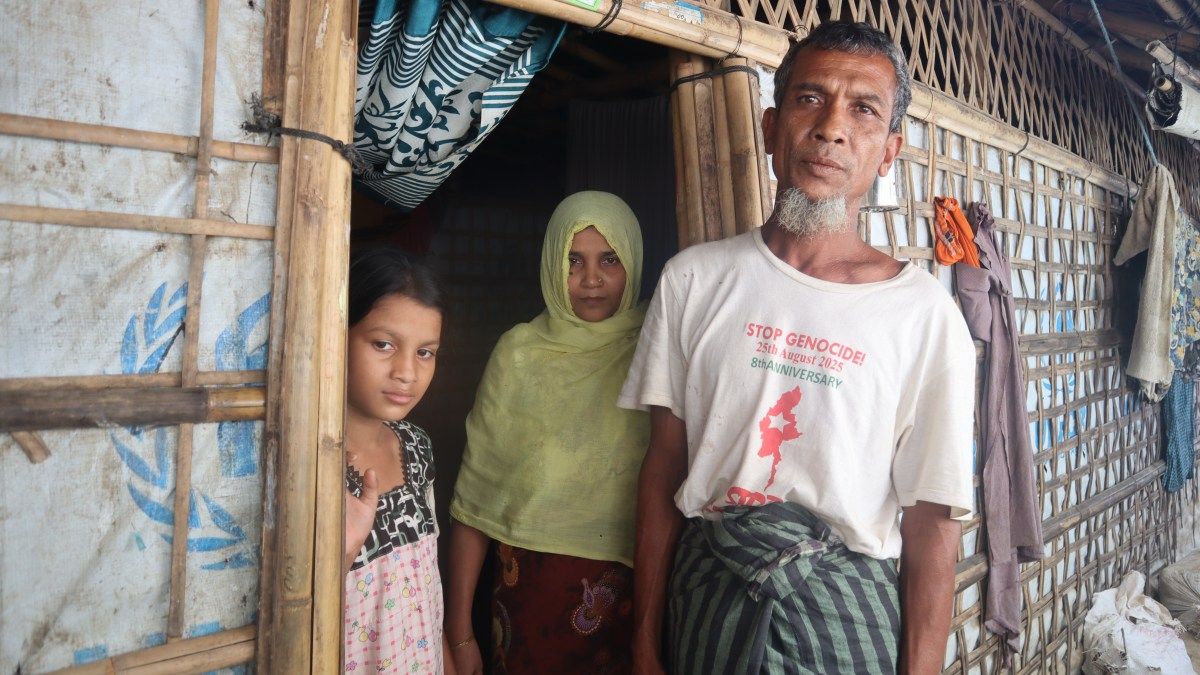
When Dil Hossain and his wife Alinnesa fled Rakhine State during the 2017 military crackdown, they carried their newborn daughter Ishara and ran for their lives. Dil’s elderly parents could not escape and were killed alongside several other relatives.
"We ran for our lives through mud, hills and water, with the baby tied to us," Alinnesa recalled.
Nearly nine years later, Ishara is growing up in a refugee camp in Cox’s Bazar, Bangladesh. Her parents depend on humanitarian aid, which has declined sharply in recent years, and wait for a chance to return home.
The family is now looking to the International Court of Justice for a verdict in a genocide case brought by The Gambia against Myanmar. The highest court of the United Nations is due to deliver its judgement on Thursday.
The Gambia filed the case on November 11, 2019, alleging that Myanmar violated the 1948 Genocide Convention through acts committed against the Rohingya by its military and security forces. The allegations focus on clearance operations that began in 2016 and escalated in August 2017, which The Gambia says involved genocidal acts intended to destroy the Rohingya.
"The court will find the truth. We suffered, so we know," Dil said, expressing confidence that the judges would recognise the atrocities.
More than 1.2 million Rohingya refugees live in Bangladesh, mostly in camps in Cox’s Bazar. Many hope a ruling in their favour will bring recognition of their suffering and strengthen their claim to return home.
Myanmar is engulfed in civil war, with the military that committed crimes against the Rohingya still in power, meaning prospects for a safe return are remote. Nurul Amin, a 25-year-old aid worker in the camps, said the contrast between his former life in Myanmar and his present circumstances was stark.
"Back home, we had houses, big trees, gardens and farmland. We could grow our own food and did not have to depend on others. We were self-sufficient," he said. "Here, we have to depend on others for almost everything. The difference is like that between heaven and earth."
Mohammad Zubair, chairman of the Arakan Rohingya Society for Peace and Human Rights, said the community was confident the court would recognise what it had endured. "They called us Bengali and committed genocide on us," he said, referring to Myanmar’s refusal to recognise the Rohingya as a community. "We witnessed the genocide with our own eyes. We suffered it. There has been enough evidence and testimony."