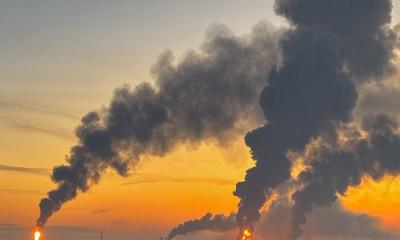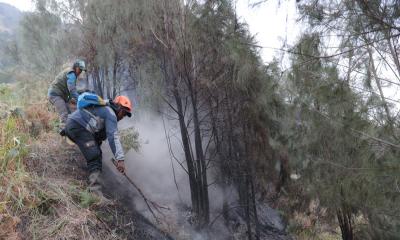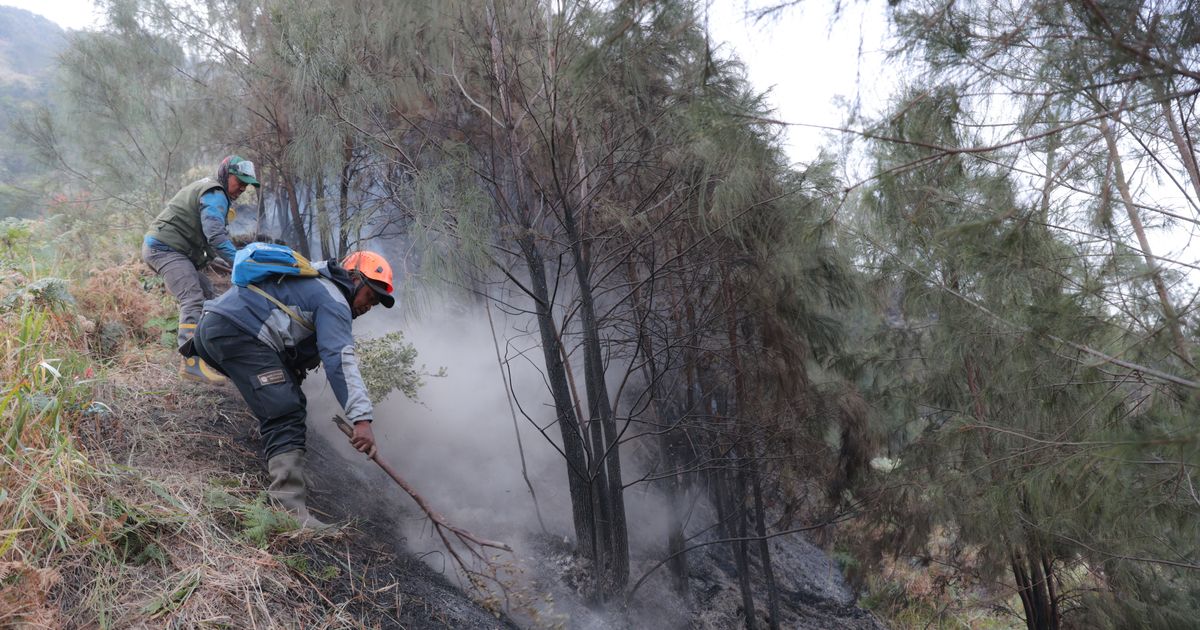
Four people died on Indonesia’s Java island while battling blazes that sent toxic smoke across southeast Asia on Thursday, authorities said on Friday. The deaths occurred in East Java’s Bromo Tengger Semeru National Park, according to the Indonesian forestry ministry. Two other individuals sustained serious burns and received medical treatment.
The ministry stated that the operation carried high risks and that personnel safety was a primary concern. The forestry department also reported a rise in hotspots across six priority provinces, where 615 high-temperature locations were detected by satellites.
The months-long fires forced school closures and triggered a surge in respiratory complaints. The smoke caused severe disruptions to regional aviation in Indonesia. Civil aviation chief Lukman F. Laisa announced that more than 2,020 flights had been affected since the haze first hit on August 11. Of those, 1,067 flights were canceled, 919 were delayed, and 18 were diverted to other airports.
Air quality plummeted across the region. Singapore topped IQAir’s live ranking of the world’s most polluted major cities on Friday, followed by Kuala Lumpur in second place and Jakarta in eighth. Singapore’s air pollution surged into very unhealthy levels, reaching around 251 on the Air Quality Index at 0400 GMT.
A local tour guide in Singapore reported that visibility was severely reduced, noting that famous landmarks were obscured and views of the national stadium were blocked. In Palangkaraya, a city in central Kalimantan, air pollution levels entered the hazardous zone above 300.
Some residents continued daily routines without face masks, but local commerce suffered. A 43-year-old stall owner named Syehan said the haze caused shortness of breath and reduced market visits from customers travelling from afar to buy staple foods.
Singapore Prime Minister Lawrence Wong announced that the city-state would take legal action under the Transboundary Haze Pollution Act against responsible companies where warranted, while also exploring joint action with other nations. Legal experts cautioned that pursuing companies linked to the smoke is difficult due to reliance on foreign cooperation.
Singapore maintains no forests or plantations of its own, but several companies holding concessions in Indonesia operate from the city-state. Previous investigations into four Indonesian companies regarding the 2015 haze crisis remain open in Singapore.
Indonesia’s national police investigations agency stated on Wednesday that it was probing companies responsible for the fires without naming specific entities. While Indonesia experiences regular wildfires during dry seasons, the current blazes are unusually severe due to a strong El Nino bringing drought, alongside deforestation and the drying of peatlands.