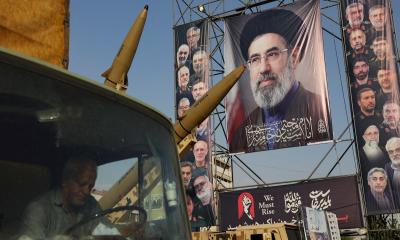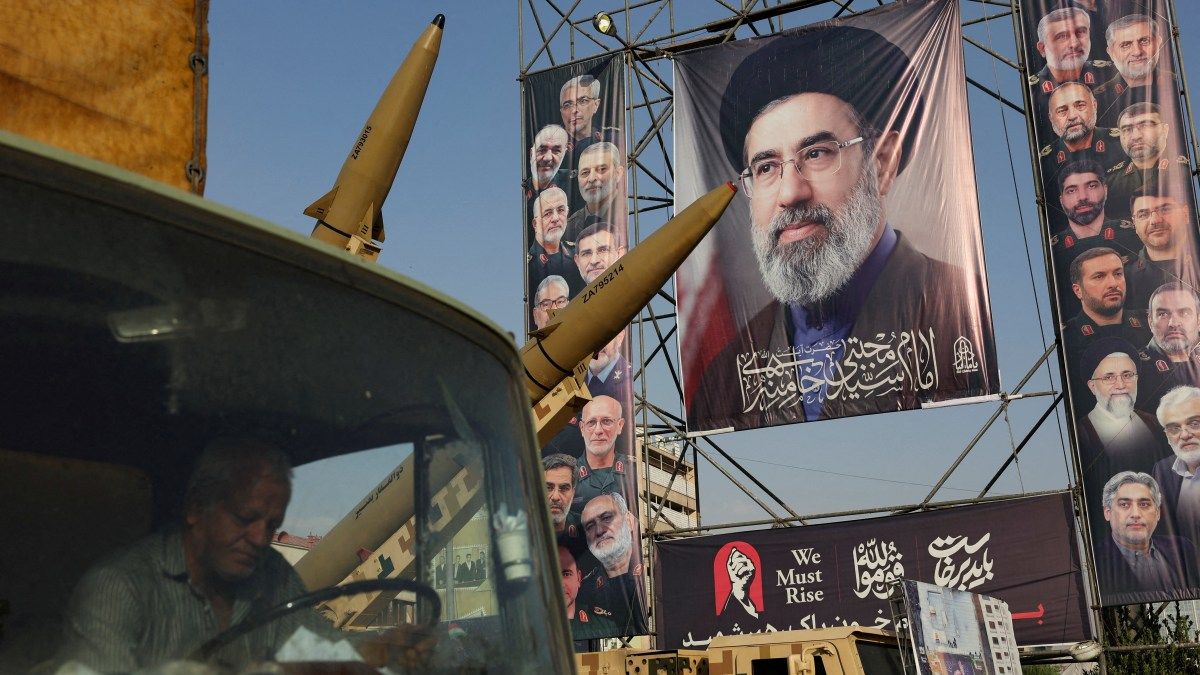
Iran has lifted its self-imposed 2,000km limit on the range of its ballistic missiles, according to an announcement by the Islamic Revolutionary Guard Corps. IRGC spokesman Brigadier-General Hossein Mohebbi revealed the policy shift during a news conference in Tehran on Saturday. The move raises questions over whether Tehran now plans to strike targets well beyond the Middle East.
Mohebbi did not clarify whether the country currently possesses operational weapons exceeding the former cap. Instead, he stated that the military would demonstrate its capabilities through actions rather than statements. This shift accompanies a hardened military doctrine that officials describe as offensive.
The announcement followed a warning issued days earlier by Supreme Leader Mojtaba Khamenei. He stated that any level of threat from the United States or Israel would trigger a response unrestricted by geography. Mojtaba also argued that Iran must escape a situation of neither war nor peace amid a volatile Strait of Hormuz and a US naval blockade on Iranian ports.
Diplomatic efforts to halt the US-Israel war on Iran have concurrently gained traction. On Monday, US President Donald Trump reported positive momentum toward ending military hostilities following discussions in Washington with Qatari Prime Minister Sheikh Mohammed bin Abdulrahman bin Jassim Al Thani.
While the change alters little for Gulf states that already sit well within the 2,000km threshold and have faced repeated fire since the conflict began on February 28, it carries broader implications. The adjustment could allow Iran to position rocket launchers in the eastern regions of the country to reach Israel. It also addresses fears in Washington and European capitals that Iranian projectiles could target American bases in the Indian Ocean and Europe.
In March, the United Kingdom accused Iran of firing missiles toward the joint US-UK base at Diego Garcia, located roughly 4,000km from Iran. Tehran denied the accusation, dismissing it as an Israeli false flag operation. Western analysts say Iran previously developed space launch technology that could theoretically be adapted to build intercontinental ballistic missiles, though the country does not currently have such weapons in its active arsenal.
Muhanad Seloom, an assistant professor at the Doha Institute for Graduate Studies, told reporters that the Diego Garcia incident already signaled Tehran’s capacity. He said that while Iran could theoretically field missiles with a range of about 5,000km, the actual combat effectiveness of such long-range strikes is a separate question.
The decision to drop the self-imposed limit marks a clear departure from past assurances given to European nations regarding missile ranges. Relations between Tehran and the European Union have deteriorated due to the Iranian nuclear programme, regional ambitions, and the bloc’s designation of the IRGC as a terrorist organisation. Tehran has also grown angered by European permission allowing the United States to use military bases on the continent.
Earlier this year, Iran issued repeated diplomatic warnings to Bulgaria over the hosting of US aircraft. In July, after Bulgaria approved the deployment of up to eight US refuelling tankers at Bezmer airbase, Iranian Foreign Ministry spokesperson Esmaeil Baghaei stated that Bulgarian decision-makers must bear responsibility for the move. Two US tankers subsequently departed from Bezmer in August.
Security concerns have also impacted British military installations. Last month, the United States withdrew military jets from RAF Fairford following a suspected plot linked by UK officials to the IRGC. Tehran denied involvement in the incident, again labeling it a false flag operation. On Monday, the US military evacuated aircraft from a second British facility, RAF Mildenhall, moving refuelling tankers to Germany and other locations following an unspecified threat from Iran. The UK Ministry of Defence declined to confirm the exact reason for the asset movements.
Seloom described the latest announcement as worrying yet not immediately alarming for European governments. He explained that missiles would need to travel vast distances to reach mainland Europe or the UK, providing NATO members with sufficient early warning time to intercept them.