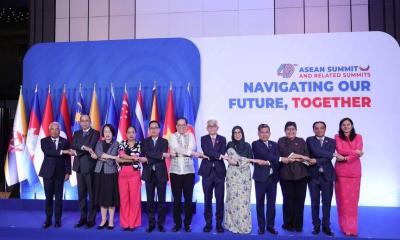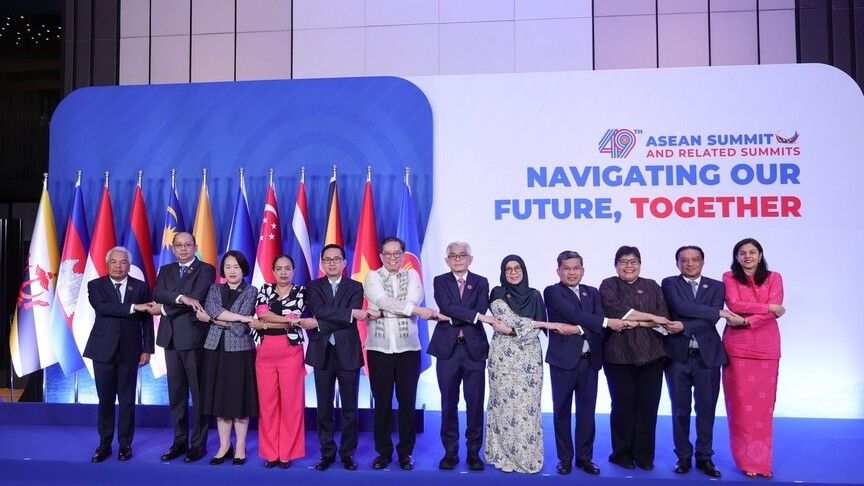
Philippine President Ferdinand Marcos Jr. Called for unity and cooperation among member states during his opening address in Pasay City. The eleven-member Southeast Asian bloc is meeting in the Philippines, which holds the rotating chairmanship.
"We differ in size, history, culture, and circumstance, but become as equals, carrying the hopes of our peoples and the shared responsibility to transform them into a common purpose," Marcos told regional leaders. "We come from different shores, yet we have chosen to travel forward together.">
Brazilian President Luiz Inacio Lula da Silva is attending the gathering as a guest. The three-day summit runs under the official theme of navigating the future together.
"Today, 11 nations come together. That commitment matters even more as the waters around us turn on shifting tides, geopolitical tensions, economic uncertainty, new technologies, climate change, and transnational threats are reshaping our region faster than any one country can respond to alone," Marcos said.
He pointed to collective decision-making as key to addressing shared challenges. "Over the coming days, alongside our external partners, the choices we will make shape how ASEAN meets the challenges of today, seizes the opportunities of tomorrow, and prepares the region for the coming generations," he said.
Turning to the ongoing conflict in the Middle East, Marcos warned that Southeast Asian countries faced risks of disruptions to transport, energy, and food supplies. "ASEAN responded quickly, rethinking, recalibrating, and redesigning, while keeping our longer-term work at center," he said.
Marcos said no single member state possessed all the resources, capabilities, or solutions needed to address modern challenges. "Where national capacities are tested, regional strength reinforces," he said, noting that this principle has guided the implementation of ASEAN 2045 through peace and security anchors, prosperity corridors, and people empowerment.