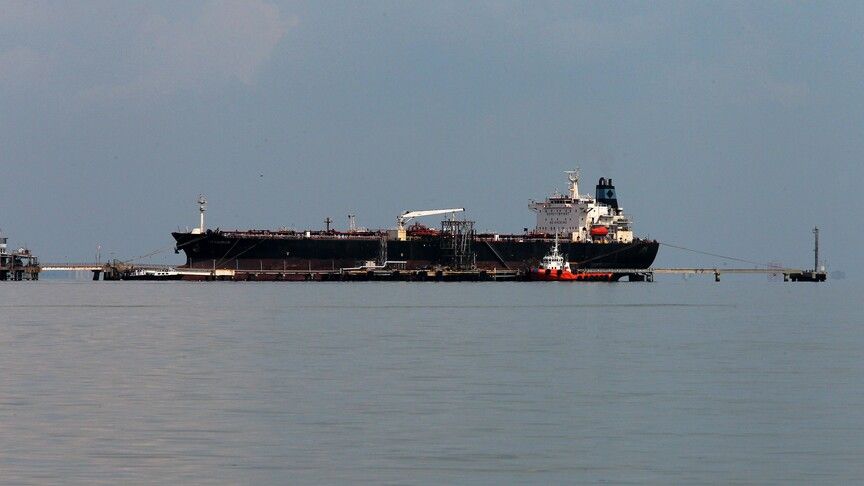
A vessel carrying oil caught fire after being struck twice in the Strait of Hormuz, the United Kingdom Maritime Trade Operations said. The organisation stated on Tuesday that it received a third-party report about an attack roughly seven nautical miles north of Khasab in Oman. The initial strike disabled the ship and caused a fire in the engine room.
A maritime security agency provided an update to the British body, detailing a second strike that triggered another onboard fire. Authorities said the crew members are unaccounted for at this stage, and the full extent of the damage is unknown.
Officials did not reveal the name of the vessel, its flag state, or its operator. The agency also withheld attribution for the attacks. Vessels navigating the area were advised to exercise extreme caution and to report suspicious activity.
In a separate announcement on Tuesday, the Navy of Iran’s Islamic Revolutionary Guard Corps reported that two unauthorised ships had struck naval mines in the same waterway. These detonations caused massive explosions and fires, leaving both vessels completely immobilised.
The Iranian military branch identified one affected ship as a supertanker transporting over two million barrels of crude oil. The second vessel was a liquefied gas carrier. Both ships were moving under the air cover of numerous US fighter jets and other military aircraft.
Iranian officials claimed the supertanker was hit in the western section of the Strait of Hormuz. The liquefied gas carrier struck mines while traversing an unauthorised southern shipping route. The resulting blasts created intense fires that halted both vessels.
It is unclear whether the tanker reported by the British maritime agency corresponds to either vessel cited by the Iranian military. The Strait of Hormuz links the Gulf to the Gulf of Oman and serves as a corridor for global oil and liquefied natural gas transport.
These maritime incidents follow recurring confrontations between Washington and Tehran. Diplomatic efforts to resolve the conflict faced obstacles, despite a memorandum of understanding signed by Washington and Tehran in June. Implementation of that agreement stalled over disputes regarding guarantees for freedom of navigation through the strait.
Hostilities have periodically resumed since July, disrupting regional security and causing anxiety over international shipping lanes and global energy supplies.