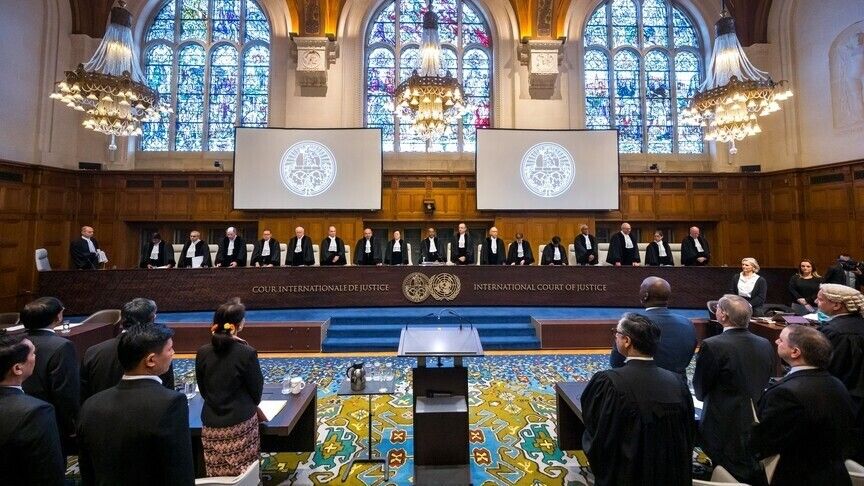
More than 20,000 Rohingya refugees gathered at the Kutupalong refugee camp in Ukhiya, Cox’s Bazar, on Friday. The massive turnout followed a ruling by the International Court of Justice finding that Myanmar committed genocide during its 2017 military operations in northern Rakhine State.
Under an overcast sky, men and boys stood shoulder to shoulder across the field and surrounding slopes. Organizers said the refugees sought assurances that the judgment in The Hague would lead to accountability and create conditions for their return after nine years in exile.
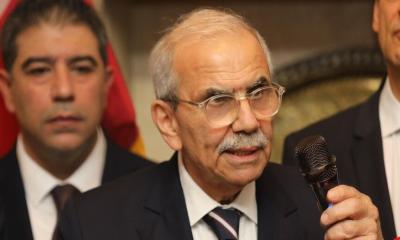
Addressing the crowd, Bangladesh’s foreign minister, who also serves as UN General Assembly chief, stated that what happened in 2017 was genocide. "The ICJ ruling must not remain confined to paper. Its implementation must be ensured," he said.
He pointed out that the judgment recognized the Rohingya as a distinct ethnic community with generations of historical ties to Myanmar. Evidence before the court established systematic killings by security forces, widespread sexual violence, attacks on women and children, and the destruction of villages.
The court cited evidence that at least 10,000 people were killed during the crackdown. Judges concluded the crimes were committed with the intent to destroy a substantial part of the Rohingya population.
"No ruling can bring back those who were killed or compensate for the loss of loved ones," he said, stressing that recognizing the truth marked the beginning of justice. He paid tribute to survivors, especially women whose testimonies helped bring evidence before the international court.
The foreign minister outlined four priorities for implementing the judgment, starting with accountability. He urged Myanmar to investigate, prosecute and punish individuals reasonably suspected of crimes prohibited under the Genocide Convention, and to reform domestic laws.
His second priority focused on the safe, voluntary and dignified repatriation of displaced Rohingya. "No one should be sent back into danger," he said, calling for family reunifications, medical treatment for survivors, and guarantees of citizenship and freedom of movement.
His third priority concerned compensation for victims. He said Myanmar must provide individual and collective compensation and submit a report within two years detailing restorative measures. His fourth priority involved preventing future atrocities through legal and institutional reforms.
Citing Article 94 of the UN Charter, he noted states must comply with ICJ judgments, and failure to do so could bring the matter before the UN Security Council. Bangladesh currently hosts more than 1 million Rohingya refugees, most of whom fled the 2017 military crackdown.
Despite diplomatic efforts, large-scale repatriation has not occurred. He warned that Bangladesh and its local residents could not bear the responsibility alone, urging international development partners to increase humanitarian funding for food, education, healthcare and shelter.
He expressed gratitude to The Gambia for bringing the case, the Organization of Islamic Cooperation, and the 11 intervening states. UN interim resident coordinator Carol Flore-Smereczniak and Refugee Relief and Repatriation Commissioner Mizanur Rahman also attended the gathering before the minister departed for Cox’s Bazar.