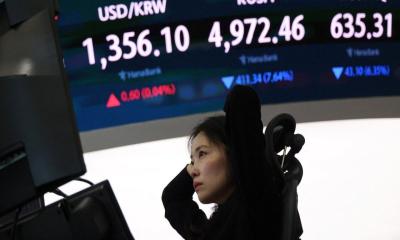
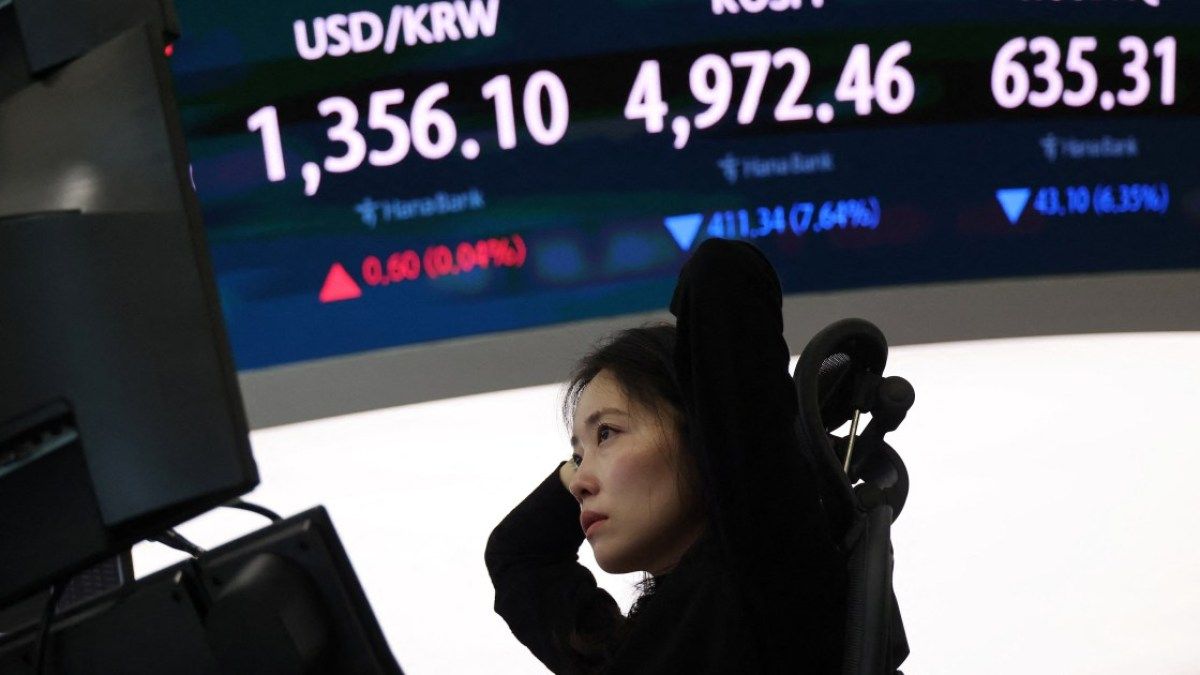
Asian stock markets opened to sharp losses on Monday as investors reacted to growing concerns over the artificial intelligence boom.
Key indexes in South Korea, Taiwan, and Hong Kong fell sharply, continuing a tech-led sell-off that affected trading on both sides of the Pacific on Friday.
In Seoul, the Korea Composite Stock Price Index fell as much as 4.3 percent during early trading. The Taiwan Stock Exchange Capitalization Weighted Stock Index and the Hang Seng Index in Hong Kong both dipped by more than 1 percent.
Stock markets in Japan remained closed on Monday for Labor Thanksgiving Day.
The regional losses followed a severe downturn on Wall Street. On Friday, the benchmark S&P 500 closed 3.7 percent lower to record its seventh straight loss.
The tech-focused Nasdaq Composite dropped 5.3 percent, erasing all of its gains for 2026 following an earlier rout in Asia.
By the end of the previous week, the Kospi, the Nikkei 225, and the Taiex had entered the weekend between 5.1 percent and 6.2 percent lower. The Hang Seng Index finished the week down 1.9 percent.
Financial backers have long worried that technology firms will fail to sustain multi-trillion-dollar investments. Companies have poured vast sums into the physical infrastructure required to train and run artificial intelligence systems.
According to technology insights company Gartner, global artificial intelligence-related investment is expected to reach $2.7 trillion in 2026. A portion of this spending is fuelled by debt, and investments are projected to climb to $3.6 trillion in 2027.
Fears that the artificial intelligence boom might be running out of steam have worsened due to increasing demands for stricter regulatory oversight. The Democratic Party secured a sweeping victory in the United States midterm elections, a political shift expected to slow the construction of data centres across American states.
Pressure on the sector also stems from an alleged espionage scandal. The controversy involves chip giant Nvidia and its former chief executive, Jensen Huang, leading to renewed pushes for tighter restrictions on China’s access to advanced semiconductors.