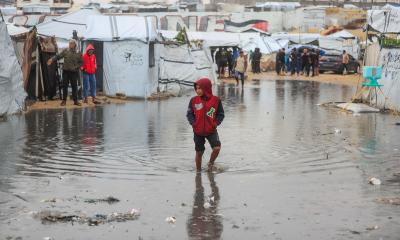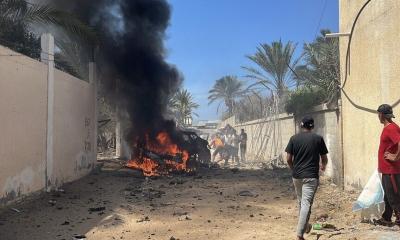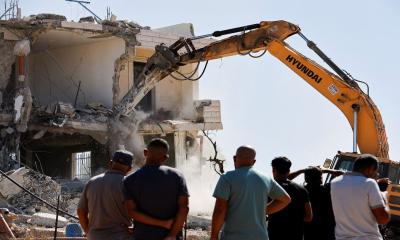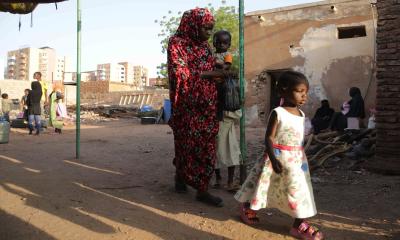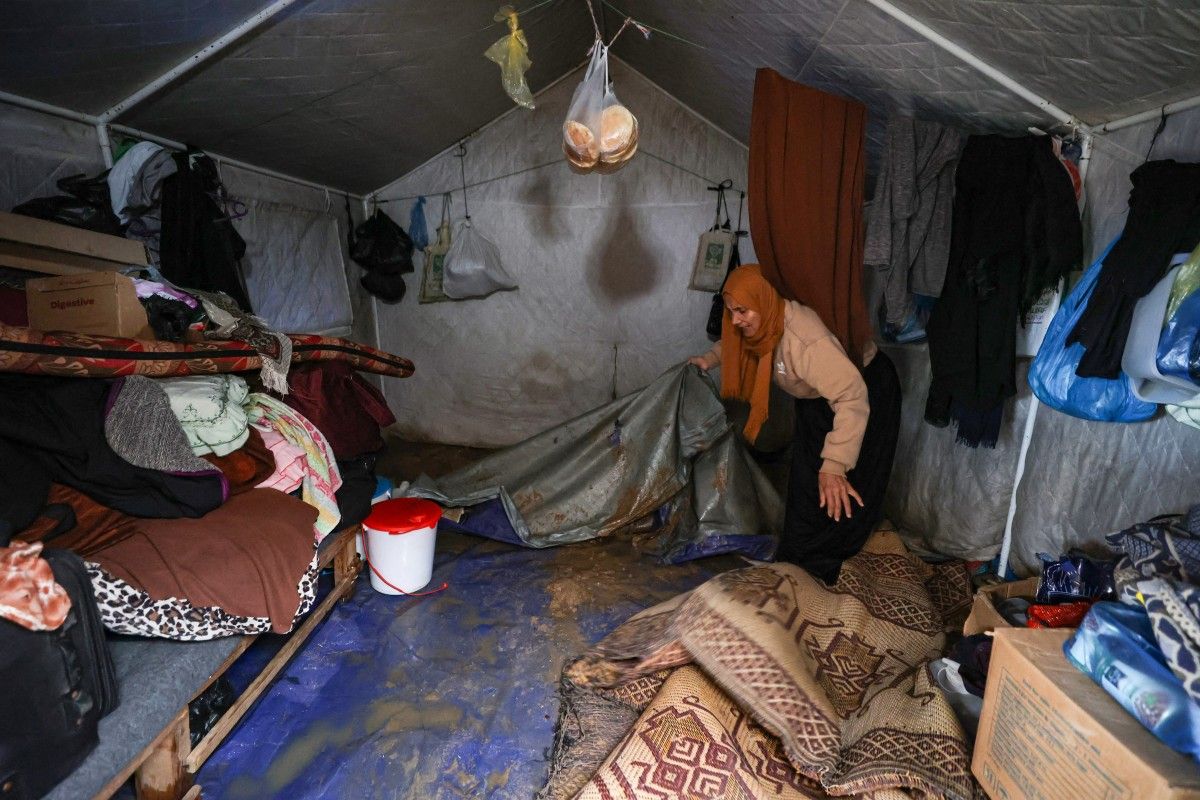
Heavy rain and bitter cold across Gaza flooded displacement camps, ruined bedding, and left families desperately patching torn shelters with salvaged wood and fabric scraps. The sudden downpour exposed the precarious conditions endured by displaced Palestinians as winter approaches. For many children, the rain brought a fleeting sense of wonder, but it quickly turned into misery as water soaked clothing and sleeping areas.
Jehad Al-Jarbou, a Palestinian visual artist and poet living in a tent in Gaza City, described how the weather laid bare the lack of protection for her family. Her young son danced in the rain before falling ill because they lacked adequate heating and proper clothing. The rain drenched everything they owned, mixing with sewage to form contaminated pools that presented a severe health hazard to children.
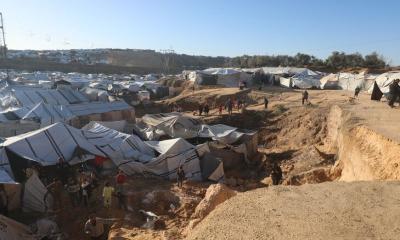
The dangers of the storms turned lethal on Sunday night when a rain-weakened sand embankment collapsed onto tents in a camp south of Deir Al-Balah. The disaster killed a woman and five children. Wassem Mushtaha, Oxfam’s response lead in Gaza, stated that severe flooding had displaced around 100,000 people and warned that the death toll would rise.
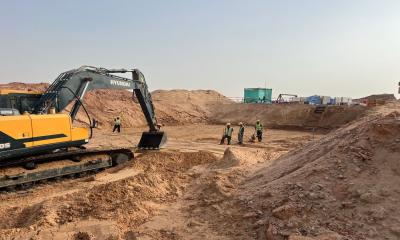
Rescue workers searched beneath boulders, sand, and collapsed tent debris by the light of their mobile phones following the embankment collapse. Save the Children reported that rescue teams were still looking for two missing persons, warning that landslides and collapsing structures threatened more lives. The organisation said that Israeli military control of approximately 70 percent of Gaza had forced the population into areas unequipped to handle heavy rainfall.
Al-Jarbou said her family tried to buy tarpaulins to reinforce their shelter, despite prices reaching about 100 dollars each. The continuous rain washed away the ground around them, leaving them surrounded by contaminated water. Nothing could protect them except proper housing, she said, adding that they needed mobile homes rather than tents.
Palestinian media reported that about 70,000 tents housing roughly 350,000 people, including 210,000 children, flooded during 12 hours of torrential rain. Save the Children warned that wet shelters and soaked winter clothing exposed children to hypothermia and waterborne diseases. More than 2,000 damaged or structurally unsound buildings were also at risk of collapse.
Elias, an educator from Gaza City whose name was changed at his request, said families could not sleep because the heavy rain tore their tents apart or flooded them. Residents tried to repair the damage using worn fabric, poor timber, and metal salvaged from bombed homes. He remarked that the pieces of cloth sheltering displaced families barely deserved to be called tents, a label he said served to absolve international institutions of responsibility.
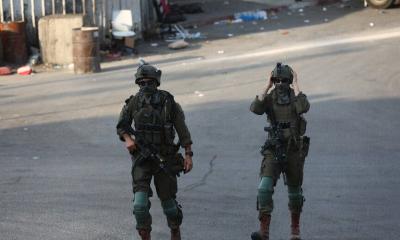
Aid groups warned that Israeli restrictions on shelter supplies and reconstruction materials turned foreseeable winter storms into emergencies. Mushtaha stated that Israeli restrictions had rendered 65 percent of Gaza off-limits and caused the near collapse of all functioning systems. Oxfam teams worked to clear sewer blockages and drain floodwater, but Mushtaha said they urgently needed spare parts, pipes, heavy machinery, and shelter materials.
Ahmad Alhendawi, regional director for the Middle East at Save the Children, said the children killed in the embankment collapse died in a preventable way. He stated that man-made conditions created by Israeli authorities forced families into unsafe shelters with nowhere else to go. Gaza’s Civil Defense urged international organizations to provide safe shelters and move tents away from slopes and sandy areas.