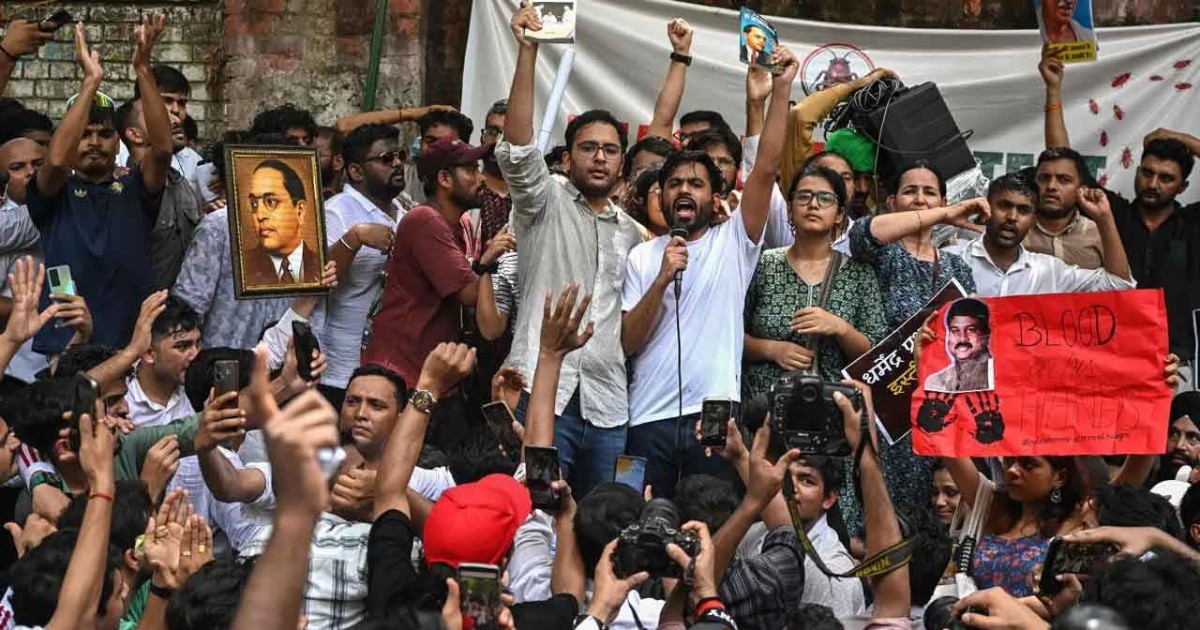
The Cockroach Janata Party organized a significant protest at Jantar Mantar in Delhi on Saturday, demanding the immediate resignation of Union Education Minister Dharmendra Pradhan. The rally was sparked by the ongoing controversy surrounding the NEET-UG examination, specifically allegations of widespread paper leaks and systemic corruption within the Indian education sector. According to reports from AFP and various Indian media outlets, the demonstration remained largely peaceful.
Abhijit Dipke, the founder of the digital-first political entity, returned to India from the United States to lead the movement. Following his arrival, local authorities granted permission for the protest to proceed. The movement, which gained immense traction online, has successfully transitioned its digital influence into a tangible physical presence. The demand for accountability regarding the NEET-UG scandal has resonated deeply with students and youth across the country, many of whom feel their academic futures are being jeopardized by administrative negligence.
The Cockroach Janata Party has distinguished itself through its massive following on social media platforms, often surpassing that of established political parties. Observers suggest this rapid growth reflects a broader disillusionment among the Indian youth with traditional political structures. The movement characterizes itself as a platform by the youth and for the youth, focusing on institutional integrity rather than partisan agendas.
Dipke has consistently emphasized the necessity for discipline and legal compliance throughout the protests. In an effort to minimize public inconvenience and ensure the safety of the protesters, he actively discouraged his supporters from gathering at the airport upon his arrival. This focus on orderly conduct has been noted by political analysts as a strategic move to maintain public legitimacy while challenging the government.
Prominent activist Sonam Wangchuk, known for his work in the Ladakh region, has also pledged his solidarity with the movement. The participation of such high-profile figures underscores the growing national significance of the protests. Despite the strict regulatory environment for online content in India, the CJP continues to challenge the status quo, effectively using digital organization to mobilize physical support.
As the situation develops, the pressure on the Ministry of Education continues to mount. While the government has yet to address the specific demands for the minister`s resignation, the ongoing demonstrations at Jantar Mantar signify that the NEET controversy is far from settled. The effectiveness of this movement and its long-term impact on Indian educational policy remain the primary concerns for those monitoring the region.