The conflict between the United States and Iran has reached a critical turning point. In recent days, American forces have conducted a series of airstrikes on Iranian islands, including Qeshm, Kish, and Abu Musa. These attacks, coupled with persistent strikes on southern port cities such as Bandar Abbas, have sparked intense speculation about Washington’s long-term objectives. As the campaign escalates, international observers are increasingly asking a pivotal question: Is the United States preparing to seize Iranian territory?
Speculation regarding a ground operation has persisted since the early weeks of the war. In March, reports from the Washington Post cited unnamed US officials who suggested that the Department of Defense was preparing for potential raids on Kharg Island, a crucial hub through which approximately 90 percent of Iran’s crude oil exports pass. While the signing of a memorandum of understanding on June 17 temporarily cooled discussions of a land grab, the possibility has returned to the forefront following comments made by President Donald Trump. In a recent interview on Fox News, Trump pointedly refused to rule out such an operation, remarking that it would be foolish to disclose military plans publicly.
From a narrow tactical perspective, the United States possesses the military force required to seize Iranian islands. Andreas Krieg, an associate professor in security studies at King’s College London, argues that with sufficient air, naval, and amphibious support, the US could capture a smaller Iranian island, provided it is willing to absorb the inevitable escalation that would follow. With approximately 50,000 personnel stationed across various bases and forward sites in the Middle East, the US maintains a significant military presence in the theatre.
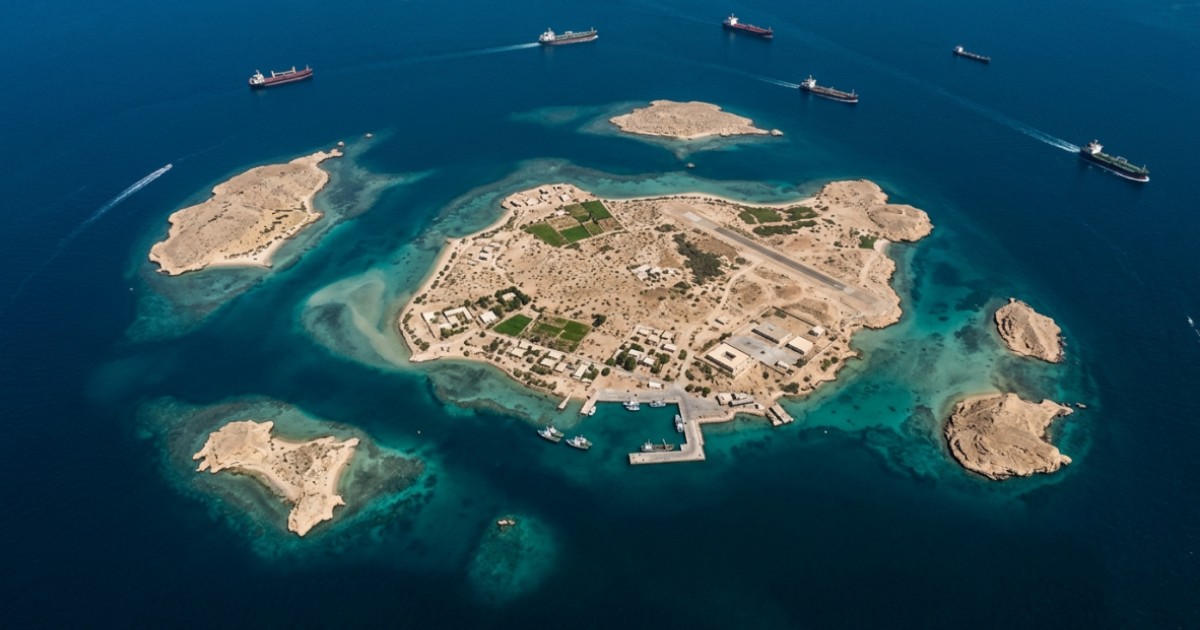
However, Nader Hashemi, a professor of Middle East politics at Georgetown University, suggests that military capability is only one side of the equation. While the US remains the world’s dominant military power, the challenge lies in the sustainability of an occupation. As Krieg noted, capturing an island and holding it while maintaining supply lines and deriving strategic utility are vastly different military tasks. Qeshm, for instance, is a large island situated directly off the Iranian mainland, making it a particularly difficult target to secure compared to a remote outpost.
Even smaller islands, such as Hengam, present logistical nightmares. While they could be overrun more easily, they would remain well within the reach of Iranian artillery, drone swarms, and small-boat tactical units. A multi-island operation would essentially require a major amphibious campaign rather than a limited raid. Such an undertaking would inevitably expose US garrisons to continuous asymmetric attacks, while granting Tehran a powerful propaganda narrative, casting the US as an occupying foreign power rather than a global arbiter.
Beyond the immediate tactical difficulties, seizing Iranian islands would not resolve the broader strategic issues, such as the disruption of the Strait of Hormuz. Instead, it would likely lock the United States into a perpetual state of conflict, stretching its resources across an environment where Iran has a distinct home-field advantage. The shift from airstrikes to ground operations would escalate the war beyond the current parameters, threatening the stability of the entire region.
As Washington continues to weigh its options, the rhetoric from the Trump administration suggests that all possibilities remain on the table. Whether the current talk of ground operations is a calculated psychological tactic or a genuine plan for escalation remains unclear. Nevertheless, the cost-benefit analysis of such an operation appears overwhelmingly skewed against the United States. In the volatile landscape of the Persian Gulf, a shift toward territorial occupation would represent a major strategic gamble, one that could lead to unintended consequences for the global economy and international security.