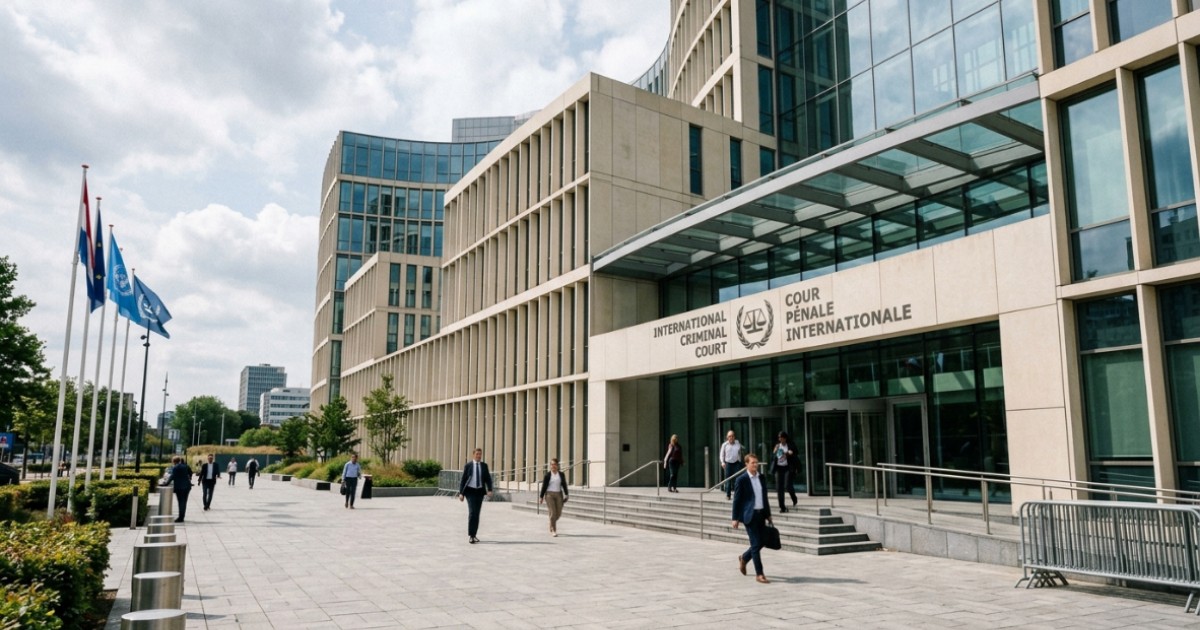
A legal challenge has been mounted in Washington, DC, against sanctions imposed by the administration of US President Donald Trump on the International Criminal Court (ICC). The lawsuit, filed on Wednesday by the human rights group DAWN and the Taxpayers Alliance Against Genocide (TAAG), asserts that the measures infringe upon the constitutional rights of American citizens and stifle advocacy for human rights. The litigation targets sanctions that were first imposed in February 2025 following the court`s issuance of arrest warrants for Israeli Prime Minister Benjamin Netanyahu and former Defence Minister Yoav Gallant.
President Trump’s executive order established penalties for any ICC officials involved in investigations related to the United States or its allies, with a particular focus on Israel. The scope of these sanctions extends to organizations and individuals who provide support or evidence to the Hague-based tribunal. Among those targeted are ICC prosecutors, judges, several Palestinian organizations, and Francesca Albanese, the United Nations Special Rapporteur for the occupied Palestinian territory.
In their filing, DAWN and TAAG argue that these sanctions violate the constitutional right of Americans to engage in Palestine-related human rights advocacy. The plaintiffs contend that the executive order limits what citizens can say to international tribunals and restricts their ability to associate with sanctioned parties. By creating a climate of fear and legal reprisal, the administration has effectively curtailed the ability of Americans to participate in international justice processes, the groups claim.
The lawsuit also invokes the International Emergency Economic Powers Act (IEEPA), a 1977 statute passed by the US Congress. The plaintiffs argue that the Trump administration’s actions violate this law, which explicitly bars the president from using sanctions to restrict personal communications or the transmission of informational materials. Legal analysts suggest this provision will be central to the court`s review of whether the president exceeded his authority in targeting international advocates and information providers.
This legal maneuver comes just days after the administration signalled an escalation in its campaign against the tribunal. US Secretary of State Marco Rubio recently pledged a whole-of-government response to dismantle the court, which he characterized as a threat to every aspect of the American legal and political system. This hostile rhetoric from high-level officials has intensified the concerns of human rights advocates, who view the court as a necessary mechanism for addressing international atrocities.
As the litigation proceeds, the tension between the administration’s foreign policy objectives and the protection of constitutional rights is becoming increasingly apparent. The outcome of this case could have significant implications for the future of international legal cooperation and the extent to which the executive branch can penalize those who support international tribunals. For now, the legal challenge provides a platform for critics to argue that the current administration`s foreign policy is sacrificing the rule of law and fundamental American values in an attempt to shield its allies from international scrutiny.