Nearly five months into the war, questions surrounding the command structure of the Islamic Republic of Iran remain a focal point of US political rhetoric. Washington has consistently attempted to project the image of a fragmented and leaderless Iranian state, particularly following the assassination of former Supreme Leader Ali Khamenei and other senior officials on February 28. United States President Donald Trump has repeatedly claimed that Iranian authorities are struggling with internal divisions, asserting that Tehran is unaware of who holds final command authority.
Tehran has categorically rejected these assertions. Despite the narrative projected from Washington, Iranian state policy reveals a highly unified position, particularly concerning the strategic control of the Strait of Hormuz. Senior officials in Iran maintain that the military and security apparatus remains disciplined and that the current strategy—resuming hostilities with the US rather than seeking capitulation—is a collective decision made by the country`s security elite.
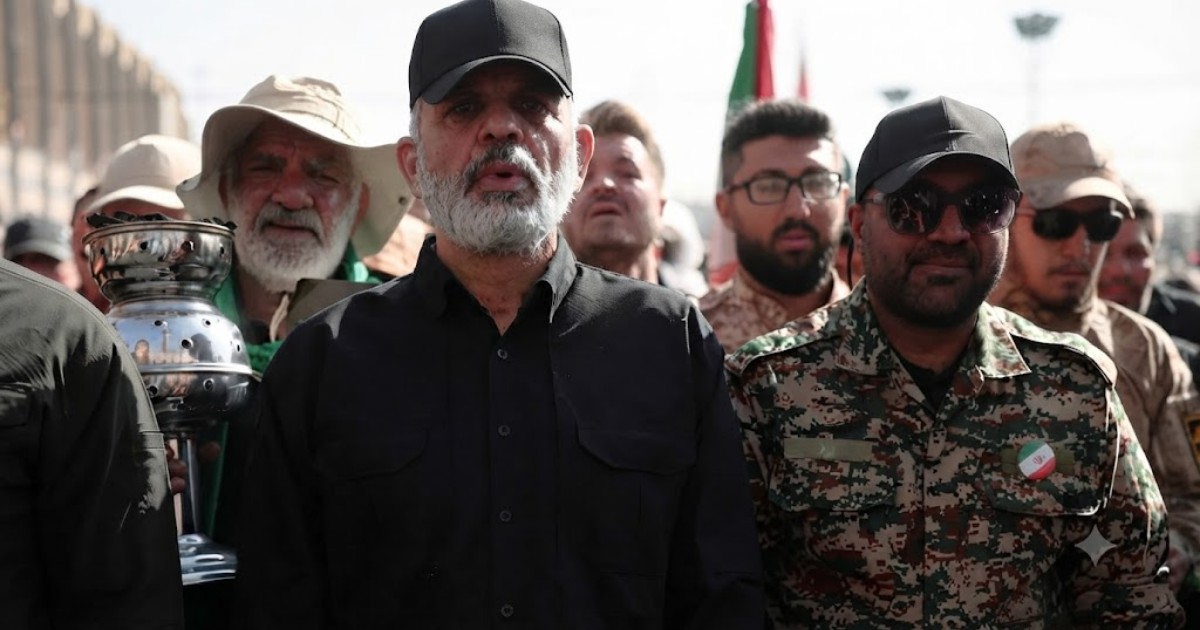
At the center of this unified command are the military and security commanders who have risen to prominence since the conflict began. Among the most influential are Ahmad Vahidi, the commander-in-chief of the Islamic Revolutionary Guard Corps (IRGC); Ali Abdollahi, the head of the joint wartime command; and Ali Azmaei, the new commander of the IRGC Navy. These leaders have maintained a visible public profile, emphasizing their determination to solidify military positions within the strategic Strait of Hormuz. Their unified stance indicates that the IRGC continues to function as the primary engine of Iranian state security.
Institutional coordination is managed through the Supreme National Security Council, the highest decision-making body in the Islamic Republic. Mohammad Bagher Zolghadr, who replaced Ali Larijani as security chief in March, serves as the principal coordinator for the council, which includes representatives from various political factions. Zolghadr, a veteran of the IRGC old guard, has been instrumental in articulating the state`s official position: that negotiations are only viable if conducted from a position of military leverage and that the regional security architecture, including alliances in Lebanon, remains integral to the nation’s survival.
The dispute over maritime passage in the Strait of Hormuz serves as a practical demonstration of this unified policy. Tehran insisted that vessels must avoid the southern route near Oman, mandating passage through northern territorial waters. When this led to clashes, the Iranian government—through Kazem Gharibabadi, the deputy foreign minister for legal and international affairs—proposed a third transit route during negotiations in Oman. While this proposal has yet to resolve the crisis, it demonstrates a coordinated diplomatic and military approach rather than the chaotic infighting that Washington describes.
For the security elite in Tehran, the Strait of Hormuz is not merely a waterway; it is a strategic asset that has become the pivot of the current war. By framing the conflict as a defense of national sovereignty rather than a struggle between factions, the Iranian leadership has successfully rallied its various internal stakeholders. As the conflict with the US continues to evolve, the Iranian command structure appears to be functioning with a level of coherency that contradicts the external assessments coming from the White House. The current dynamic suggests that the regime in Tehran is prioritizing military endurance and regional influence over immediate diplomatic concessions.