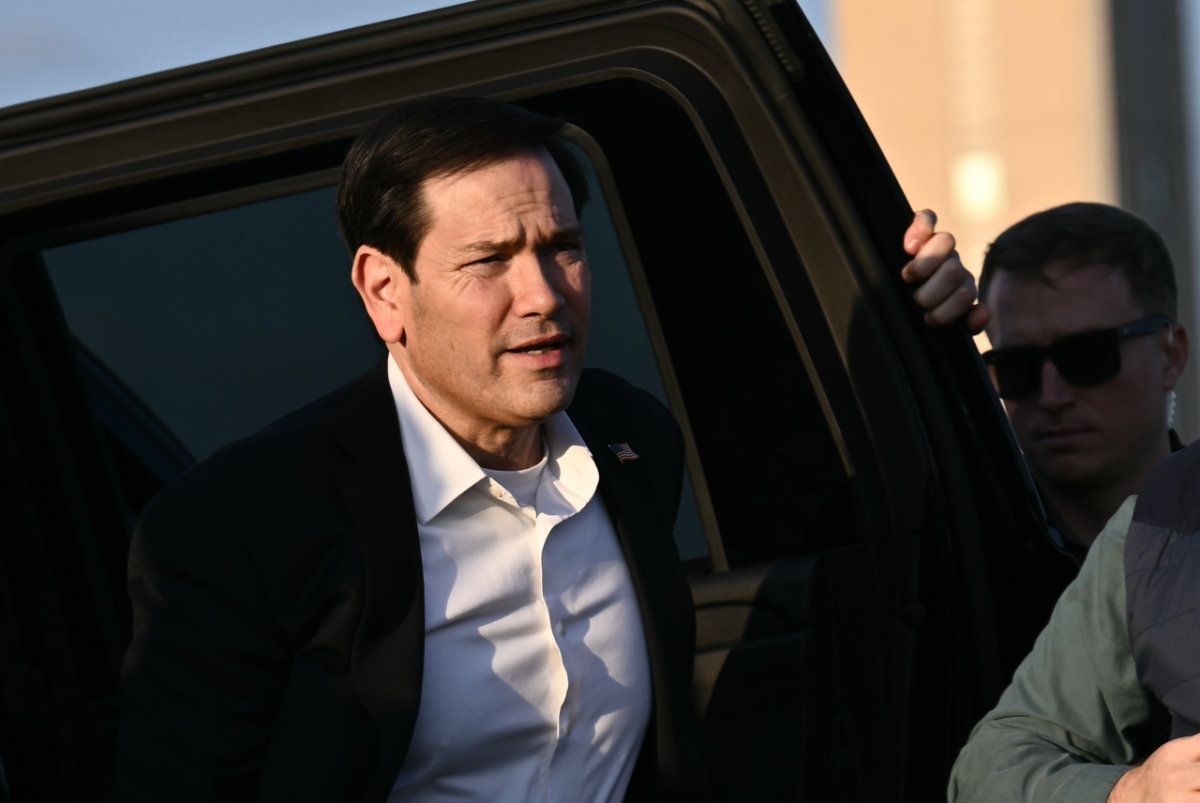
US Secretary of State Marco Rubio said on Friday that further military action against Iran is unnecessary because the economic pain inflicted on the Islamic Republic is severe. Speaking to the Federalist Society, Rubio argued that Washington has weakened the country to a point where military strikes are no longer required.
His remarks echoed a statement made earlier in the week by US President Donald Trump, who declared that the war is effectively over from a military standpoint. Rubio said the ultimate victory lies in ensuring Iran never acquires a nuclear weapon.
Rubio also acknowledged the economic fallout felt by Americans. He said the conflict has driven up fuel costs and impacted nearly every sector of the global economy. He maintained that it would have been easy for the president to avoid an unpopular war and leave the nuclear threat for a successor, but Trump chose to address it directly.
Military activity continued in the region. The US military announced on Friday that it shot down two Iranian attack drones heading toward Bahrain. Central Command denied an earlier Iranian claim that a US radar system in the kingdom had been successfully struck.
The US military said no injuries or damage resulted from the intercepted drones. Iran’s official IRNA news agency had previously cited a Revolutionary Guard statement claiming the radar attack followed a US strike on a telecommunications pole in the southern Iranian port of Sirik.
In the Strait of Hormuz, Iran’s Revolutionary Guard reported that a liquefied petroleum gas tanker struck a mine and caused an explosion. The Guard claimed the vessel ignored repeated warnings while transiting the eastern part of the waterway, though this report could not be independently verified.
The United Nations reported that October recorded the highest number of incidents against commercial vessels in contested waters since the war began in February. The International Maritime Organization stated that 25 seafarers have died, with others injured or missing across approximately 134 incidents in the region as of November 11.
On the diplomatic front, Iran informed the International Atomic Energy Agency that nuclear monitoring discussions cannot proceed while the country faces military threats. A confidential IAEA report noted that Tehran has refused to grant inspectors access to sites damaged by US and Israeli strikes during the June 2025 war.
Addressing the UN Security Council on Friday, Iran’s deputy UN ambassador, Gholamhossein Darzi, warned that any renewed fighting would be met with a decisive response. He stated that the retaliation would be directed against the source of aggression wherever it may be found.
Darzi also dismissed the prospect of new talks, arguing that US actions during previous negotiations created profound distrust. He clashed during the session with representatives from Bahrain and the United States.