There are nations in world football whose strength cannot be measured by statistics alone. Once on the pitch, they often deliver performances that far exceed the sum of their individual parts, and Croatia is undoubtedly one such team. Despite a population of under four million, the country has become one of the most successful and consistent forces in global football over the last three decades. Since their first appearance in 1998, they have repeatedly proven that success on the world stage does not require vast resources or large populations; it demands talent, mental fortitude, and precise strategic planning.
The architect behind much of Croatia’s recent success is head coach Zlatko Dalić. Since taking charge in 2017, he has instilled a mentality that thrives on fighting until the final whistle. Dalić’s greatest strength lies in his ability to strike a balance between experienced veterans and promising young talent. The 2026 squad reflects this philosophy perfectly. Veteran warriors such as Luka Modrić, Ivan Perišić, and Andrej Kramarić are now joined by emerging stars like Luka Vušković and Igor Matanović. This seamless blend of current experience and future potential provides the team with a distinct competitive advantage.
Croatia’s performance during the qualification rounds was nothing short of dominant. Remaining unbeaten throughout the campaign, they secured seven victories and a single draw to book their place in the tournament. Beyond the results, their attacking flair was evident as they netted 28 goals, establishing themselves as one of Europe’s most formidable attacking sides. This run of form has instilled a deep sense of confidence within the squad, which will serve as their foundation when they step onto the world stage in North America.
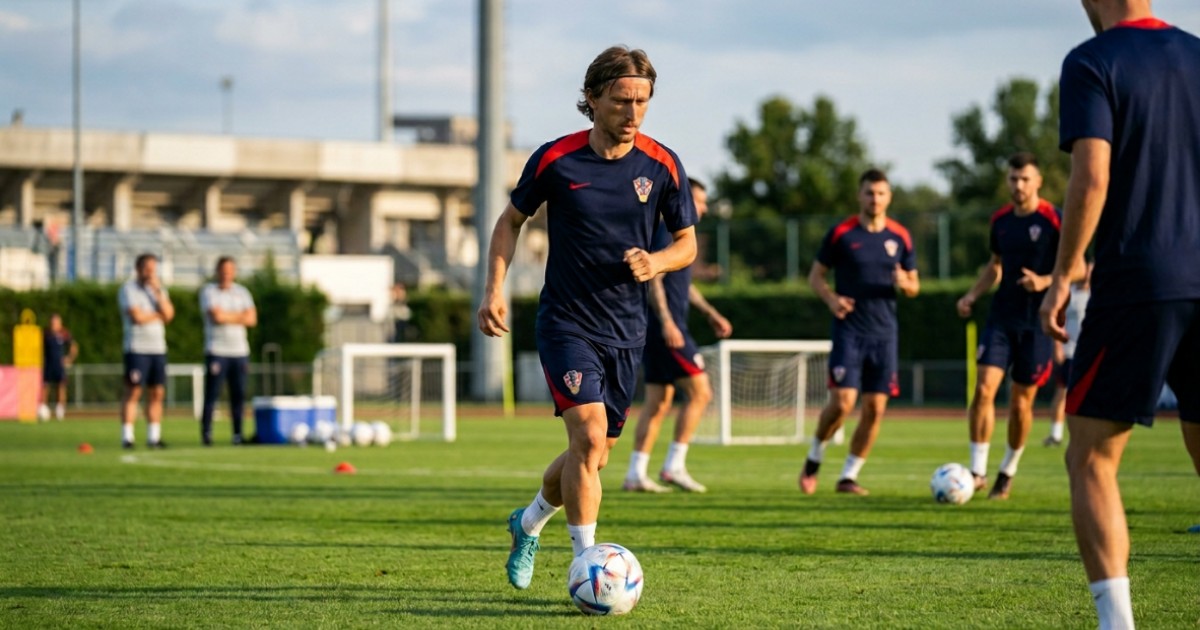
The defense will be anchored by Josko Gvardiol, one of Europe’s most promising young defenders, whose pace and tackling ability set him apart. In goal, Dominik Livaković, who gained global recognition for his penalty-saving heroics in Qatar, remains the undisputed starter. However, the heart of the team continues to be its legendary midfield. Even at nearly 40 years old, Luka Modrić remains the pulse of the team. His ability to control the tempo, deliver precise passes, and provide leadership remains unrivaled. His long-standing partnership with Mateo Kovačić provides the tactical stability required to dominate the center of the pitch.
Despite their strengths, the team faces the inevitable challenge of age. A number of key players are in the twilight of their careers, and the physical demands of a high-intensity tournament will test their fitness levels. Croatia’s tendency to push matches into extra time, while a testament to their resilience, could prove exhausting in such a tightly contested competition. Nevertheless, for fans worldwide, this tournament represents a potentially emotional farewell to Luka Modrić. Having won almost everything at the club level, the elusive World Cup trophy remains the final piece of the puzzle. If Modrić can lead Croatia to their first-ever World Cup title, it would cement his legacy as one of the greatest fairy-tale stories in football history.