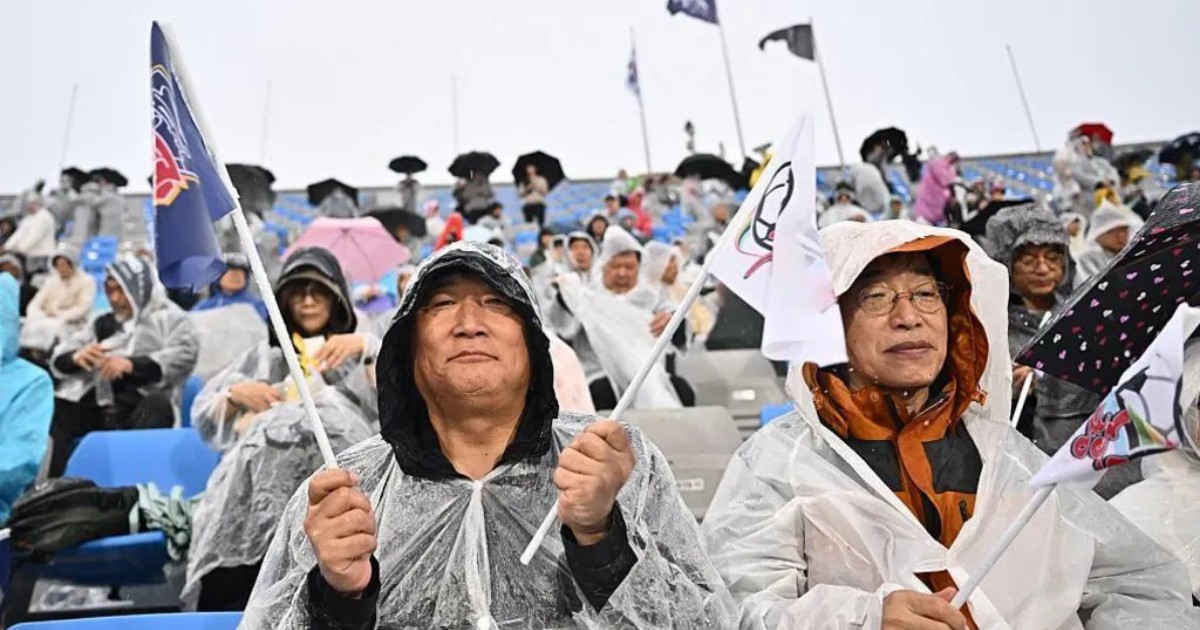
Defying heavy downpours, strong winds, and deep-seated political animosity, North Korean athletes competed on South Korean soil for the first time since 2018. More than 5,000 spectators gathered at Suwon Stadium, just south of Seoul, to witness a rare and emotionally charged inter-Korean football match. The high-stakes semi-final of the Asian Women`s Champions League brought together top clubs from both sides of the demilitarized zone. Ultimately, Pyongyang-based Naegohyang Women`s Football Club secured a historic 2-1 victory over South Korea`s Suwon FC Women to advance to the final.Second-half strikes sealed the crucial victory for the North Korean powerhouse.
Second-half goals from clinical forwards Choe Kum Ok and Kim Kyong Yong overturned the match, setting up a final showdown against Japan`s Tokyo Verdy Beleza. This tournament marks a historic return, as no North Korean sports delegation had crossed the southern border in eight years. Relations between the neighboring nations have cratered recently, following a record number of ballistic missile tests by Pyongyang. In 2023, North Korean leader Kim Jong Un officially abandoned the long-standing goal of peaceful reunification, formally designating South Korea as a "hostile state."
Despite the intense diplomatic ice age, North Korea remains a dominant powerhouse in global women`s football. The country currently sits 11th in the official FIFA world rankings, trailing only Japan as the second-highest ranked team in Asia. Founded in the capital in 2012, Naegohyang captured the domestic league title in 2022. The current squad boasts multiple elite national team players and is managed by a former head coach of the senior women`s national team.
According to Kim Yong-hyun, a professor of North Korean Studies at Dongguk University in Seoul, Pyongyang systematically prioritizes the identification and training of young athletic talents. The state-of-the-art Pyongyang International Football School, established in 2013 on Rungna Island, serves as the elite cradle for the nation`s rising stars. Talented children are meticulously selected from elementary and middle school levels to undergo rigorous, state-funded athletic regimens.
While international economic sanctions over its nuclear program have severely crippled the broader national economy, elite sports funding remains untouched as a potent tool for state propaganda. Successful star athletes receive lavish state rewards, including luxury vehicles, apartments, and highly coveted memberships in the ruling Workers` Party. This top-down institutional emphasis has yielded monumental returns, including historic trophies at the 2024 FIFA U-20 Women`s World Cup and the 2025 FIFA U-17 Women`s World Cup.