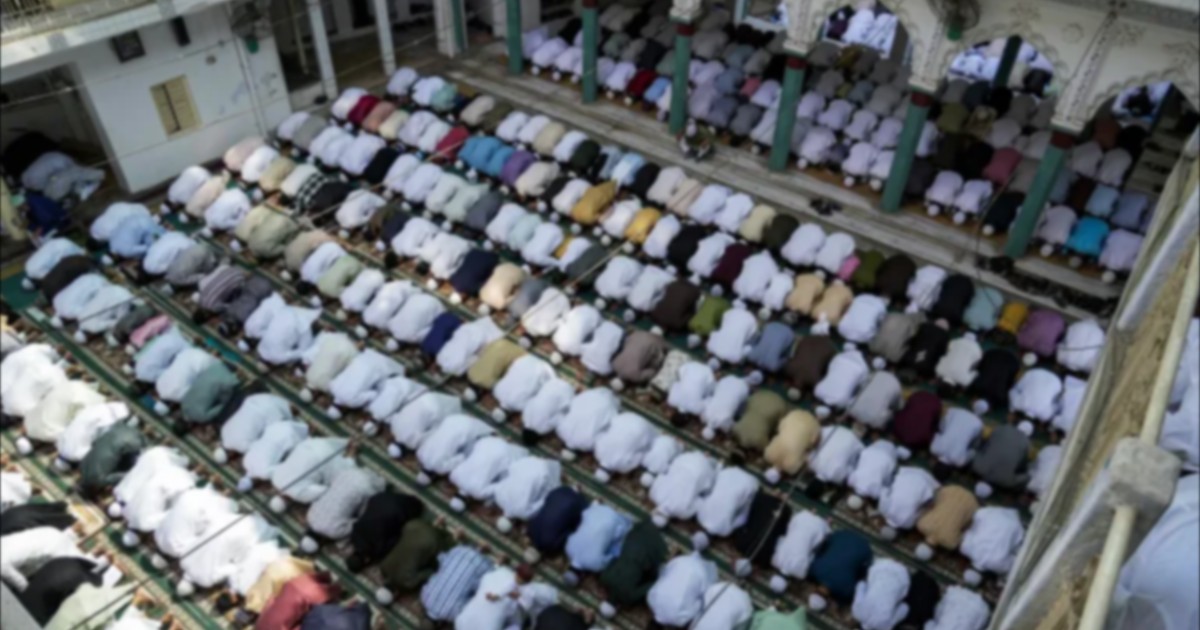
Muslim communities across several states in northern India are facing deep anxiety as local administrations enforce strict bans on holding Eid Al Adha prayers in public open spaces. Worshippers in crowded districts are being instructed to conduct their religious congregations strictly inside designated mosque buildings. This administrative shift has compelled many regional mosque management committees to organize prayer schedules in multiple separate shifts to manage the large turnout.The restrictive orders come amid an intense summer heatwave affecting the entire subcontinent.
In Maliyana village, located within the Meerut district of Uttar Pradesh, community leaders held urgent meetings inside mosques to brief residents on the official guidelines. Committee members explicitly instructed congregants not to overflow onto roads or gather near the outer gates during the holy event. Worshippers were strongly advised to remain calm, avoid engaging in political arguments, and refrain from filming local police deployments to prevent escalations.
The geographic pocket of Maliyana holds historical significance regarding communal tensions in the region. In May 1987, the village witnessed a violent outbreak where 72 Muslims were killed, involving local groups and state provincial armed forces. Although a provincial district court acquitted the primary accused individuals in 2023 citing insufficient evidence, the memory of that historic violence shapes current communal fears during high-density festivals.
Legal experts note that requiring formal written police permission for basic religious gatherings has become a major hurdle for minorities under current state policies. Critics argue that targeting public Islamic prayers while allowing other cultural events constitutes an infringement on constitutional religious guarantees. Official security advisories continue to circulate through local mobile groups, keeping the resident population on high alert.
Despite the heavy administrative pressure, mosque boards are urging the public to comply fully with the parameters set by law enforcement. The expanding scope of these prayer restrictions across Uttar Pradesh has drawn significant coverage from global human rights monitors. Consequently, the upcoming festival is being observed under an unprecedented blanket of security and internal community constraint.