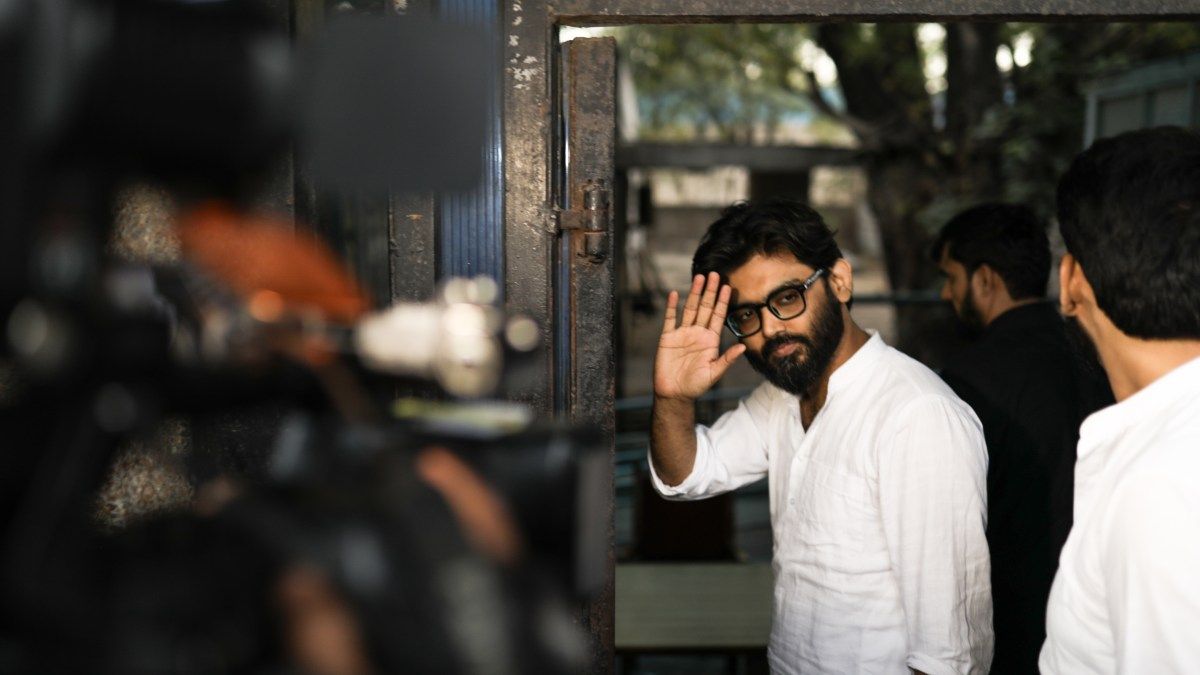
A polarising debate over the political status of India’s nearly 200 million Muslims has emerged from a prison cell in New Delhi, centring on remarks made by detained scholar Sharjeel Imam. The discussion questions whether the world’s largest democracy has failed its largest minority group, who make up roughly 14 percent of the country’s 1.4 billion population.
Imam delivered the remarks through a lengthy interview published by the Indian news website The Quint on September 29, speaking from Tihar Jail where he has been held for years. There are around 210 million Muslims in India, forming one of the biggest Muslim groups globally, yet they have practically zero say in this democracy, Imam told the outlet.
The 38-year-old scholar criticised the Indian constitution for its enshrined centralisation of power and described the nation’s brand of secularism as Islamophobic and parochial. He argued that democracy in the country serves as a tool to deny Muslims their political representation and rights.
Originally from Bihar’s Jahanabad district, Imam graduated from the Indian Institute of Technology Bombay in computer science and worked as a software engineer before pursuing a doctorate in historical studies at Jawaharlal Nehru University. In January 2020, authorities arrested him for speeches delivered during nationwide protests against the Citizenship Amendment Act.
Passed by Prime Minister Narendra Modi’s Hindu nationalist government in 2019, the citizenship law granted an expedited pathway to Indian citizenship for non-Muslim refugees from neighbouring countries. The United Nations called the legislation fundamentally discriminatory against Muslims, igniting weeks-long demonstrations led mostly by Muslim women at Shaheen Bagh in New Delhi, where Imam served as a chief organiser.
Although no violence occurred at the Shaheen Bagh sit-in prior to his arrest, riots broke out the following month in northeast New Delhi after anti-government demonstrations in Muslim neighbourhoods faced attacks from mobs. Despite being in custody at the time, Imam received charges of rioting, murder, attempted murder, sedition, and promoting enmity under several laws, including a stringent anti-terror statute.
Imam is imprisoned without trial alongside nearly a dozen Muslim students and activists, including fellow Jawaharlal Nehru University scholar Umar Khalid, who have faced repeated bail denials. Rights groups have condemned their ongoing incarceration as a gross abuse of power and an example of judicial oversight that treats the accused as guilty until proven innocent.
In his interview, Imam extended his critique to historical figures, calling independence icon Mahatma Gandhi a fascist for shaping the Congress party into an essentially Hindu organisation. He also accused independent India’s first Prime Minister Jawaharlal Nehru of falsehood and mythmaking for portraying the country as uniquely tolerant in his book, The Discovery of India.
Legal scholar Mohd Zeeshan Ahmad responded in a rebuttal published by The Quint, stating that Imam raises serious historical and ideological questions that cannot be evaded merely because of his prosecution. However, Ahmad argued that Imam’s equation of secularism with Hindutva is unpersuasive and risks projecting Muslims as a homogeneous political bloc.
Irfan Ahmad, a professor of anthropology and sociology at Ibn Khaldun University in Istanbul, supported Imam’s view on the similarities between the Congress party and the ruling Bharatiya Janata Party regarding secularism. If a democracy routinely makes Muslims invisible in legislative representation, then there is something fundamentally wrong with this democracy, the professor stated.