On Thursday, displaced families along the coast of Khan Younis in southern Gaza prepared for another winter living in dilapidated tents just metres from the sea. Anas al-Shami, 33, lives in a worn shelter with his family of six near al-Qarara port. The tent fails to block the wind and rain, while dampness seeps into their bedding constantly. Swelling waves pose an ongoing threat as the weather turns.
Al-Shami and his relatives were forced to leave Bani Suheila, east of Khan Younis, after the area was designated as part of an Israeli military zone. High rental costs and extreme overcrowding made it impossible to find land further inland. He searched for safe spaces to pitch a shelter without success, leaving his family on the beach.
He recalled how seawater and rain flooded their tent while they slept last winter. He woke to find his children lying in water, with their belongings soaked through. His children suffered serious illnesses due to repeated exposure to cold water and damp conditions.
Ibrahim Abu Tair, 47, shares a cramped tent on the shoreline with his seven children after fleeing eastern Khan Younis. His shelter lacks basic necessities. He expressed deep distress over his inability to protect his family. Strong winds and rising waves keep him awake at night, and he fears a repeat of last year when flooding forced them out into the open air.
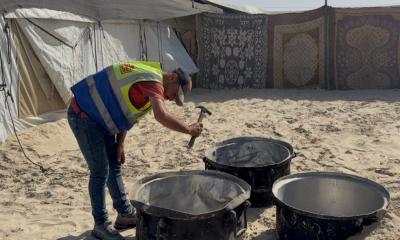
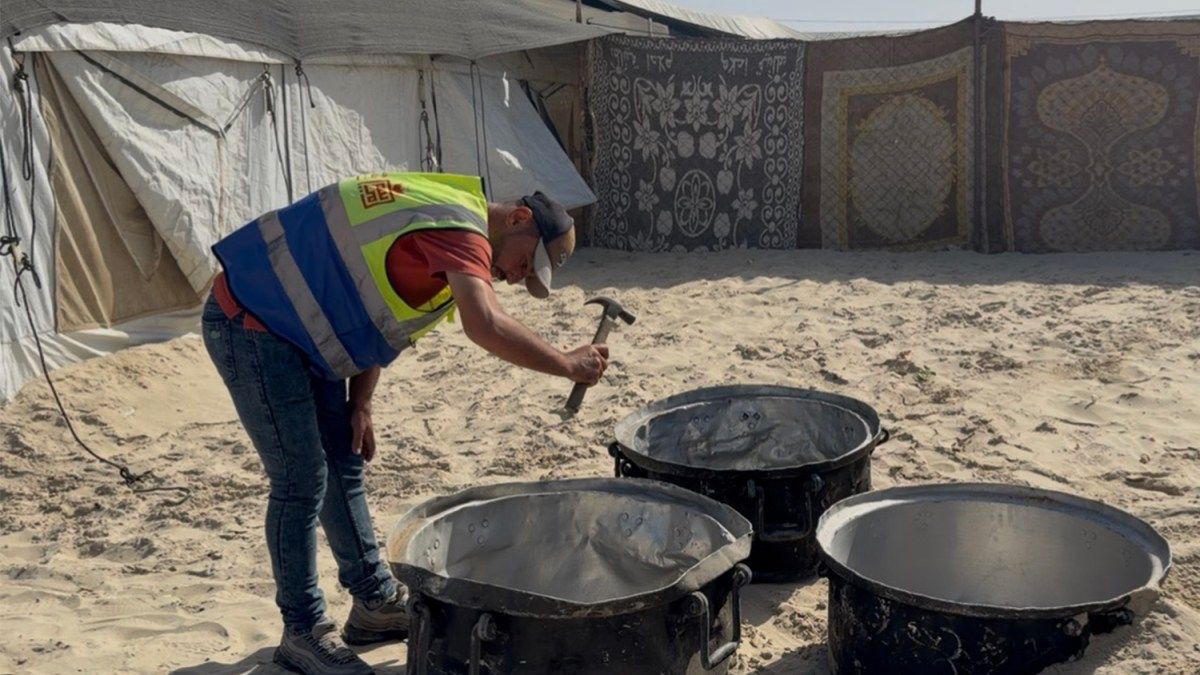
To counter the advancing water, some residents have begun stacking damaged cooking pots filled with earth to create defensive barriers. The Mayasem Association, working alongside World Central Kitchen, adopted this method to protect tents along the coast. Khalil Abu Lahia, the emergency response coordinator for the association, explained that the initiative reuses metal pots that have holes or fire damage. Workers fill three donated pots with soil and stack them roughly 150 centimetres high to hold back waves.
The project began by protecting the association’s educational safe space before expanding to help displaced families. Local aid groups stress that this makeshift measure cannot replace proper housing. Gaza’s Winter Emergency Committee warned of a worsening humanitarian catastrophe due to severe shortages of tents and caravans. Israeli authorities continue to block the entry of these items, alongside critical construction materials and fuel.
Israeli military operations have destroyed about 70 percent of essential municipal equipment and 90 percent of civil defence rescue gear, according to the committee. The severe fuel shortage threatens to halt remaining machinery and generators, severely hampering flood response and rescue operations.
Roughly 200,000 dilapidated tents currently shelter hundreds of thousands of displaced people across the strip. Around 7,800 of those shelters sit in hazardous locations, including beaches, dry riverbeds and rainwater collection ponds. An estimated 2,000 cracked buildings are also at immediate risk of collapse, endangering the families sheltering inside them.