Benjamin Netanyahu’s political opponents used the Democratic sweep of the United States Congress on Wednesday to argue that he had ruined decades of bipartisan American backing for Israel. The rivals intensified efforts to form a government without him following an inconclusive parliamentary election a week earlier.
Democrats secured majorities in both the Senate and the House in Tuesday’s midterm elections. The vote served as a rejection of President Donald Trump and reflected deep frustration over the unpopular US-Israeli military campaign against Iran. The election outcome arrived just as Israeli President Isaac Herzog prepared to begin consultations on Wednesday and Thursday with party representatives to decide who will attempt to form the next government.
Netanyahu stayed in office as caretaker after his right-wing coalition lost its parliamentary majority. However, his main opponent, Gadi Eisenkot, also failed to secure a clear path to unseating him. For decades, the United States has served as Israel’s closest ally under administrations from both political parties, delivering billions of dollars annually in military aid since the 1970s. While previous leaders courted both Democrats and Republicans, Netanyahu openly supported Republicans.
Backing for Israel among Democrats and certain Republicans eroded after Israel launched its military assault on Gaza following the Hamas attack in 2023. Support declined this year when Trump and Netanyahu launched a joint attack on Iran. Several Democratic candidates campaigned heavily on criticizing American military aid to Israel. On Tuesday, Trump pledged to halt $4 billion in annual funding to Israel to strip Democrats of a talking point.
Eisenkot stated on Wednesday that an Israel led by him would repair relations with Washington. He wrote on X that his government would renew and deepen the partnership, strengthen bipartisan foundations, and work to advance the Middle East. Yair Golan, leader of the centre-left opposition Democrats party, stated on social media that the US election results showed how toxic Netanyahu had become among both Democrats and Republicans.
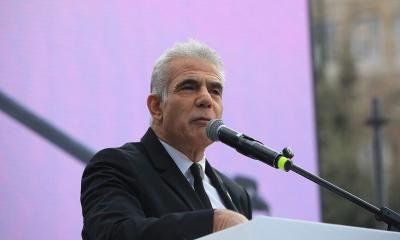
Centrist opposition leader Yair Lapid argued that the election results proved Israel could not afford to keep Netanyahu in power. Lapid wrote on social media that Netanyahu endangered national security, jeopardised democracy, and would ruin the country’s global standing. Netanyahu did not comment on the US election outcome, and his office did not respond to requests for comment.
Forming a government could take weeks or months as Herzog assigns one of the two main leaders the task of building a coalition. If the first choice fails, the other candidate receives an opportunity, and a new election will be called if both fail. Udi Sommer, a political science professor at Tel Aviv University, stated that the incoming Democratic-controlled US Congress would prove to be the most adversarial toward Israel in history.
Although foreign policy authority rests primarily with the president, Sommer noted that Democrats retain the ability to exert pressure through congressional oversight, hearings, and budgetary actions. Sommer described the Democratic victory and Republican losses as a defining moment for the future of US-Israeli relations.