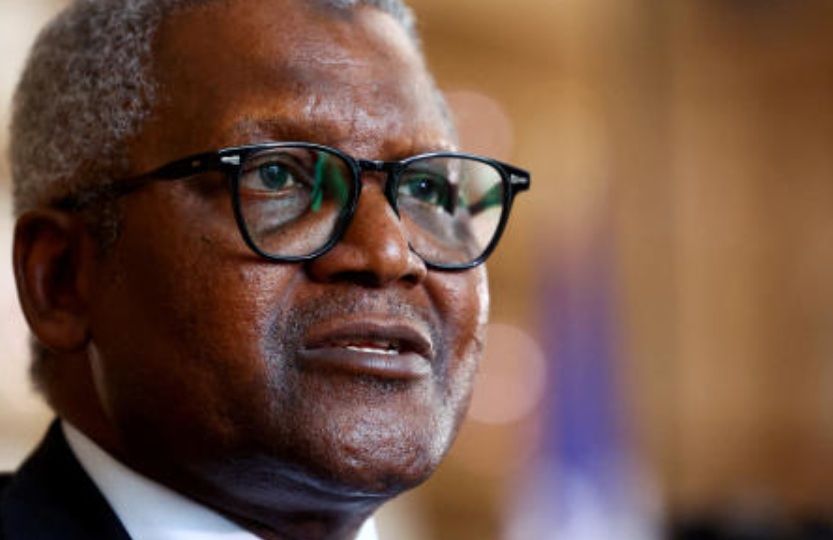
Nigerian billionaire Aliko Dangote launched a $2.5 billion fuel storage and regional pipeline project in Namibia on Wednesday. The venture in Walvis Bay could reshape fuel supplies across Southern Africa.
The initiative is part of a series of energy ventures championed by Africa’s richest man. He is expanding his business empire on a continent heavily reliant on imported fuels and affected by the Iran war.
Dangote operates Africa’s biggest refinery in Nigeria. That 700,000 barrel-per-day plant is currently being expanded. He also plans to build another 700,000 barrel-per-day refinery in Kenya on the opposite side of the continent.
Namibian President Netumbo Nandi-Ndaitwah attended the launch ceremony. Dangote said the pipeline project would strengthen the energy independence of six African countries and help establish Walvis Bay as a fuel logistics hub.
For Namibia, the venture is expected to moderate logistical vulnerabilities, high shipping costs and severe energy insecurity while promoting infrastructure warehousing, Dangote told the ceremony.
The new tank farm will feature a storage capacity of approximately 600 million litres, which equals roughly 4 million barrels. This will include 360 million litres of diesel, with the remainder allocated for petrol.
Dangote told reporters the project would be completed within 18 to 20 months. The new facility will possess eight times the capacity of Namibia’s existing National Oil Storage Facility, a 75 million-litre plant operated by the national oil company Namcor.
The terminal also includes scope for a 1,700-kilometre pipeline. This network would connect the hinterland countries of Botswana, Zimbabwe, Zambia and potentially the Democratic Republic of Congo.
Gerrit van Rooyen, a senior economist at Oxford Economics Africa, said the project formed part of a broader strategy. Dangote aims to develop African fuel distribution networks for his refined fuel exports.
This initiative will help the company diversify its market, van Rooyen added. The shift moves focus away from a reliance on European and East Asian markets, where the green energy transition is expected to moderate demand for refined fuel over the long term.