Bangladesh’s garment wage board agreed on Wednesday to raise minimum pay in the key export sector following five days of protests and clashes.
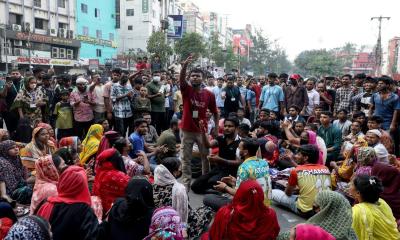
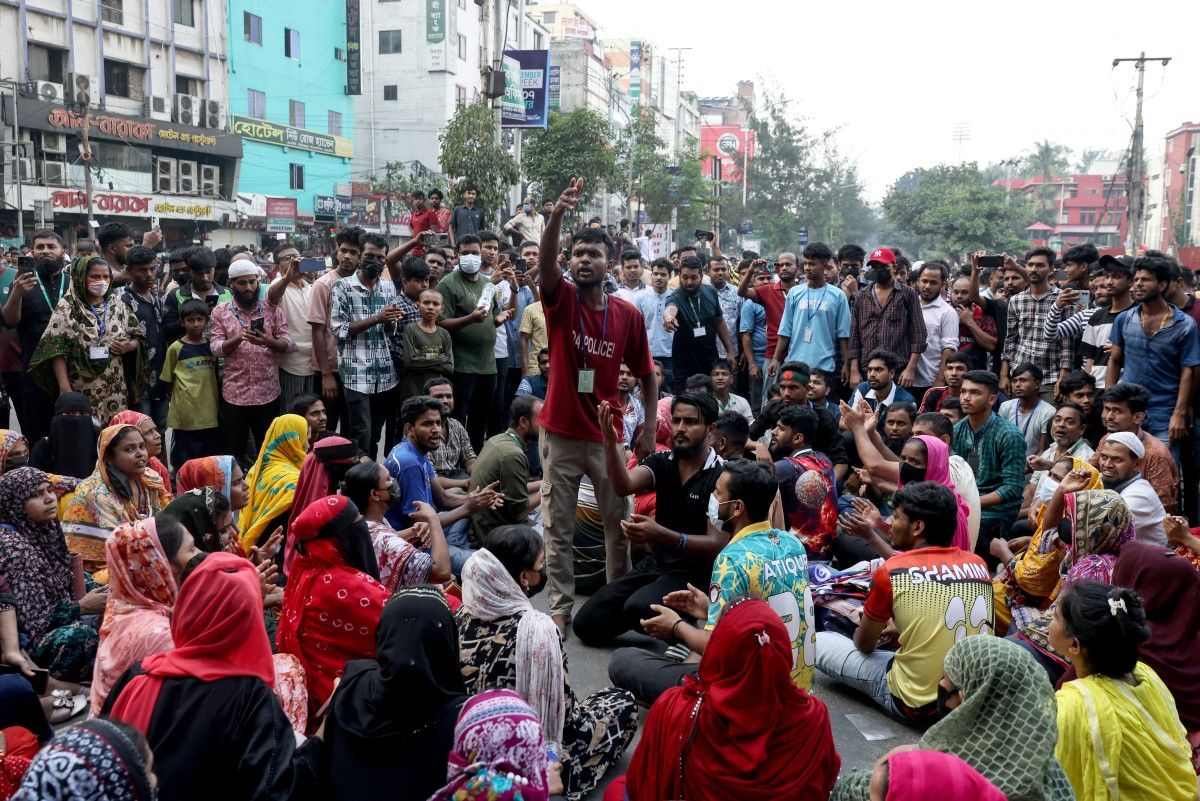
Tens of thousands of workers marched through industrial areas on Wednesday morning to demand higher pay. Some protesters threw bricks, torched police vehicles and erected barricades, while police fired tear gas to disperse the crowds.
Protests eased in the afternoon after the wage board announced an agreement. However, there was no immediate indication that workers would return to factories and restart production.
Many workers remained unsure what the announcement actually meant. Union leader Kamrul Hasan of the Ekota Garments Sramik Federation said most workers did not know how the wage board worked and were asking on social media whether their pay had increased.
Mahmudul Hasan, president of the Bangladesh Garment Manufacturers and Exporters Association, urged workers to go back to work. The unrest should subside, he told reporters, as progress is evident now. He added that factory owners did not want facilities to remain closed, but had no choice because of the unrest.
The South Asian nation of 170 million people stands as the world’s second-biggest garment exporter behind China, producing clothes for prominent global brands. The industry generates about four-fifths of the country’s export earnings, worth up to $38 billion. The United States serves as its biggest individual market, while the European Union is its largest trading bloc, supplying companies ranging from Fruit of the Loom to Levi Strauss and VF Corp.
The current dispute reflects longstanding tensions in an industry employing more than four million people. The sector has faced persistent complaints over pay, working conditions and labour rights. Workers point to eight percent inflation and the rising cost of food, housing, transport and healthcare as factors eroding their purchasing power. They have demanded a minimum monthly wage of 30,000 taka, equivalent to 240 dollars, which represents a 140 percent increase on the current 12,500 taka.
The government set up the negotiation board on Sunday, comprising representatives of employers and workers. The board did not specify the size of the wage increase on Wednesday.
Babul Akter, the workers’ representative on the board, said workers had been demanding a wage increase by December to receive revised salaries in January. The representative of the factory owners on the wage board agreed to this point, according to Akter.
ABM Shamsuddin, the BGMEA representative on the wage board, confirmed that the work would be completed by December so that workers could receive increased salaries by January.
Unrest occurred in major industrial centres including Gazipur, Mirpur, Narayanganj and Savar. In Savar, angry workers torched police vehicles and injured a police officer before the deal was announced, according to Dhaka police superintendent Shamima Parvin. Around 30,000 to 40,000 workers came from both sides and attacked the police, Parvin said, adding that the officer-in-charge of Savar police station was seriously injured during the clashes.
Syed Sultan Uddin Ahmed, executive director of the Bangladesh Institute of Labour Studies, said the government should take immediate steps to inform workers about the developments. He suggested forming a tripartite arrangement involving government, factory owners and workers to explain the wage board process, arguing that the unrest should be managed through communication rather than coercion.