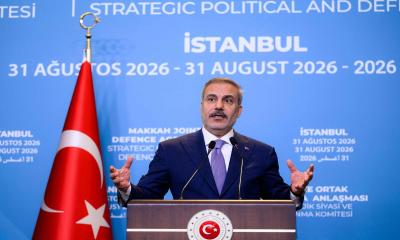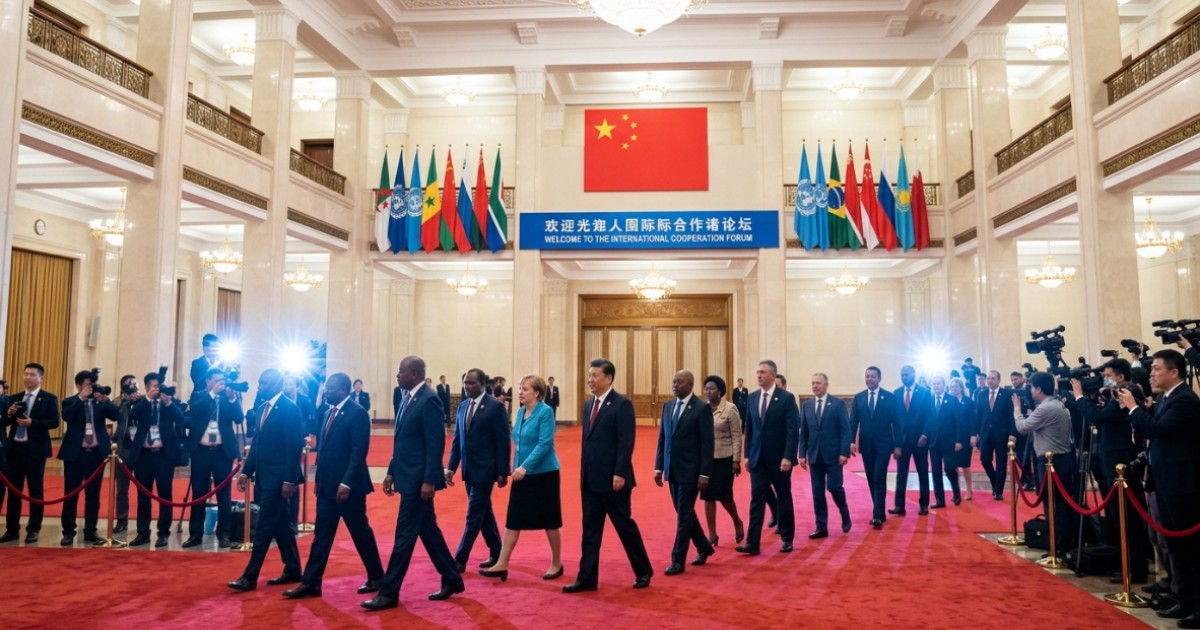
A steady stream of high-ranking international dignitaries visiting Beijing throughout 2026 highlights the expanding scope of China diplomacy and its formidable economic clout. British Foreign Secretary Yvette Cooper’s recent three-day official visit marks the latest high-profile addition to this diplomatic calendar. During her stay, Cooper is scheduled to engage in bilateral talks with Chinese Foreign Minister Wang Yi and Vice President Han Zheng in Beijing before proceeding to the technological hub of Shenzhen. International tracking indicators reveal that Cooper is the 26th senior foreign official or state leader to travel to China this year, showcasing Beijing`s position as a core node of contemporary global affairs.Beijing has effectively established itself as the central arena for international statecraft.
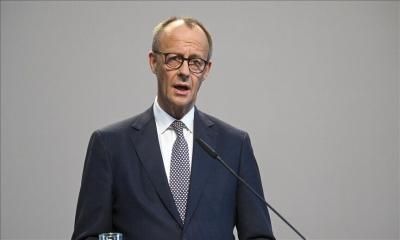
The extensive list of visitors includes presidents, prime ministers, chancellors, and crown princes representing twenty-three diverse nations. Regionally, Europe led the influx with ten representatives, followed by eight from Asia, and two each from the Middle East, Africa, North America, and Latin America. Among the most prominent arrivals were Canadian Prime Minister Mark Carney, British Prime Minister Keir Starmer, German Chancellor Friedrich Merz, and Spanish Prime Minister Pedro Sanchez. Notably, US President Donald Trump arrived on May 14 to discuss bilateral ties and regional security, followed closely by Russian President Vladimir Putin on May 20. Pakistani Prime Minister Shehbaz Sharif also held extensive high-level talks with President Xi Jinping at the Great Hall of the People on May 25, underscoring deeply entrenched strategic partnerships.
This continuous influx is particularly remarkable because Chinese President Xi Jinping has chosen to host foreign dignitaries domestically rather than undertaking extensive overseas travel. Most visiting delegations are actively seeking expanded market access, fresh capital investments, and enhanced cooperation across the manufacturing, green technology, energy, and infrastructure sectors. Long-term allies like Pakistan and Russia have dispatched multiple senior delegations this year to fortify geopolitical realignments. Furthermore, the strong presence of European nations demonstrates that Western governments remain eager to engage Beijing directly, despite ongoing systemic friction regarding trade imbalances and security frameworks. For these nations, China remains an indispensable economic partner and a highly influential geopolitical heavyweight.
The foundational driver of this diplomatic magnetism is China’s historic trade performance. Data from China’s General Administration of Customs indicates that the country’s total foreign goods trade reached a record forty-five trillion yuan, equivalent to six and a half trillion dollars, in 2025. This achievement secures China`s status as the world’s largest trading nation in goods for the ninth consecutive year, bolstered by a record-breaking one trillion dollar trade surplus recorded late last year. Despite prolonged tariff disputes, the United States remains China`s largest single trading partner, with bilateral goods trade valued at over four hundred and fourteen billion dollars. Rapid supply chain integration with Vietnam, Japan, South Korea, and India further consolidates Beijing’s overarching position as the primary engine of global manufacturing and commerce.