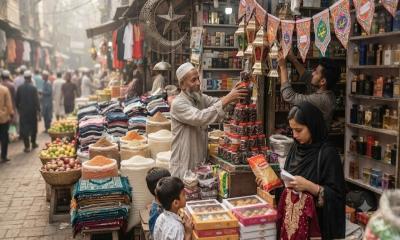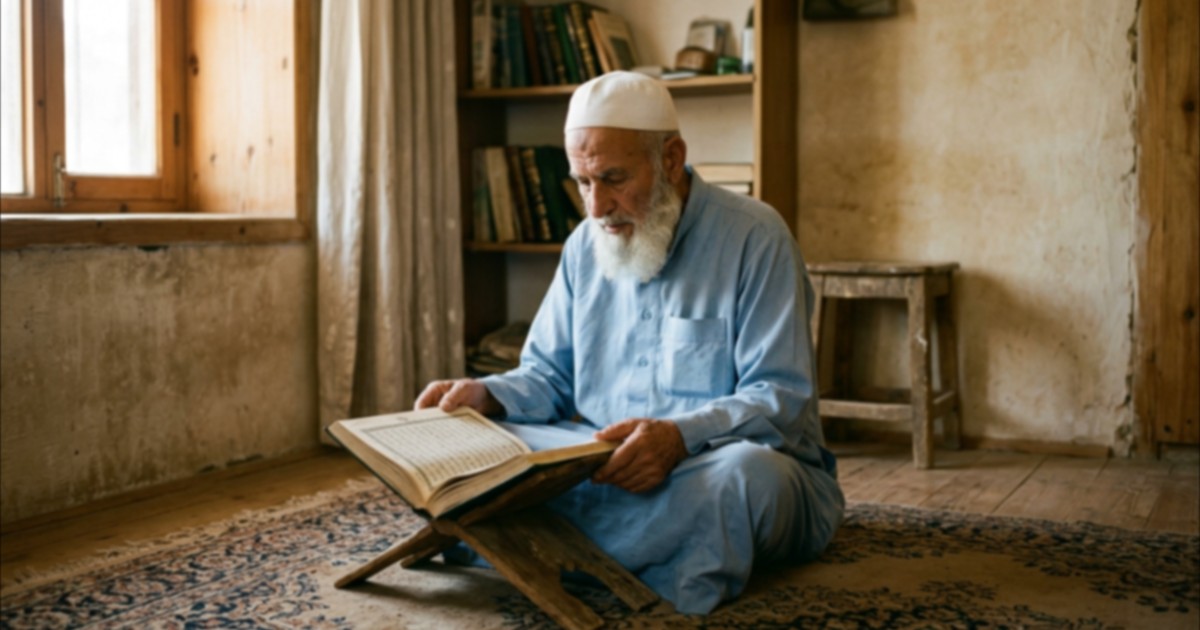
External appearance, wealth, and social status can never serve as the true criterion of dignity in Islam, prominent Islamic scholars stated during a special review symposium in Dhaka on Sunday, Ummah Kantho Desk confirmed. In contemporary modern society, there is a pervasive and harmful social tendency to evaluate individuals based on their material affluence, expensive apparel, or professional positions. Whether attending public ceremonies, receiving civil services, or engaging in commercial shopping, wealthy individuals are routinely granted unfair priority over the less fortunate. Islam strongly rejects this superficial standard of evaluation, dismantling all artificial hierarchies to establish a timeless framework for human worth based entirely on internal righteousness.
The divine revelation explicitly outlines the foundational purpose of human diversity and the genuine measure of respect in the eyes of the Creator. In the thirteenth verse of Surah Al-Hujurat, the Almighty declares that humanity was created from a single male and female and dispersed into various nations and tribes solely for mutual recognition (Surah Al-Hujurat, 49:13). The Quranic text clarifies that the most honorable individual in the sight of God is the one who possesses the greatest amount of piety or taqwa. This divine declaration definitively establishes that spiritual consciousness and moral integrity form the absolute baseline of human value, completely rendering material possessions or physical beauty irrelevant.
The Prophet Muhammad, peace be upon him, reinforced this egalitarian principle during his historic farewell pilgrimage, delivering a severe blow to all forms of systemic racism and classism. According to an authentic tradition preserved in Musnad Ahmad, the Prophet addressed the gathered masses by reminding them that their Lord is one and their ancestral father is one. He explicitly stated that an Arab possesses no inherent superiority over a non-Arab, nor does a non-Arab hold any virtue over an Arab. Furthermore, the prophetic address emphasized that a black-skinned person is not superior to a white-skinned person, nor is a white-skinned person superior to a black-skinned person, except through the structural metric of piety.
Despite these clear theological parameters, modern institutional environments frequently afford special reverence to individuals adorned in luxury brands or arriving in expensive vehicles. Conversely, an honest, God-fearing individual who chooses to dress in simple, unassuming clothing is often marginalized or entirely ignored within the social hierarchy. Paradoxically, this discrimination manifests in reverse when individuals are depreciated or labeled as backward simply for adhering to traditional Islamic dress codes. A practicing Muslim who maintains a beard or a Muslim woman who observes the structural parameters of the veil is occasionally stereotyped as uneducated or unqualified, even though they might be highly accomplished professionals making significant contributions to society.
Evaluating human beings through the lens of external styling is not only a profound psychological error but treating individuals with contempt due to their religious adherence is a severe moral transgression that threatens a believer`s faith. In the eleventh verse of Surah Al-Hujurat, the Almighty commands the believing community never to ridicule or mock one another, as the ridiculed party may very well be superior in character to the mockers (Surah Al-Hujurat, 49:11). The same structural prohibition applies to women mocking other women, alongside a strict warning against defamation and the implementation of offensive nicknames. The Quran reminds humanity that someone disregarded due to their modest attire or low economic status might occupy an exalted rank before God.
When a prominent intellectual or any individual is deliberately marginalized or subtly humiliated simply for executing Islamic rituals and wearing prophetic attire, the offense transcends personal insult to target the faith itself. The divine text addresses this malicious behavior in Surah At-Tawbah, issuing an unyielding warning to those who treat religious principles with levity or sarcasm (Surah At-Tawbah, 9:65-66). When historical hypocrites attempted to excuse their mockery as harmless banter, the Prophet was instructed to ask them if they were ridiculing God, His revelations, and His Messenger. The revelation concluded that no excuses would be accepted, declaring that their mockery of divine symbols constituted an absolute regression into disbelief after they had professed faith.
What remains unclear is how effectively modern Muslim communities can resist the continuous onslaught of hyper-capitalistic and materialistic media narratives to preserve these internal spiritual values. The contemporary corporate infrastructure and digital social media landscapes consistently condition individuals to prioritize external validation, superficial aesthetics, and conspicuous consumption over substantive moral character. Historically, the elite leaders of the Quraish tribe in Mecca exhibited a similar arrogance when they demanded that the Prophet dismiss his economically disadvantaged companions before they would agree to attend his assemblies. The Almighty immediately intervened to reject their elitist demands, establishing that economic disparity must never dictate the structure of Islamic brotherhood.
To permanently protect the rights of the impoverished believers, the Creator revealed the fifty-second verse of Surah Al-An`am, instructing the Prophet never to dismiss those who invoke their Lord morning and evening seeking His divine pleasure (Surah Al-An`am, 6:52). The text clarified that the spiritual accountability of these simple believers did not rest upon the Prophet, nor was he accountable for them, and expelling them would categorize him among the unjust. Therefore, whether providing institutional services, organizing familial gatherings, or evaluating professional competence, society must prioritize moral integrity, trustworthiness, and taqwa over transient wealth. Material affluence, political power, and external beauty are entirely temporary attributes, whereas righteousness remains the only permanent criterion of dignity in this life and the hereafter.