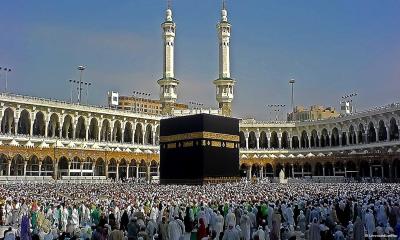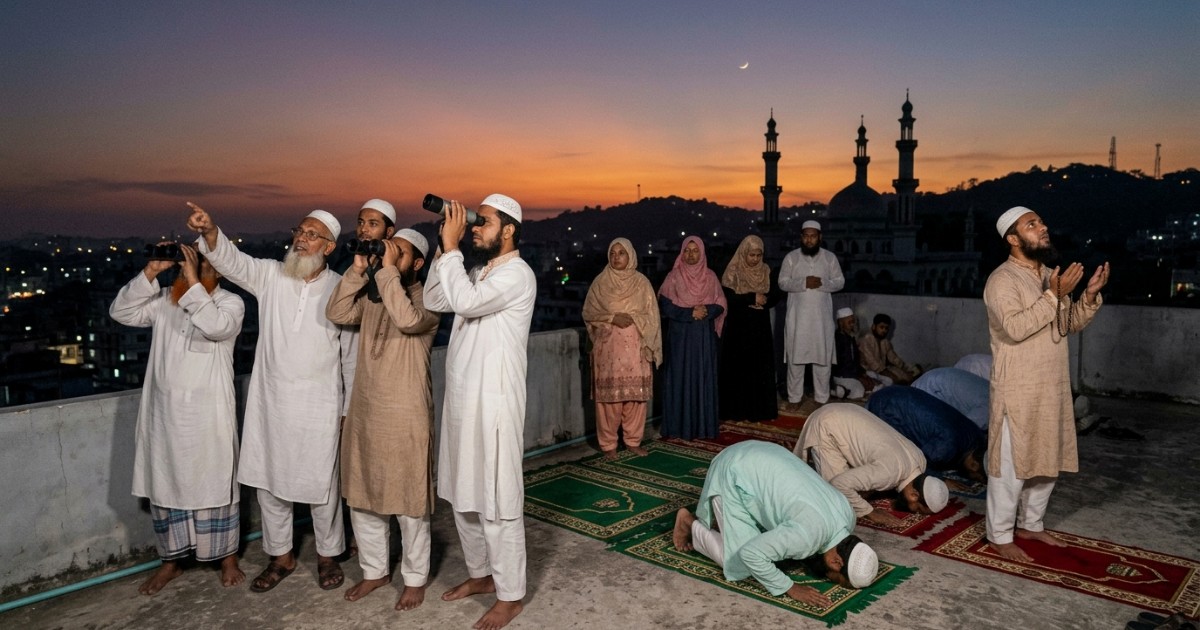
Almighty Allah created the moon not just as a celestial body, but as a primary means for humanity to calculate time and determine the schedules of various acts of worship. In Islamic jurisprudence, sighting the crescent moon is not merely a natural phenomenon; it is a fundamental religious requirement that regulates spiritual obligations. The Prophet Muhammad (peace be upon him) placed immense emphasis on tracking the lunar cycle, teaching his companions to be vigilant, while also recognizing the practical realities of geographical distances and horizon variations.
The Islamic calendar is entirely lunar, meaning that the dates for major acts of worship—such as the Ramadan fasts, Eid celebrations, the season of Hajj, and the sacred months like Muharram—are directly tied to the appearance of the new crescent moon. Sighting the moon provides the definitive start and end to these holy periods. According to a narration by Ibn Umar (may Allah be pleased with him), the Messenger of Allah (pbuh) stated:
A similar injunction narrated by Abu Hurairah reinforces that the global Muslim Ummah must rely on visual confirmation or completion of the standard To prevent ambiguity or errors in the timings of worship, Islam demands high precision and care when counting the days of each lunar month. The Prophet (pbuh) was exceptionally careful regarding the calculation of the month of Sha`ban, as it serves as the immediate gateway to Ramadan. Aisha (may Allah be pleased with her) noted that the Prophet used to keep track of Sha`ban more rigorously than any other month.
If the crescent remained hidden due to overcast skies, he would seamlessly complete thirty days of Sha`ban before commencing the mandatory fasts of Ramadan.Because the Earth is a sphere, sunrise, sunset, and the visibility of the crescent moon vary significantly across different longitudes and latitudes. Islamic Sharia fully acknowledges this astronomical reality, a concept known as Ikhtilaf al-Matali (the difference in horizons). Consequently, the sighting of the moon in one distant region does not automatically bind another faraway territory.
A famous incident narrated by Kuraib highlights this principle. While visiting Syria, he witnessed the Ramadan crescent on a Friday night, and the local community began fasting on Saturday. Upon his return to Medina, Ibn Abbas asked him when they had sighted the moon. When Kuraib replied "Friday night," Ibn Abbas noted, "But we saw it on Saturday night, so we will continue fasting until we complete thirty days or see the crescent." When asked if the sighting in Syria by Muawiyah was insufficient, Ibn Abbas firmly replied, "No, this is how the Messenger of Allah (pbuh) commanded us."
While sighting the moon is a collective obligation (Fard Kifayah), Sharia does not require every individual citizen or town to personally spot the crescent with their own eyes. If a trustworthy, righteous, and upright (Adel) person or group testifies to seeing the moon, that news becomes legally binding for the immediate region.This is illustrated in a Hadith where a group of Muslims were uncertain about breaking their fast on the final day of Ramadan. Two Bedouins arrived and swore an oath before the Prophet (pbuh) that they had sighted the crescent of Shawwal the previous evening. Accepting their reliable testimony, the Prophet immediately ordered the public to break their fast and proceed to the Eid prayer ground the following morning.
In conclusion, the Islamic framework for moon sighting showcases a perfect blend of discipline, ease, and societal unity. By balancing geographical realities with spiritual principles, Sharia establishes a practical system that keeps the global Ummah connected to both cosmic order and divine decree.