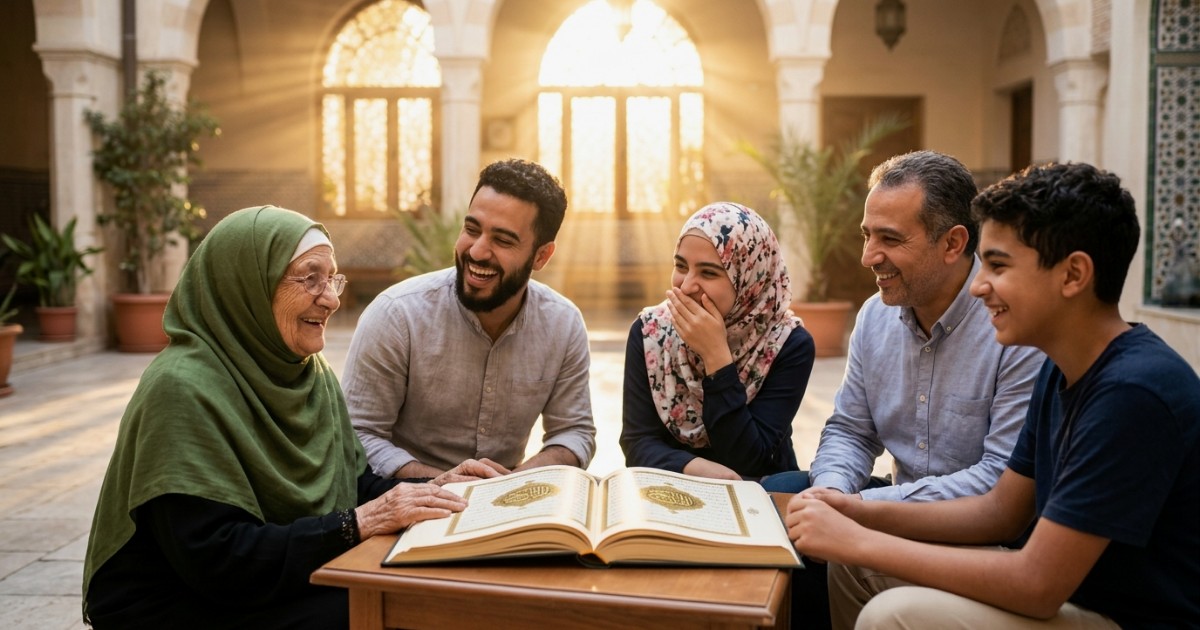
Human life is a delicate tapestry woven with threads of laughter and tears. A person enters this temporary world crying, while the surrounding world rejoices and smiles at their arrival. Islamic theology teaches that if a believer spends their earthly life walking the path of righteousness, fearing Allah, and adhering to the divine code, their departure from this world will be marked by a peaceful, radiant smile. In the Holy Quran, the natural phenomenon of human laughter is analyzed with deep spiritual and psychological nuance, offering believers a guide on how to balance joy with mindfulness.
Laughter and Tears are Granted by Allah
In the Islamic worldview, the emotional capacity for both joy and sorrow is carefully measured and granted by the Creator. Allah is the one who bestows the gift of laughter during moments of happiness and provides the solace of tears during times of repentance and grief. Therefore, a believer should constantly supplicate to Allah for a life blessed with wholesome joy and eyes capable of shedding tears out of divine fear. As the Holy Quran beautifully states:
The root word for laughter, Dhik, appears in ten different verses across the Holy Quran. Classical Quranic commentators have categorized these descriptions into five distinct types of human laughter:
Prohibited Laughter and the Prophetic Sunnah
While Islam does not suppress the natural urge to feel joy or smile, it strictly forbids any form of laughter that leads to spiritual negligence or harms the dignity of another human being. Mockery, sarcasm, and loud, continuous laughing break the spiritual vitality of the heart and distract a person from their ultimate purpose. Allah warns against malicious humor in Surah Al-Mu`minun (Verse 110), pointing out those who were so busy ridiculing the righteous that it caused them to forget the remembrance of Allah.
The idealized method of expressing humor in Islam is modeled after the Sunnah (tradition) of the prophets, which is the gentle, silent smile (Tabassum). Islamic scholars note that laughter can be classified into three stages: a soft smile, a cheerful chuckle, and loud, boisterous laughter. Loud bursts of laughter are discouraged for a person seeking wisdom, as they disrupt inner tranquility. Following the prophetic pattern of a warm, welcoming smile is considered an act of charity in Islam, bringing peace to both the individual and society.