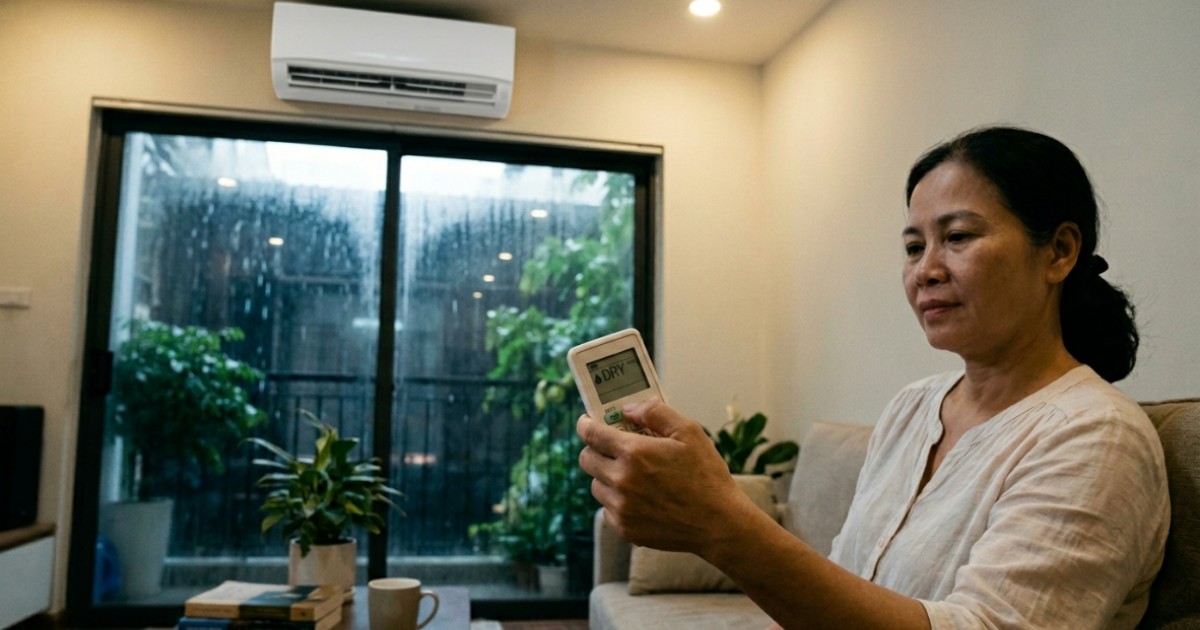
Lifestyle experts issued a comprehensive guide on Saturday regarding the most effective appliance settings for humid weather, confirming that implementing the AC dry mode in monsoon provides optimal comfort, according to Dinajpur TV. During the rainy season, while the atmospheric temperature often drops slightly, the relative humidity in the air escalates dramatically. This atmospheric shift creates a sticky, uncomfortable indoor environment that induces constant sweating despite the cooling effects of an air conditioner. Standard cooling setups often fail to alleviate this clammy sensation because they focus primarily on temperature reduction rather than moisture control. Consequently, home residents struggle to maintain a fresh indoor climate during heavy downpours.
To counteract these seasonal challenges, electrical engineers and home comfort specialists recommend utilizing the specialized dehumidification feature on modern cooling units. The AC dry mode in monsoon operates differently from the conventional cooling cycle by acting primarily as a dehumidifier. When this function is activated via the remote control, the compressor runs at a lower capacity while the internal fan operates at a regulated speed to extract excess water vapor from the indoor air. This targeted process lowers the humidity levels without making the room excessively cold, resulting in a naturally refreshing atmosphere. Most modern appliance interfaces represent this specific setting with a distinct water droplet icon on the digital display.
Beyond establishing an ideal living environment, utilizing this specific function offers substantial financial benefits by optimizing household energy consumption. In standard cooling configurations, the high-powered compressor must run continuously to maintain a low target temperature, which demands a massive amount of electrical power. In contrast, the dehumidifying setup allows the compressor to operate intermittently, relying more on the internal fans to circulate the dried air throughout the living space. This operational efficiency directly translates into significantly lower monthly utility bills while simultaneously reducing the mechanical wear and tear on the appliance. Homeowners can thus achieve maximum comfort during the rainy months while practicing sustainable energy conservation.
What remains unclear is how many consumers are genuinely aware of these technical functionalities or how frequently they implement them to improve their indoor living standards. Many users routinely lower the temperature settings out of habit, which unnecessarily increases power bills without addressing the core issue of environmental humidity. Technical specialists advise that keeping the internal air filters clean during high-moisture periods is equally vital to ensure smooth air circulation and prevent the growth of household mold. Maintaining a healthy indoor environment requires a proper understanding of modern household technologies. Adapting appliance usage to seasonal climate variations remains an essential practice for maintaining long-term domestic wellness and comfort.