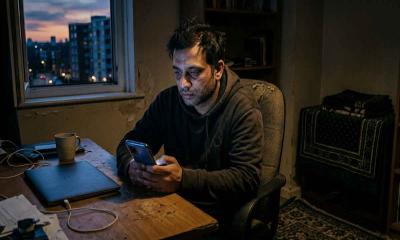
It is a common human reflex to blame external circumstances or destiny when faced with personal or professional setbacks. People often attribute their failures to a predetermined fate rather than examining their own decisions and actions. However, Islamic theology presents a highly practical balance between divine will and human agency. A recent broadcast report by the Bangladeshi media outlet News24 explored this dynamic, highlighting that the power to change one`s life trajectory fundamentally rests in human hands. The core message of the report challenges fatalism and encourages proactive self-improvement based on scriptural guidance.
At the heart of this philosophy is a direct declaration from the Quran. In Surah Ar-Ra`d, verse 11, it is explicitly stated that Allah does not change the condition of a people until they change what is within themselves. This verse establishes a universal psychological and social law. It implies that the Creator has endowed humanity with free will, intellect, and the capacity for action. Without utilizing these tools, expecting a miraculous shift in circumstances contradicts the natural order of the world. Classical scholars have analyzed this deeply. According to the renowned exegesis Tafsir al-Baghawi, when a community alters its behavior toward negativity or disobeys fundamental ethics, divine blessings are naturally withdrawn, emphasizing that human choices dictate the resulting environment.
Historical events provide concrete evidence of this principle in action. During the Battle of Uhud, a critical tactical error made by the Muslim forces resulted in a severe setback. When the archers abandoned their assigned positions on the hill, defying strategic orders, that single physical action changed the entire trajectory of the conflict. This historical precedent demonstrates that every practical step taken by individuals or groups carries specific consequences. Divine support is traditionally tied to the fulfillment of human responsibilities. Waiting for supernatural intervention while neglecting basic duties is entirely against the fundamental teachings of the faith.
This concept of responsibility extends beyond the individual and scales up to the societal level. A well-known narration from Sahih al-Bukhari illustrates this communal accountability. The Prophet Muhammad was once asked whether a society could face destruction even if righteous people lived within it. He affirmed that it could, specifically when corruption and evil actions become widespread. This indicates that if capable individuals remain passive and fail to address systemic issues, the entire community suffers the fallout. Passivity in the face of decline is, in itself, a negative action that alters a society`s destiny.
The practical applications of this mindset are highly visible in everyday life. Consider the reality of agricultural management. A farmer cannot expect a rich harvest of a sensitive crop, whether it is local fruits or commercial grain, without meticulously preparing the soil, applying fertilizers, and managing irrigation. Nature provides the rain, but the farmer must put in the labor to yield results. Similarly, an athlete preparing for a competitive cricket league or major sports tournament cannot rely on raw talent or luck alone. Rigorous physical training, strategic planning, and dietary discipline are mandatory. Preparation is the key that unlocks what people often mistake for pure luck.
The News24 report provided highly relatable examples of this dynamic. A student who consistently fails examinations will not see improvement by simply hoping for an easier test. Change only occurs when that student restructures their study habits, manages their time effectively, and seeks targeted guidance for difficult subjects. Likewise, a business owner facing repeated financial losses must analyze the market, adapt their commercial strategy, and learn from previous miscalculations. Resilience and the willingness to pivot are what ultimately turn a failing enterprise into a successful one. Continuous effort is the absolute prerequisite for any positive shift.
The Islamic concept of predestination, or Taqdir, was never intended to induce paralysis or apathy. Instead, it serves as a crucial psychological safety net. When a person exhausts all their resources and efforts but still falls short, believing in a divine plan prevents devastating despair. However, using destiny as an excuse before even attempting to succeed is a severe misunderstanding of the theology. The Islamic framework requires individuals to create the means and take practical steps, a concept famously described as tying one`s camel, before placing their ultimate trust in God for the final outcome.
Beyond individual success, this proactive mindset fosters a robust culture of continuous learning and emotional resilience. When people accept that their daily choices directly influence their long-term outcomes, they become significantly more intentional about their habits. They stop viewing themselves as victims of circumstance and start operating as architects of their own environment. Whether it involves improving family dynamics, advancing in a corporate career, or contributing to local community development, the core principle remains identical.
For modern professionals navigating complex challenges, this action-oriented approach is critical. The modern world is highly competitive and leaves little room for those waiting on fortune. Upgrading skills, maintaining mental clarity, and pursuing goals with unwavering focus are necessary steps. The intellect and physical capability granted to humans are the primary tools meant to shape their futures. Recognizing personal agency is the most powerful catalyst for growth. When individuals make a firm decision to move forward and put in the work, their circumstances gradually align with their efforts. The responsibility to initiate that change lies entirely within the individual.