The Saudi-led coalition supporting Yemen’s internationally recognised government stated on Saturday that it intercepted three ballistic missiles fired by Yemen’s Houthi rebels toward Riyadh. The interception followed a flurry of emergency alerts in the Saudi capital.
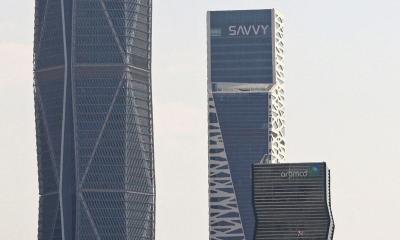
The attack early on Saturday morning arrived two days after a previous Houthi strike damaged the Public Investment Fund tower. That building serves as the headquarters of Saudi Arabia’s sovereign wealth fund and stands as Riyadh’s tallest skyscraper.
The incident marked the third consecutive day that Saudi Arabia issued and quickly lifted safety alerts for Riyadh. Saudi Arabia’s civil defence agency issued eight public emergency alerts during a 24-hour period starting at 7:30am Saudi time on Friday.
Hours after the missile interception, the coalition announced it destroyed another drone fired by the Houthis toward the kingdom’s south. The military alliance did not specify which province was targeted by the drone.
In Yemen, the coalition stated earlier on Friday that it executed a special operation against the Houthi-held Red Sea port of Hodeidah. The raids also struck military targets in the Yemeni capital, Sanaa.
Coalition spokesperson Turki al-Malki said the strikes hit operational capabilities at Hodeidah port that were used in smuggling operations and the transport of weapons and ballistic missiles. Yemen’s internationally recognised government defended the coalition strikes on Hodeidah port.
The internationally recognised government accused the Houthis of using port facilities to receive smuggled Iranian weapons and conduct military operations. In response, the Houthis threatened to attack Jeddah and other Saudi Red Sea ports.
The rebel group warned airlines that Saudi Arabia’s airspace was unsafe. They also issued threats against Riyadh’s financial centre and a power station in Al-Shuqaiq, located in the southwest of the kingdom.
The United Nations stated that it was following the military escalation with concern. The international body warned that continued fighting could threaten vital supply routes for humanitarian aid in Yemen.