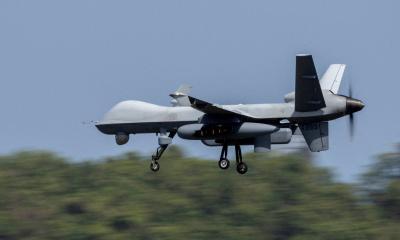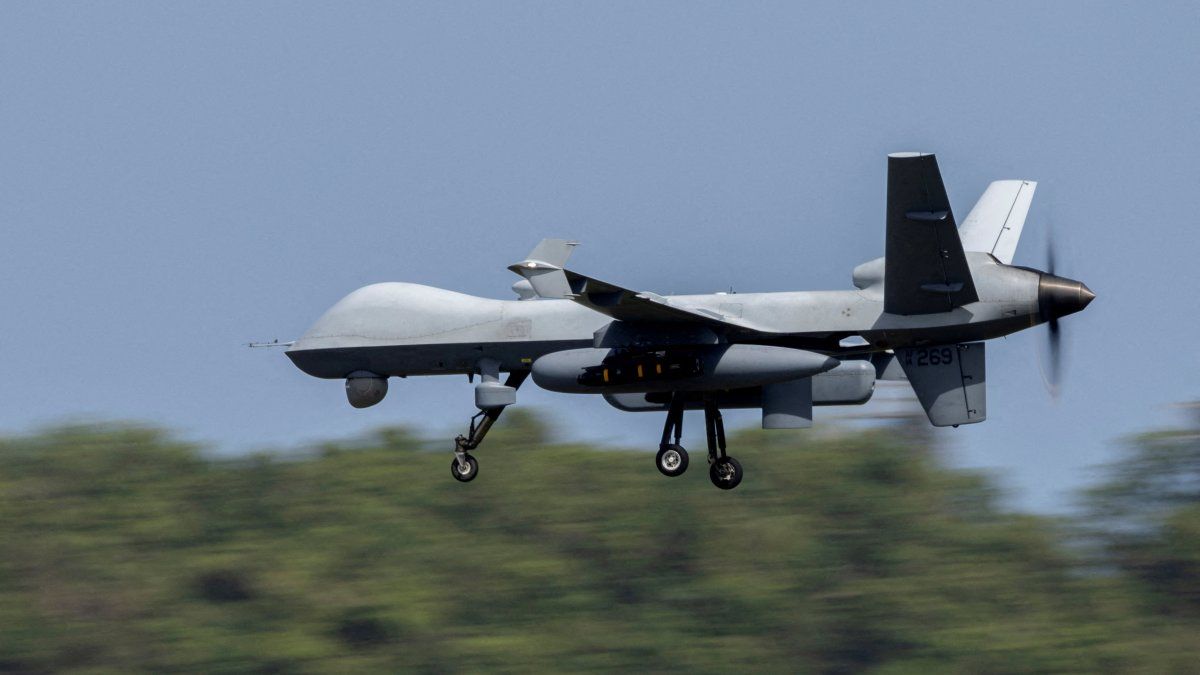
Iranian forces shot down a US military drone over the Strait of Hormuz on Saturday, according to announcements by the Islamic Revolutionary Guard Corps. State broadcaster IRIB reported that a new air defence system intercepted and destroyed the unmanned aerial vehicle.
The incident involved a US Air Force MQ-9 Reaper. Iranian authorities stated this marked the 58th drone of this type brought down by their forces during the conflict.
The shootdown follows direct exchanges of fire between the United States and Iran, occurring against a backdrop of increasing attacks on commercial vessels in the Strait of Hormuz. One-fifth of the global supply of oil and gas passed through the vital waterway during peacetime.
The war, launched jointly by the United States and Israel on February 28, has killed thousands of people. It has severely disrupted shipping lanes, driven up global energy prices, and spread conflict across the wider region.
Diplomatic efforts to halt the fighting have made little progress. The United States and Iran signed a memorandum of understanding in June, but disagreements over freedom and navigation in the Strait of Hormuz prevented its implementation, leading to the resumption of attacks in July.
Iranian Foreign Minister Abbas Araghchi outlined his country’s negotiating stance in a state media interview on Friday. He referred to a seven-day proposal delivered to Washington in September, stating that seven specific conditions must be met for the Strait of Hormuz to reopen.
The conditions include ending the war and lifting both sanctions and the naval blockade on southern Iranian ports. Araghchi stated that Iran was prepared to negotiate the implementation timeline, provided the American side took necessary confidence-building measures.
Araghchi also ruled out transferring Iran’s stockpile of 60 percent enriched uranium abroad. He said a fair solution could be reached and that mediator proposals were worth examining, describing the current no-war-no-peace situation as undesirable.
US President Donald Trump told reporters at a Friday White House news conference that Tehran wanted to make a deal, but not one acceptable to his administration. Trump stated that he wanted a real deal rather than past agreements, having previously remarked that a settlement to end the war was unnecessary.
US Vice President JD Vance spoke at the same press conference, declining to say whether he would have authorised the initial strikes on Iran. Vance noted that the attack decision belonged to the president and that his role was to support him.
Separately on Friday, the US Treasury imposed sanctions on four Iranians accused of acting as oil trustees. The Treasury stated these individuals collected money from illicit international oil sales to help Iran evade sanctions and the naval blockade.
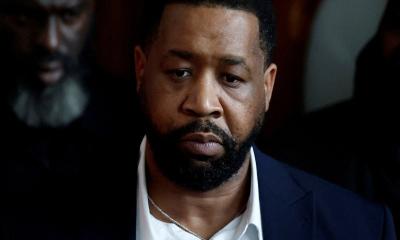
The sanctioned individuals include Mohammad Javad Bavand, a former IRGC intelligence officer, and Majid Taj, brother of Iranian Football Federation President Mehdi Taj. Also targeted were Mohammad Hossein Servati and Mojtaba Arabnejad, with the Treasury freezing any assets under US jurisdiction.