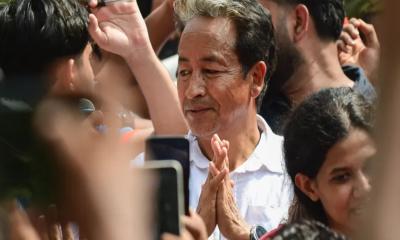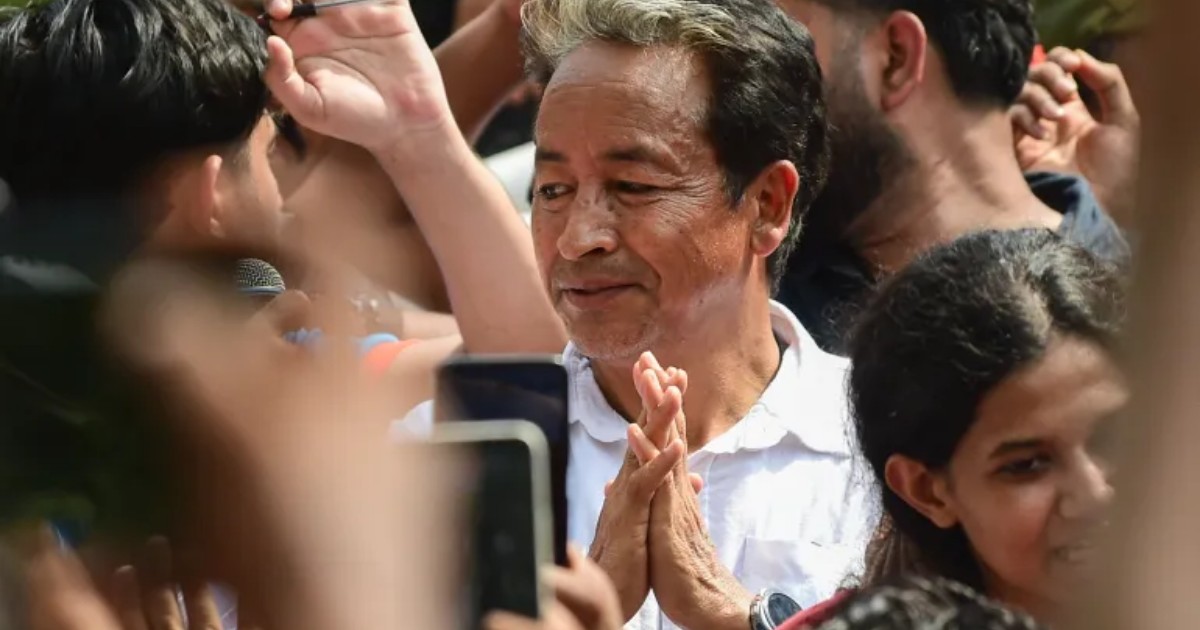
Indian police forcibly removed a prominent hunger-striking activist from a New Delhi protest site and transported him to a hospital on Saturday, according to Al Jazeera, AFP, and AP. The 59-year-old hunger-striking activist Sonam Wangchuk had been fasting for 20 days at Jantar Mantar to protest widespread corruption and mismanagement within the national examination system. His prolonged demonstration has rapidly become the focal point of a massive youth-led campaign demanding the immediate resignation of Indian Education Minister Dharmendra Pradhan.
A New Delhi police deputy commissioner confirmed in an official statement that Wangchuk was shifted to the hospital for essential medical care following orders from the High Court and expert advice from monitoring doctors. When law enforcement personnel arrived at the park to execute the judicial order, demonstrators attempted to obstruct the evacuation, resulting in a brief commotion at the scene. Authorities have urged the remaining protestors to peacefully vacate the public area as soon as possible to maintain public order.
Hours before his enforced hospitalization, the veteran activist stated on social media that smaller historic movements have successfully brought down many powerful governments in India, emphasizing that this specific struggle directly concerns the future of education. An engineer by professional training, Wangchuk is internationally recognized for pioneering innovative water conservation projects in the Himalayan region. The broader public outrage ignited after systemic leaks and administrative failures exposed severe vulnerabilities in the state-run testing mechanism.
The growing protest movement has adopted the ironic moniker of the Cockroach Janta Party, which emerged after a Supreme Court chief justice drew a controversial comparison between unemployed youths and cockroaches in May. Initially confined to satirical internet memes, the movement quickly expanded offline, drawing hundreds of students to Jantar Mantar since the fast began on June 28. The online branch of the campaign gained immense traction, gathering over 21 million Instagram followers within a matter of days.
The crisis escalated after approximately 2.2 million medical aspirants were forced to retake the national entrance exam under intense security last month because the original testing papers leaked in May. In an effort to curb further digital leaks, the federal government went as far as imposing a temporary ban on the popular messaging application Telegram. The immense psychological stress associated with the sudden cancellation and subsequent retesting reportedly contributed to more than a dozen student suicides across the nation.
What remains unclear is how the youth movement will respond to this forced removal and whether the development will disrupt the planned demonstrations scheduled to coincide with the opening of the parliamentary session. Alongside the resignation of the education minister, the collective is demanding a comprehensive structural overhaul of the examination board and direct financial compensation for the families of the deceased students. Following the police action, the organization founder Abhijeet Dipke declared the state intervention a grave error and announced an indefinite hunger strike of his own.
The activist`s wife, Gitanjali J Angmo, informed reporters at Safdarjung Hospital that her husband remains fully alert and determined to continue his hunger strike from his hospital bed. She explicitly insisted that medical staff must not administer any oral or intravenous treatments without the explicit consent of the family and his personal medical team. In anticipation of further unrest ahead of the upcoming legislative session on Monday, authorities have deployed additional paramilitary units and erected heavy security barricades around the hospital facility.