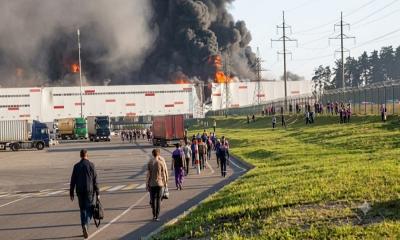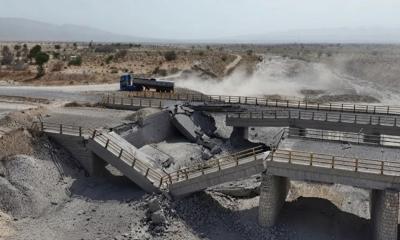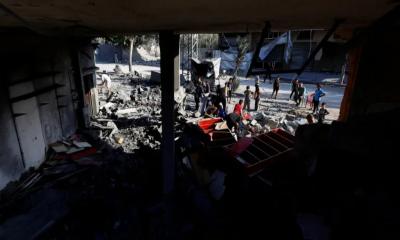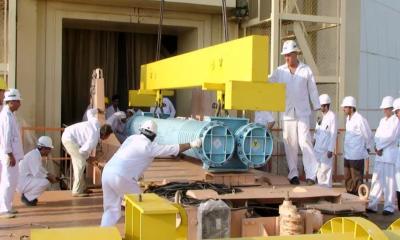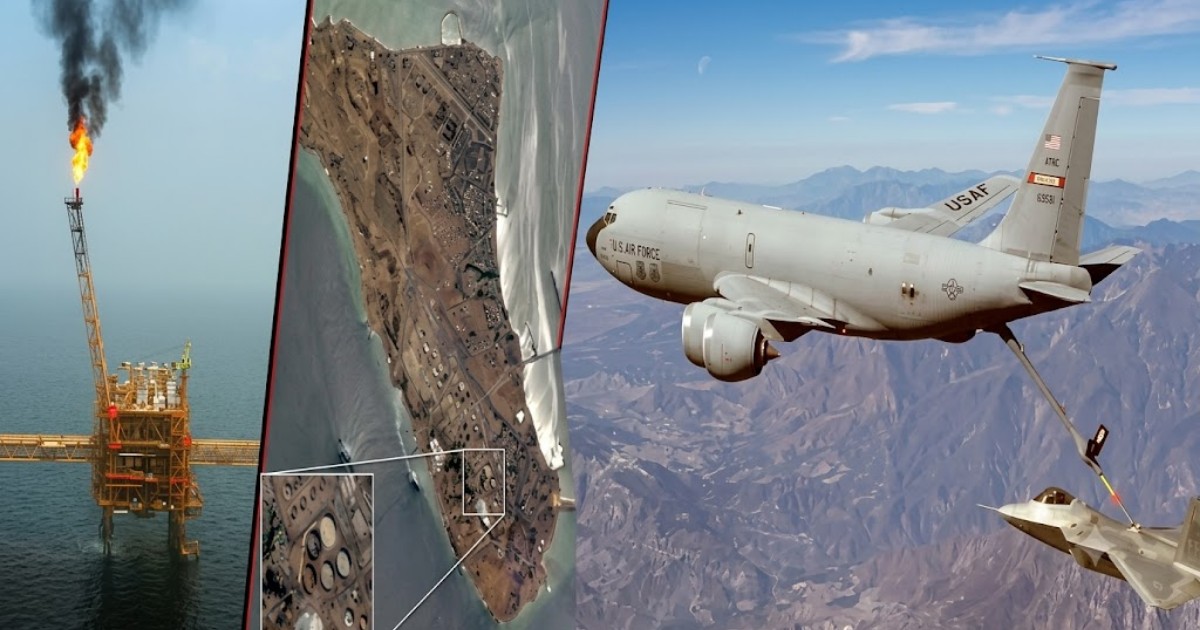
The United States military carried out a seventh consecutive night of intense airstrikes targeting both civilian and military infrastructure across Iran on Saturday, Al Jazeera reported. The severe US-Iran conflict escalation follows an official declaration made 10 days ago by US President Donald Trump, who announced that the international peace deal with Iran had officially ended. The latest wave of American bombardments struck the Bunji desalination facility located in Jask in southern Iran, completely destroying a critical seawater pumping station and a major power transformer. Hamzeh Pour, the chief executive of the Hormozgan Water and Wastewater Company, told the Tasnim news agency that the destruction has cut off the primary water supply for more than 20 local villages, leaving over 10,000 residents entirely without clean water.
In immediate retaliation for the American strikes, Iran`s Islamic Revolutionary Guard Corps launched a massive wave of combat drones and ballistic missiles targeting United States military installations and allied Gulf states. Following the incoming aerial threats, the government of Kuwait announced the immediate closure of its national airspace after two domestic power and water desalination plants were struck by Iranian ordnance. The Kuwaiti firefighting force confirmed that several emergency responders sustained serious injuries while attempting to extinguish the large blazes triggered by the missile impacts. Concurrently, air raid sirens sounded repeatedly across Bahrain as local defense authorities urged residents to immediately seek underground shelter, while neighboring Jordan reported that its air defense systems successfully intercepted 10 incoming Iranian ballistic missiles.
The naval and aerospace wings of the Islamic Revolutionary Guard Corps released a statement claiming responsibility for the strikes, asserting that their forces successfully targeted a US military fuel pier located at Kuwait’s al-Ahmadi port. The Iranian military also claimed to have struck a specialized American warplane assembly site at Sheikh Isa Air Base in Bahrain and an active US military base in Azraq, Jordan, where they claimed to have destroyed two American fighter jets. Conversely, the United States military Central Command, widely known as CENTCOM, presented a different assessment of the overnight operations, stating that its forces focused exclusively on disabling Iranian surveillance sites, military logistics infrastructure, underground weapons storage facilities, and maritime operational capabilities.
What remains unclear is the exact long-term impact these severe infrastructural losses will have on the broader stability of Middle Eastern energy markets and regional security agreements. International humanitarian organizations have raised serious concerns over the deliberate targeting of essential civilian infrastructure by both sides, noting that depriving civilian populations of water and electricity constitutes a clear violation of international law. The current confrontation represents the most severe geopolitical crisis in the region in recent years, with diplomatic channels remaining completely blocked as both Washington and Tehran refuse to de-escalate. As the military conflict enters this dangerous new phase, international observers warn that the ongoing escalation could easily expand into a broader regional war if immediate diplomatic interventions are not established by global powers.
The widespread disruption to essential services has created an immediate humanitarian challenge for local administrations in both Iran and the affected Gulf countries. The complete suspension of diplomatic dialogues between Washington and Tehran over the past two weeks has removed any immediate path toward a peaceful resolution, leaving military engagement as the primary driver of regional events. As the exchange of high-impact weaponry continues to endanger critical economic hubs, global energy analysts express growing anxiety over potential supply chain disruptions near the crucial Strait of Hormuz. Local residents throughout the conflict zones face escalating displacement and psychological trauma, yet neither leadership has indicated a willingness to halt the devastating cycle of kinetic strikes.