Satellite imagery has revealed new impact scars inside Iran`s strategic Bushehr nuclear power plant complex following a series of military airstrikes by the United States, Al Jazeera reported on Friday. A comparison of European Sentinel-2 satellite images captured on July 7 and July 12 shows newly formed damage inside the compound along with another apparent strike site within nearby support facilities. The open-source unit of the network compiled satellite data, field footage, and official statements from the US Central Command to map the locations of the strikes. Ehsan Jahanian, the deputy governor of Bushehr province, confirmed on July 9 that several areas surrounding the facility were hit, although he denied that the reactor itself sustained any direct damage. State media agency IRNA reported that the strikes also targeted a military site in Choghadak and a fishing port located in the southern part of the province.
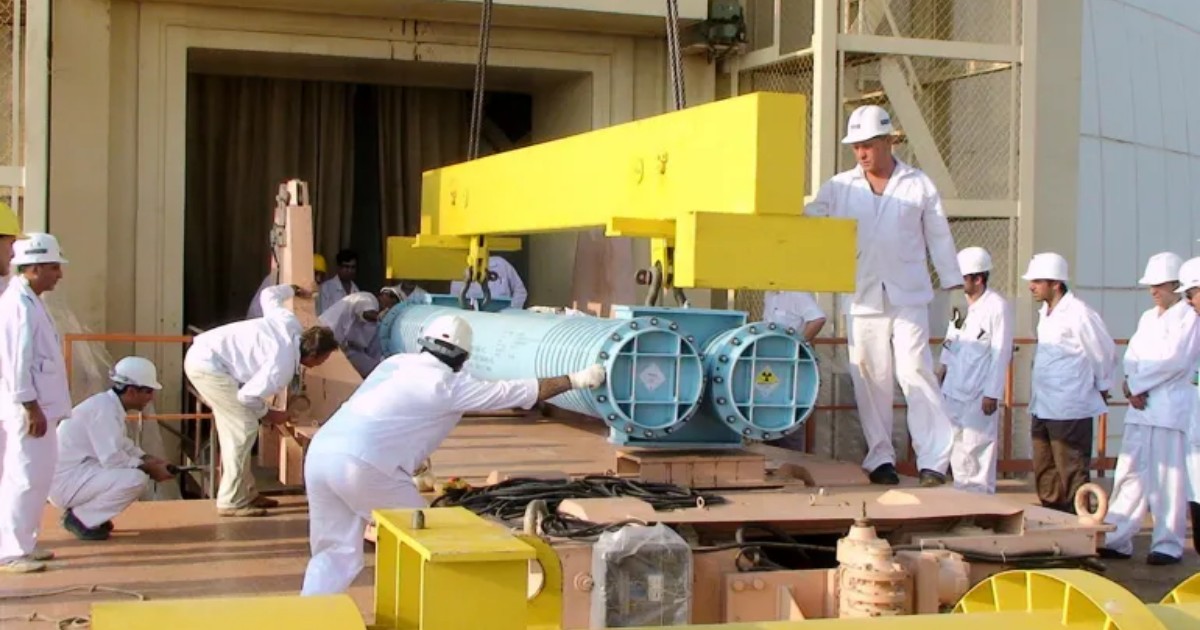
The military operation occurred during a broader escalation between Washington and Tehran along the southern coast of the country. US Central Command announced that its forces struck approximately 90 military targets between July 7 and July 8, focusing on air defense networks, missile storage facilities, drone depots, and naval assets. Although American authorities did not explicitly identify the energy facility among the list of targets, the new imagery confirms architectural damage within the secure perimeter. The complex spans about 2.5 square kilometers and remains the only operating nuclear power station in the country, situated roughly 17 kilometers south of the city of Bushehr. The site incorporates advanced cooling-water channels directly connected to the ocean alongside massive assembly halls and a dedicated harbor used to receive heavy industrial construction equipment.
Unlike uranium enrichment facilities such as Natanz or Fordow, the operational unit contains active nuclear fuel and highly radioactive materials associated with power generation. Any damage to its critical cooling channels, containment shields, or main power supply lines carries significant environmental and humanitarian sensitivities. According to official documentation from the International Atomic Energy Agency, the Bushehr-1 reactor has a net electrical capacity of 915 megawatts and was commercially integrated into the national grid in September 2013. The vast industrial compound also houses a second reactor building that has remained unfinished for several decades.
The recent military strikes represent the latest in a series of projectile incidents recorded at the facility during 2026. The international regulator documented separate projectile impacts within the plant premises on March 17, March 24, and March 27, followed by another structural impact near the perimeter fence on April 4. Iranian nuclear regulators consistently reported that the facility maintained normal operations throughout these incidents without experiencing radioactive containment breaches. What remains unclear is how the continuation of high-intensity military actions will affect the long-term structural integrity of the facility and regional atomic safety guidelines. The regulatory body continues to emphasize that operational atomic facilities must never be targeted by armed forces due to the catastrophic environmental consequences.