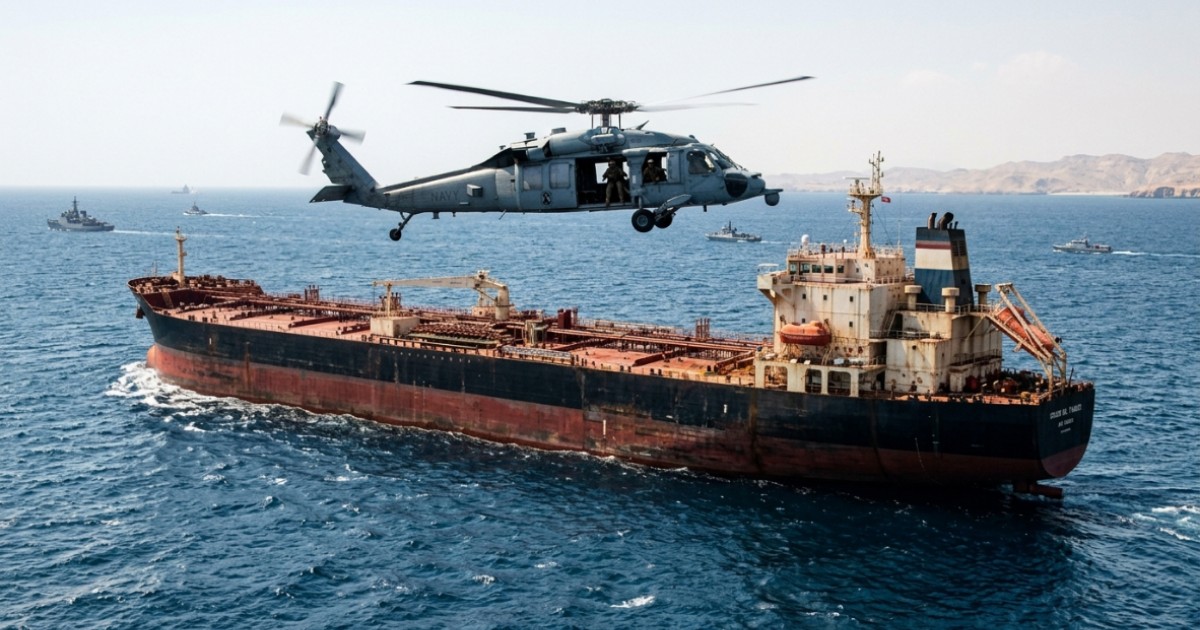
US Marines boarded a commercial oil tanker in the Gulf of Oman on Thursday as part of a renewed naval blockade against Iran, the US Central Command confirmed, according to Reuters. Armed personnel from the 11th Marine Expeditionary Unit conducted a verification boarding of the crude tanker M/T Wen Yao via helicopter insertion. Central Command released video footage of the operation, which took place amid escalating geopolitical tensions in the strategic maritime corridors of the Middle East. The commercial vessel, which had been previously sanctioned by the United States, was reportedly carrying oil originating from Iran at the time of the military intervention.
The military command stated that the naval blockade of Iranian ports took effect at 2000 GMT on Tuesday, prompting aggressive enforcement measures by American forces in the region. Since the enforcement mechanism resumed, US forces have redirected three commercial vessels attempting to violate the blockade and disabled another vessel that refused to comply with official directives. On Wednesday, a US aircraft fired upon and successfully disabled an unladen oil tanker that attempted to breach the defensive perimeter established by the naval coalition. Washington has characterized the operation as a steel wall blockade designed to ensure full compliance with standing international restrictions against Iranian state shipping.
This operation marks the first direct boarding by American forces since the renewal of the maritime blockade earlier this week. Previously, US forces had blockaded Iranian ports from April 13 to June 18, a period during which they disabled nine vessels and redirected more than 140 commercial ships. In response to the latest measures, Tehran`s Islamic Revolutionary Guard Corps issued strong warnings, threatening to close the strategic Strait of Hormuz. Iranian state media reported that the military apparatus intends to block all export corridors that benefit the United States and its regional allies until American operations cease.
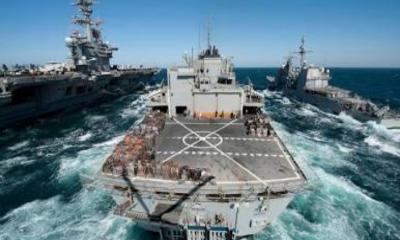
What remains unclear is how this extensive naval blockade and the direct boarding of commercial ships will affect global energy markets and long-term security dynamics in the Middle East. The Strait of Hormuz and the surrounding waters serve as a vital transit point for one-fifth of the world`s petroleum supply, rendering any sustained military confrontation highly disruptive to the global economy. Despite these risks, the United States is intensifying its military posture by deploying advanced naval assets to monitor the zone. The personnel involved in the latest boarding operation belong to the Camp Pendleton-based 11th Marine Expeditionary Unit, currently deployed with the USS Boxer Amphibious Ready Group.
Simultaneously, American forces have conducted a series of targeted airstrikes against Iranian military infrastructure for six consecutive nights. These aerial operations utilized fighter jets, drones, and warships to target coastal defense positions, cruise missile storage facilities, and launch sites. Strikes were concentrated on Greater Tunb Island and locations near Bandar Abbas to degrade Iranian capabilities that could threaten commercial shipping transiting the narrow waterway. As the standoff intensifies, international observers express growing concern over the potential for a broader regional conflict involving multiple state actors.