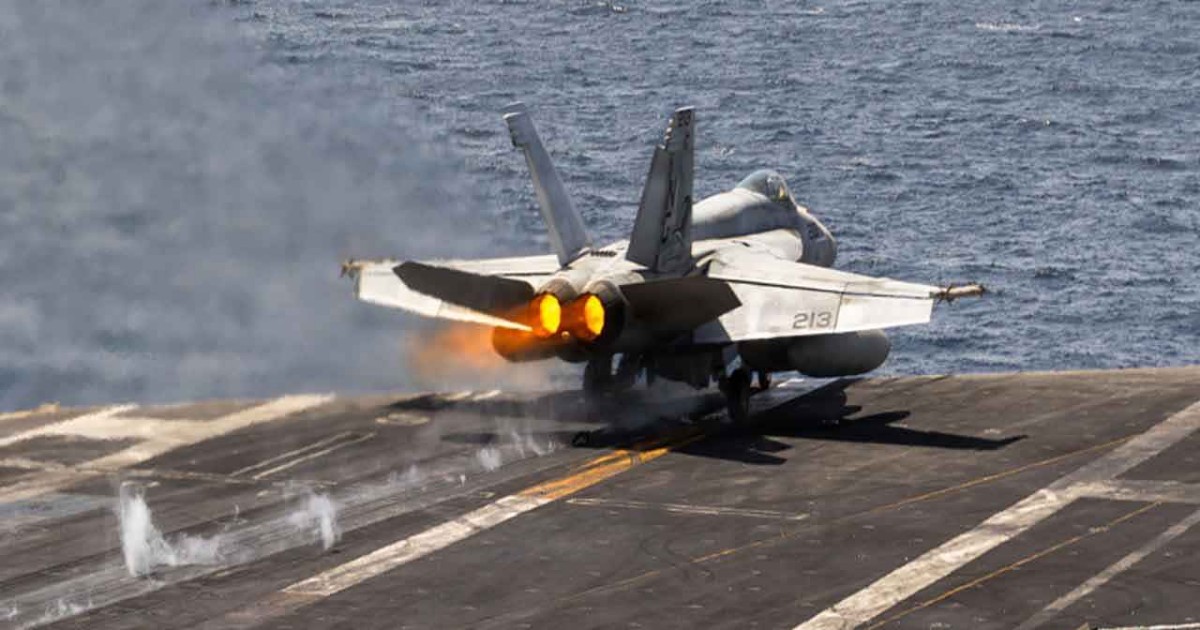
The United States military disabled a Palau-flagged oil tanker in the Gulf of Oman on Monday after the vessel reportedly attempted to defy a naval blockade enforced by Washington. U.S. Central Command (CENTCOM) confirmed in a statement that the vessel, identified as the M/T Marivex, was intercepted while transiting international waters toward an Iranian port. The operation involved an F/A-18 Super Hornet fighter jet launched from the aircraft carrier USS Abraham Lincoln, which fired a precision munition into the tanker’s engineering and steering spaces after the crew repeatedly failed to comply with U.S. naval directives.
CENTCOM stated that the strike was intended to disable the vessel, ensuring it could no longer complete its transit to Iran. This incident marks the seventh time since April 13 that U.S. forces have been compelled to disable a commercial vessel for refusing to adhere to the maritime blockade. While the strike caused significant damage to the ship`s engine room, sparking a fire, the 24 Indian crew members on board were safely evacuated. The rescue operation was conducted with the assistance of the Omani Coast Guard and local rescue teams, and all personnel have been brought to shore unharmed.
The blockade remains a cornerstone of the current U.S. strategy aimed at curtailing Iranian maritime trade. According to official data from CENTCOM, U.S. forces have redirected approximately 134 compliant vessels since the enforcement began, while 42 ships carrying humanitarian aid have been granted safe passage through the region. However, the U.S. administration has reaffirmed that any vessel attempting to circumvent these naval restrictions will be treated as a direct target for military intervention.
This aggressive enforcement policy has significantly escalated tensions in the Gulf of Oman, a vital global transit route for energy supplies. By adopting a policy of direct engagement, the U.S. military is signaling a heightened commitment to enforcing economic and military pressure on Tehran. As the region remains in a state of high alert, the incident underscores the growing risk of miscalculation in these heavily contested waters. The international community continues to watch the situation closely, as such tactical strikes carry the potential to trigger broader regional volatility.