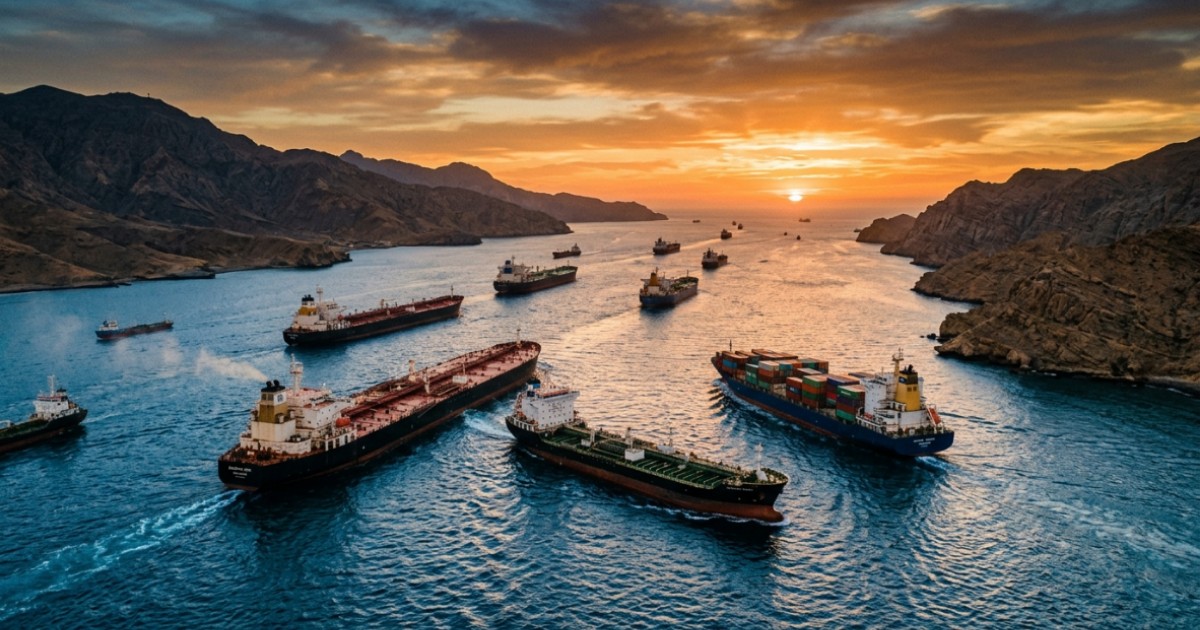
Iran and Oman have agreed on a temporary maritime shipping route through the Strait of Hormuz, Iranian Deputy Foreign Minister Kazem Gharibabadi announced on Tuesday, according to Al Jazeera. Gharibabadi stated that the seven-mile-wide transit corridor is designed to accommodate commercial vessels, though he cautioned that the vital waterway will not fully reopen until the United States fulfills its commitments under a lapsed interim peace agreement signed in June.
The Strait of Hormuz has faced severe disruptions since the onset of the US-Israel conflict with Iran on February twenty-eighth, effectively closing a vital chokepoint through which one-fifth of global oil and liquefied natural gas supplies pass during peacetime. The prolonged closure triggered widespread energy shortages and caused global crude prices to surge significantly, particularly impacting Asian economies heavily reliant on Gulf energy exports. Throughout the conflict, Tehran maintained strict control over the channel, permitting only limited passage while engaging in tense standoffs with Washington.
Under the newly announced arrangement, the temporary route will operate while Iranian and Omani officials conduct further technical negotiations over the next thirty to sixty days to establish a permanent transit framework. Omani and Iranian diplomatic representatives emphasized the importance of regional cooperation in maintaining maritime safety amidst ongoing geopolitical friction. However, Iranian officials insisted that a complete normalization of shipping operations remains contingent upon the United States dropping its naval blockades and honoring all terms of the previous memorandum of understanding.
The announcement comes as international markets grapple with persistent energy price volatility driven by supply constraints in the Middle East. While the temporary corridor aims to ease commercial transit pressures, security concerns persist following reports from the United Kingdom Maritime Trade Operations confirming that an oil tanker was disabled by an unidentified projectile near Oman`s Ash Shishah entrance to the strait. Industry experts note that while regional diplomatic efforts offer a pathway toward stabilizing maritime trade, deep-seated political divisions between Washington and Tehran continue to pose substantial hurdles to a permanent resolution.
The United States has previously accused Iran of laying naval mines in the strait, a claim Tehran has consistently challenged while maintaining complete operational control over regional waters. Washington`s imposition of strict economic sanctions and naval patrols has further complicated diplomatic channels, making Omani mediation a critical bridge between the warring parties.
Furthermore, the strategic importance of the Strait of Hormuz has sparked intense debate among economic analysts regarding the long-term viability of relying heavily on a single chokepoint. Neighboring Gulf producers have increasingly explored alternative pipeline networks to diversify export routes and insulate their economies from future disruptions. Nonetheless, in the immediate term, restoring secure and predictable passage through the strait remains an urgent priority for global energy markets and international trade stability.
As regional stakeholders and international observers monitor the implementation of the temporary shipping corridor, the broader economic fallout underscores the extreme vulnerability of global supply chains to geopolitical flashpoints. Policymakers across energy-importing nations remain hopeful that ongoing dialogue between Oman and Iran will pave the way for broader diplomatic engagement and restore predictability to international shipping lanes in the coming months.