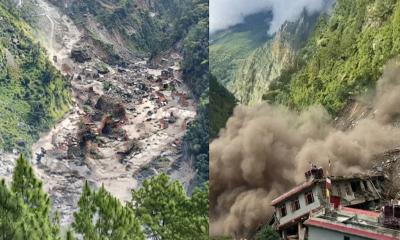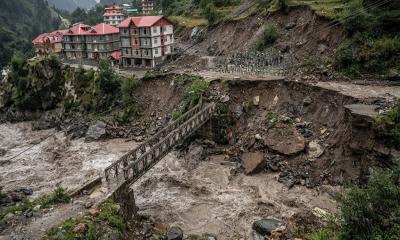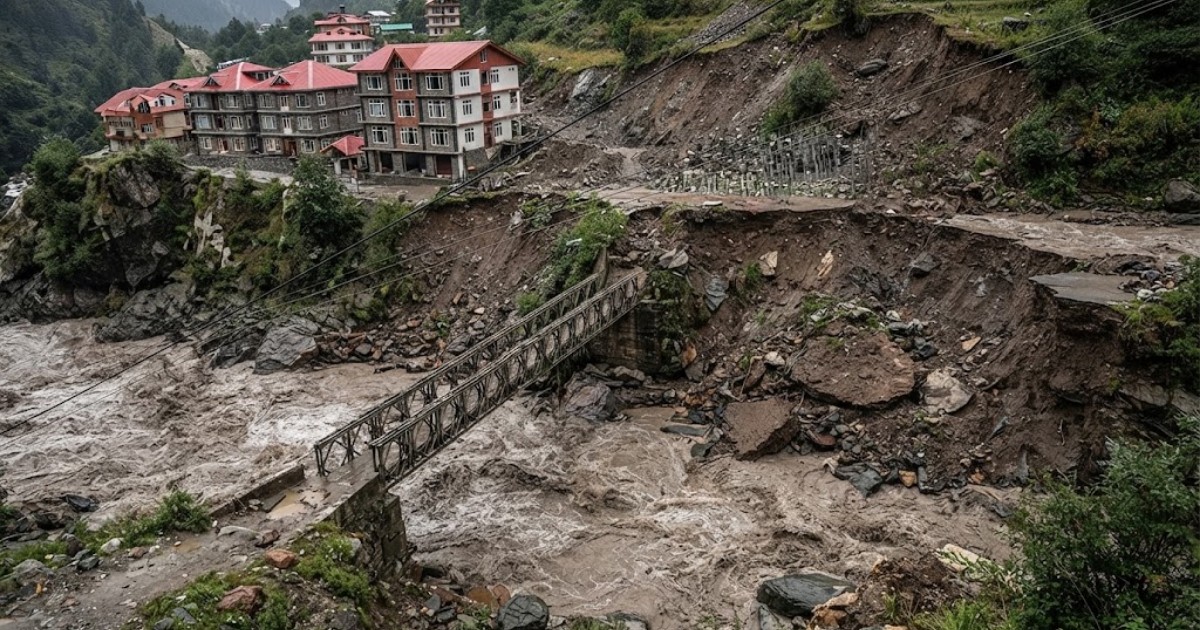
At least seventeen people have been confirmed dead and nearly four hundred others remain missing following catastrophic flash floods and landslides in northern Nepal, local media reported on Wednesday. Triggered by record rainfall and melting snow on the Tibetan plateau, the sudden deluge swept through multiple mountain villages across the Rasuwa, Nuwakot, and Dhading districts. The disaster severely damaged infrastructure, including the historic Friendship Bridge connecting Nepal and China, while severing key road links to the capital, Kathmandu.
Authorities stated that the disaster struck early Wednesday morning when the Bhote Koshi River swelled rapidly without prior warning. Raging floodwaters submerged villages and local markets in Rasuwa district, including Timure and Syaphrubeshi. Eyewitness accounts indicated that the immense velocity of the current washed away numerous homes and crippled local transport networks, making immediate rescue operations exceedingly difficult for local authorities.
According to preliminary data from the Nepal Tourism Board, three hundred eighty-four travelers and tourists are unaccounted for in the disaster zone. Officials confirmed that the missing individuals include one hundred five Indian nationals, alongside tourists from Australia, the Netherlands, the United States, the United Kingdom, Malaysia, and South Africa. Additionally, communication has been lost with twenty-six Nepal Police personnel and seven members of the Armed Police Force stationed in the affected Rasuwa region.
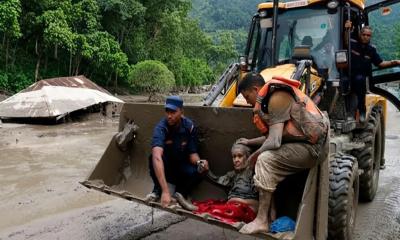
In response to the crisis, Nepalese Prime Minister Balendra Shah ordered a massive coordinated search and rescue operation involving the national army, armed police, and local law enforcement. Fourteen helicopters, drones, and specialized sniffer dogs have been deployed to scour the rugged terrain for survivors. However, rescue teams faced significant obstacles reaching isolated settlements due to high river levels and relentless currents.
The disaster has also dealt a heavy blow to Nepal`s national grid infrastructure, according to government statements. At least six major hydroelectric facilities and transmission lines along the Bhote Koshi basin suffered severe damage, knocking out approximately four hundred thirty megawatts of domestic power generation. The resulting shortfall has triggered widespread power outages across Kathmandu and surrounding regions, compounding the crisis for residents.
Local administration officials issued strict evacuation warnings for communities residing along the banks of the Bhote Koshi and Trishuli rivers. Meteorological services warned that adverse weather conditions could persist in the mountainous areas over the coming days, further complicating ongoing rescue efforts. International organizations and regional neighbors have expressed condolences and offered emergency support as Nepal grapples with one of its worst natural disasters in recent years.