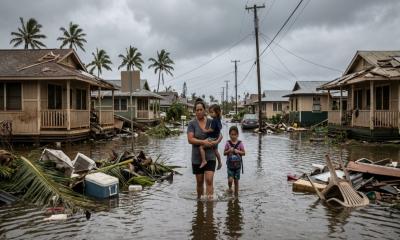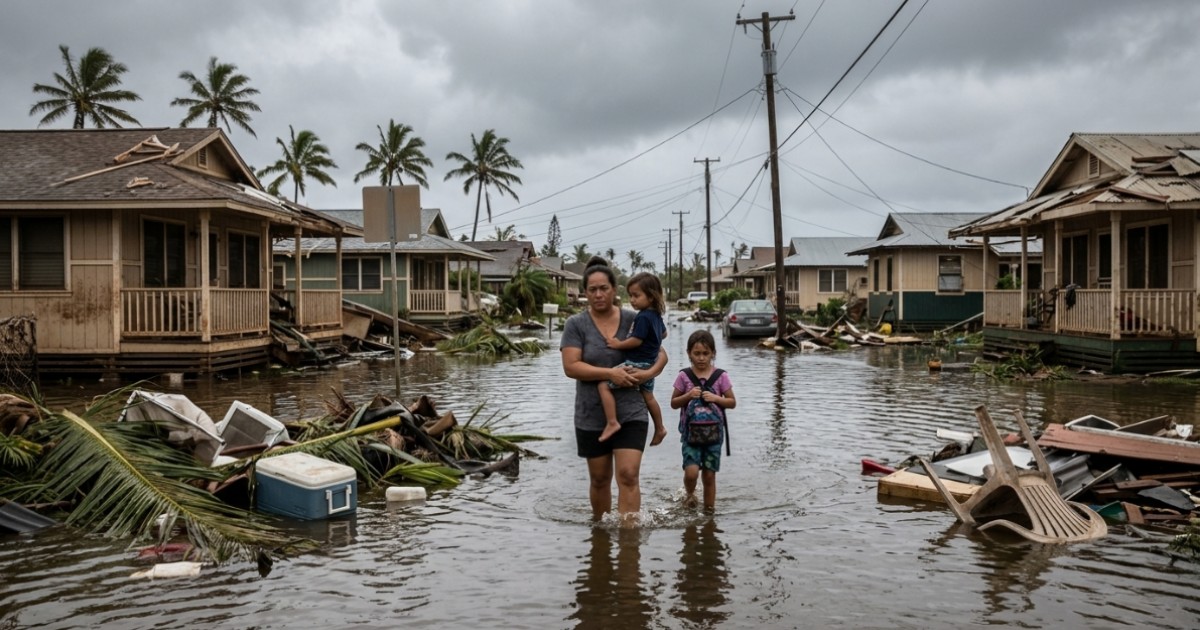
Hurricane Lala has officially weakened from a Category 1 hurricane to a tropical storm after passing south of Hawaii, according to reports from Al Jazeera and the Associated Press. However, meteorologists warned that punishing wind gusts, torrential downpours, and severe flash flooding continue to threaten communities across the islands. The US National Hurricane Center had previously issued a hurricane warning for the Big Island, a region that has not experienced a direct hurricane landfall in over a century and a half.
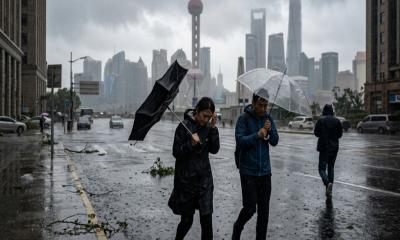
As tropical storm conditions swept westward from Maui toward Oahu and Kauai on Sunday, Hurricane Lala skirted the Hawaiian coastline, narrowly avoiding a catastrophic direct primary impact. Despite missing a direct hit, pounding ocean waves battered the shores of the Big Island, while fierce squalls bent tall palm trees and caused rivers to swell dangerously. Forecasters estimated that up to one meter of rainfall could accumulate on higher windward slopes, raising serious concerns regarding life-threatening mudslides and rapidly overflowing riverbanks.
Hawaii Governor Josh Green reported that more than sixty thousand households lost electrical power during the height of the storm, prompting three local hospitals to switch immediately to emergency generator power. At least one fatality was confirmed resulting from a vehicular accident in the South Point area of the Big Island, while nineteen roofs were torn off residential structures by the enormous storm force. Local residents, including Waimea resident Christine Matsuda, described enduring terrifying gusts that rattled homes continuously throughout the weekend.
Tropical storm warnings remain strictly in effect for Maui, Molokai, Lanai, Kahoolawe, Oahu, Kauai, and Niihau as hazardous weather conditions persist. Coastal erosion driven by monster waves continues to plague communities throughout the US state, while fears linger over potential secondary hazards. Emergency management agencies continue to urge residents to remain indoors, avoid flooded roadways, and heed all local civil defense advisories until the storm system completely clears the region.