Colombia has declared three days of national mourning after a devastating 7.4-magnitude earthquake killed more than 200 people on Monday, according to Al Jazeera and Reuters. As rescue crews race against time to find survivors trapped beneath the rubble, the government announced on Wednesday that flags would be lowered to half-staff at official buildings and Colombian embassies worldwide in honor of the victims.
The earthquake, which struck western Colombia, is recorded as the strongest to hit the South American nation in a century. It completely flattened buildings and severely damaged infrastructure across multiple regions. By Tuesday afternoon, seismologists had recorded more than 100 aftershocks. The disaster presents a monumental early test for President Abelardo de la Espriella, who assumed office just three days prior to the seismic event. The newly inaugurated leader now faces a major national crisis following a deeply divisive election cycle.
Official government figures report 2,595 people injured and 195 individuals missing. However, civilian-operated databases indicate that the number of people unaccounted for could be closer to 4,000. As the disaster response enters its critical third day, the search for survivors has grown increasingly desperate. Emergency aid agencies emphasize that the initial 48 to 72 hours are generally the most crucial for extracting people alive from collapsed structures, though survival chances can extend for those with access to trapped water sources.
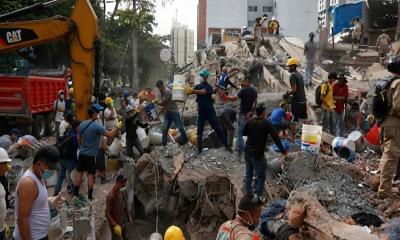
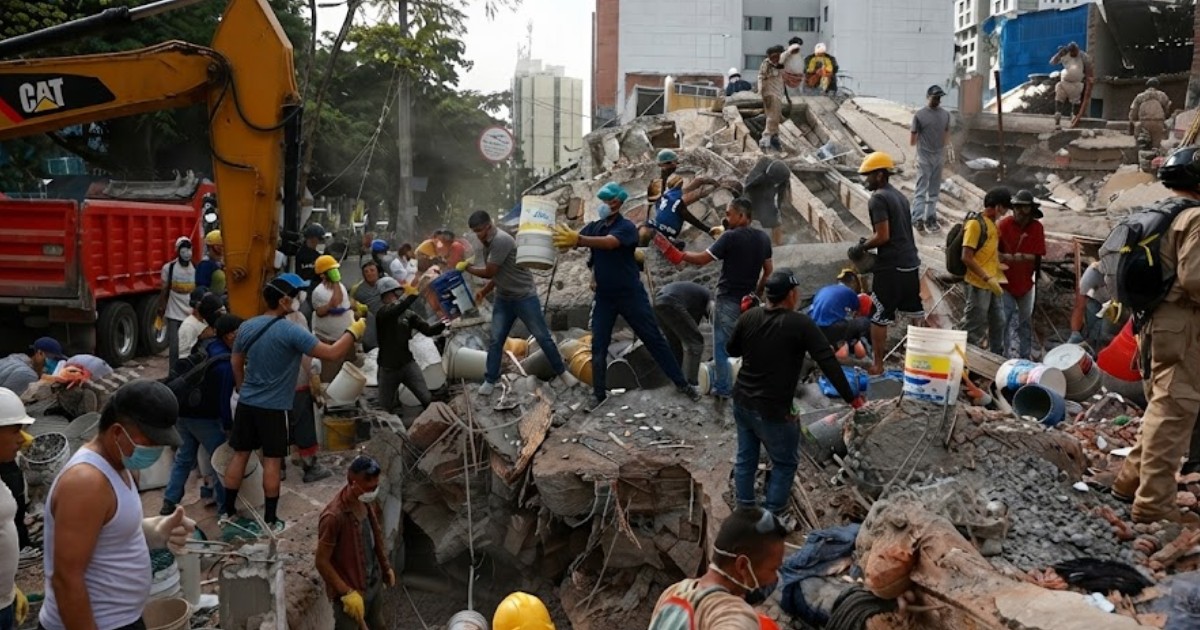
Search and rescue teams worked relentlessly through the night in heavily impacted cities, including Cali, Pereira, Manizales, and Quibdo. In Cali and Pereira, professional responders utilized cranes, specialized search dogs, and heavy machinery, while civilian volunteers formed human chains to manually clear debris. Entire neighborhoods in Cali have been reduced to piles of concrete, with blocks of residential apartments obliterated and vehicles crushed beneath fallen walls. Residents have joined local firefighters, using picks, shovels, and their bare hands to dig, periodically halting their efforts in absolute silence to listen for any signs of life below the surface.
What remains unclear is the full scale of destruction in isolated rural areas. The epicenter was located near the Choco region, one of the poorest and most underdeveloped territories in the country. Many communities in this jungle-dense area can only be accessed by riverboats or helicopters. The region`s historical struggles with violence involving armed factions have further complicated logistical efforts to reach these remote populations.
The sheer volume of casualties has placed Colombia`s healthcare system under immense pressure. A section of the Hospital Universitario del Valle in Cali collapsed during the tremors, forcing medical staff to rapidly evacuate patients into an outdoor parking lot to continue emergency treatments. In response to the growing crisis, ordinary Colombians have mobilized in massive numbers, delivering food, drinking water, and essential supplies to shattered neighborhoods, while long lines of donors have formed outside regional blood banks.
President de la Espriella has formally declared a state of emergency and promised rent subsidies for families displaced by the destruction. International assistance is also materializing rapidly. The United States government announced a 15.5 million dollar emergency aid package, and the State Department authorized the deployment of elite urban search-and-rescue teams from Virginia and California. The European Union has pledged 2.3 million dollars in relief funds. Additionally, Mexico has offered to deploy hundreds of search specialists and healthcare workers, while El Salvador announced it would dispatch two aircraft carrying 100 tons of humanitarian supplies.