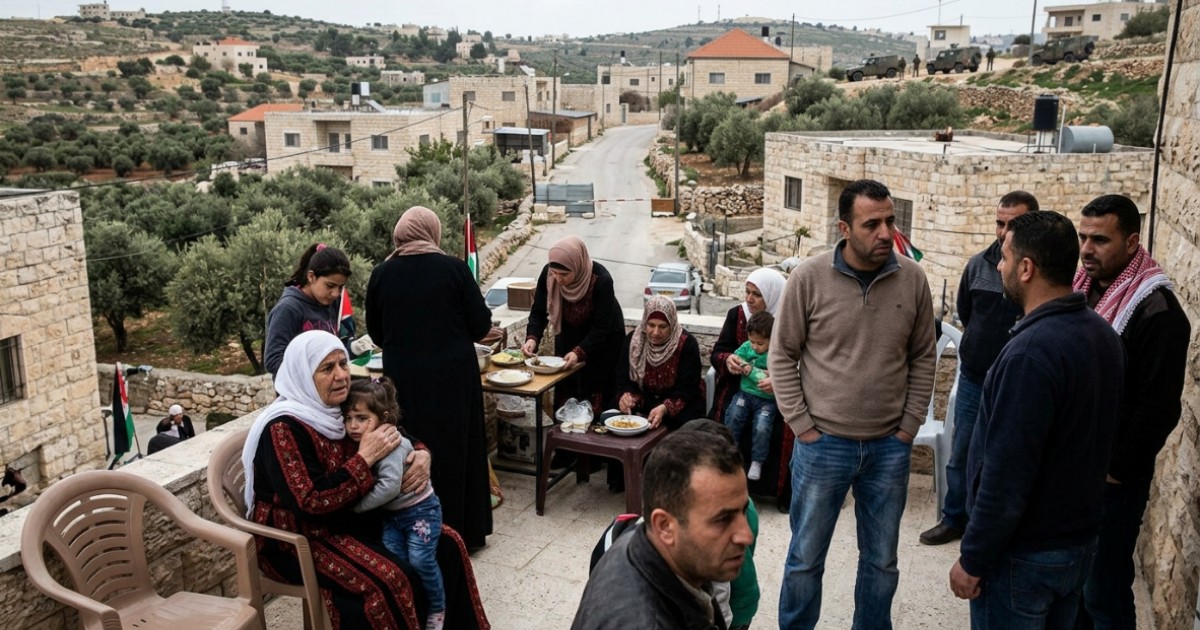
Israeli settlers have been besieging two Palestinian families in their homes in the occupied West Bank village of Qusra, leaving residents with severely depleted supplies and sparking urgent appeals from human rights organizations, according to BBC News and Reuters. The harrowing standoff highlights the escalating friction in the region as unauthorized outposts continue to expand despite international legal prohibitions.
The ordeal began when security camera footage captured settlers tearing down a perimeter wall outside the Abu Ridi family home and using the masonry to barricade access roads. This action trapped seven individuals, including two young children, inside an area under mixed administrative and security control. With municipal water and electricity lines severed and food stocks rapidly dwindling, family members took to social media to broadcast desperate pleas for assistance.
Reports indicate that initial responses from security forces on the scene were sluggish, with local residents filming soldiers appearing indifferent to the unfolding intimidation. However, as international and domestic pressure mounted, senior military commanders visited the site to inspect the unauthorized encampment. Subsequently, Israeli border police and military units intervened, deploying crowd-control measures and dismantling the settler outpost while vowing disciplinary action against personnel who failed to act.
The incident unfolds against a backdrop of unprecedented levels of friction across the territory. During a recent briefing to the United Nations Security Council, senior officials warned that the region is at a breaking point, citing a sharp rise in fatalities and forced displacements this year. All settlements are considered illegal under international law, and unauthorized outposts further complicate efforts to maintain civil order and protect civilian populations.
While humanitarian access was eventually granted to deliver emergency provisions and evacuate a child for medical care, local leaders emphasize that systemic intimidation remains a daily threat. What remains uncertain is whether announced disciplinary measures will deter future incursions by extremist groups. As international monitors continue to track escalating casualties and property takeovers, the path toward durable stability in the area appears increasingly fragile.