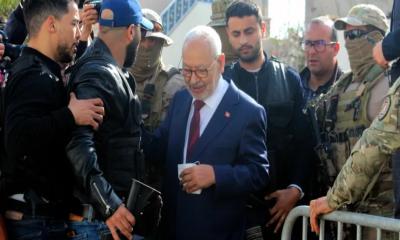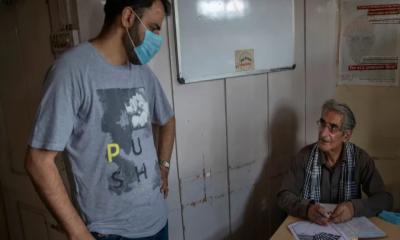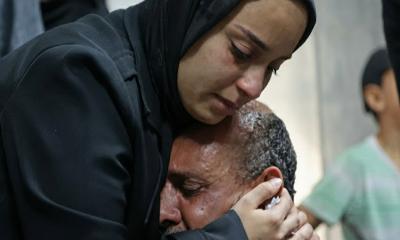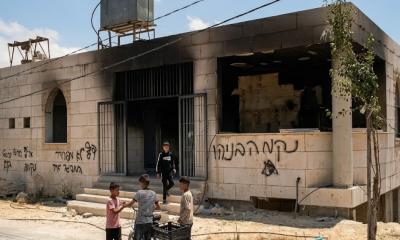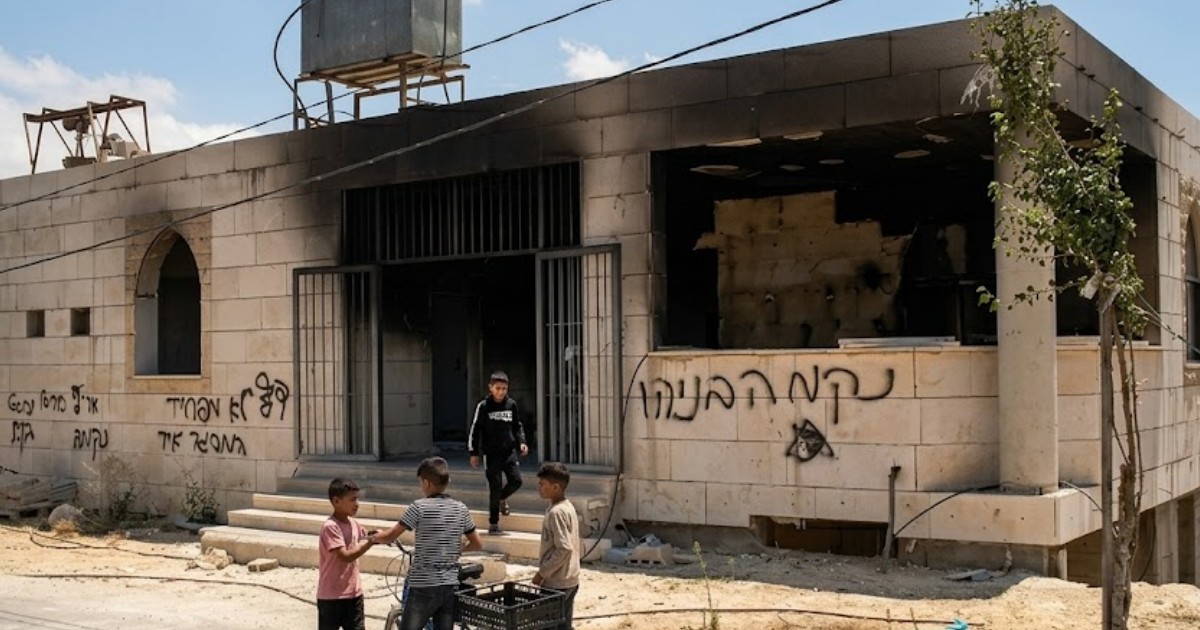
Armed Israeli settlers set fire to at least two mosques in separate overnight attacks across the occupied West Bank, causing substantial structural damage and leaving racist graffiti on the walls, Al Jazeera and the Associated Press reported on Monday. The arson attacks targeted the Al-Rahma mosque in Qusra, located south of Nablus, and another mosque in the village of Kour, near Tulkarem. Attackers spray-painted Hebrew slogans, including phrases demanding revenge, before fleeing the scenes. Officials from the Palestinian Ministry of Endowments and Religious Affairs condemned the incidents as deliberate acts designed to terrorize local Muslim communities and desecrate religious sites.
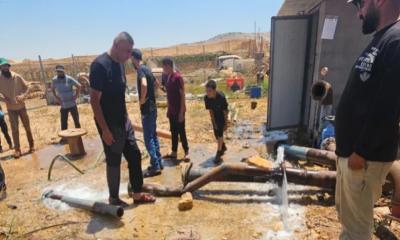
The latest arson incidents follow a period of intense confrontation in the region. Just days prior, deadly clashes erupted in the nearby village of Tell after armed settlers entered Palestinian residential areas, resulting in the deaths of four Palestinians and two Israeli soldiers. The arson attacks on religious infrastructure represent a pattern of reprisal actions that Palestinian officials say has damaged or destroyed at least 45 mosques across the West Bank over the past year alone. Local residents in Qusra reported discovering the fires during the early hours of the morning, forcing neighbors to organize emergency firefighting efforts using domestic water supplies.
Data released by the United Nations Office for the Coordination of Humanitarian Affairs reveals that 3,033 Israeli settler attacks were documented between January 2025 and mid-2026 across the West Bank. The Ramallah and el-Bireh governorate recorded the highest concentration of incidents with 881 documented attacks, followed by Nablus with 660 and Hebron with 497. Since the onset of full-scale military operations in Gaza in October 2023, settler-led violence against Palestinian rural communities in the West Bank has accelerated at an unprecedented rate.
Human rights monitors emphasize that the monthly frequency of documented settler violence has surged significantly. While 2025 averaged roughly 153 attacks per month, the monthly average rose to 190 incidents during the first four months of 2026, representing a 24 percent increase. Every governorate across the West Bank has experienced documented settler incursions over the past year, resulting in physical injuries, agricultural destruction, livestock theft, and property damage that severely constrains normal daily life for Palestinian agricultural communities.
Under international law, all Israeli settlements built on land occupied since 1967 are considered illegal. Despite international consensus, Israel has steadily expanded settlement infrastructure. Today, between 600,000 and 750,000 Israeli settlers reside in approximately 250 illegal settlements and outposts dispersed throughout the West Bank and East Jerusalem, accounting for roughly 10 percent of Israel`s total Jewish population. Prime Minister Benjamin Netanyahu`s successive governments have facilitated this expansion, undercutting terms established under the 1993 Oslo Accords that envisioned a freeze on settlement growth to enable a negotiated two-state outcome. Land registration policies enacted earlier this year have further streamlined state acquisition of Palestinian-owned property.
Systemic violence and land seizures have triggered large-scale displacement of native populations across vulnerable rural sectors. OCHA statistics confirm that at least 1,988 Palestinians were displaced across the West Bank during the first four months of 2026 due to settler attacks and associated home demolitions. This four-month total exceeds the total number of displacements recorded throughout the entire preceding year by 20 percent. Bedouin and herding communities in the Ramallah, Jericho, and Tubas governorates remain particularly vulnerable, with many families forced to abandon ancestral grazing lands due to persistent harassment.
The vast majority of home demolitions and settler incursions occur within Area C, which constitutes roughly 60 percent of the West Bank`s total land area. Established as a temporary administrative division under the Oslo Accords, Area C remains under exclusive Israeli military and civil administrative control. Although approximately 300,000 Palestinians reside within Area C, the Israeli Civil Administration rarely grants building permits to Palestinian applicants. Consequently, nearly all residential, agricultural, and community construction undertaken by Palestinians in Area C is classified as unauthorized, leaving structures vulnerable to administrative demolition orders.
What remains unclear is whether international legal pressure or diplomatic interventions will compel the Israeli government to enforce domestic law enforcement measures against extremist settler groups operating in the West Bank. Human rights organizations continue to document instances where armed settlers execute attacks in close proximity to active military units without intervention. Absent decisive accountability mechanisms or structural policy changes regarding settlement expansion, international observers warn that escalating violence in the West Bank threatens to destabilize the broader regional environment.