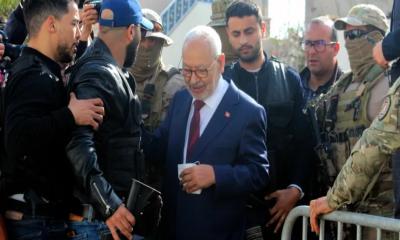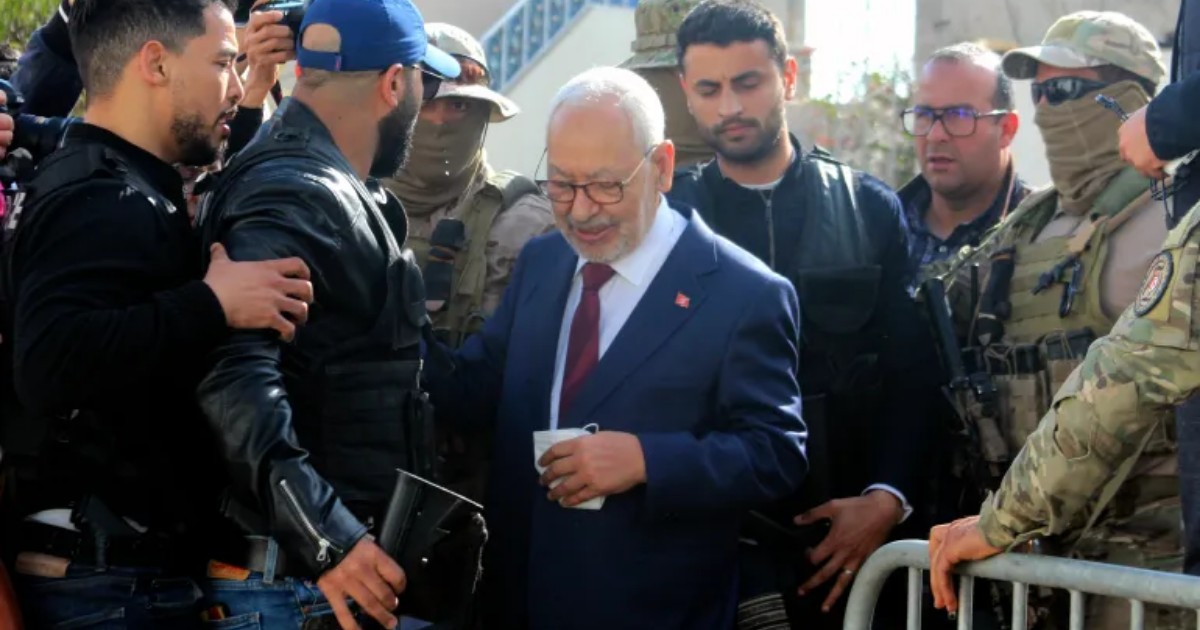
Tunisian authorities have barred family members and defence attorneys from contacting or visiting jailed 85-year-old opposition leader Rached Ghannouchi for 11 consecutive days following his hospitalization due to a collapse in prison, official sources confirmed to Al Jazeera and the Associated Press. Ghannouchi, the leader of the Ennahda party and former Speaker of the House, temporarily lost consciousness on July 17 amid severe heatwave conditions inside Mornaguia prison. Requests submitted by his legal team to the public prosecutor to confirm his current medical status and location have been repeatedly refused.
Speaking in an interview on Monday, Moadh Ghannouchi, the son of the imprisoned politician, described the prolonged blackout as a situation resembling enforced disappearance. The family noted that the elder Ghannouchi suffers from high blood pressure and chronic respiratory difficulties, which were severely aggravated by extreme temperatures inside a facility lacking proper ventilation or air conditioning. Internal reports from fellow detainees indicated that temperatures inside the prison reached 52 degrees Celsius during the peak of the heatwave.
Ghannouchi’s defence committee issued a public statement demanding immediate disclosure regarding his physical condition and exact whereabouts. Unconfirmed reports circulating across social media platforms suggested he might be undergoing treatment at either the Rabta public hospital or a military medical facility in Tunis, while other rumors alleged he suffered a cardiac event. However, representatives from the Ennahda party emphasized that neither his family nor his primary attorneys have received formal confirmation from government health or judicial officials.
Ghannouchi has been detained since April 2023 after receiving a life sentence under charges that domestic opposition groups and international human rights advocates characterize as politically motivated. The conviction forms part of a broader crack-down executed under President Kais Saied against prominent political opponents, journalists, and judicial figures since his consolidation of power in July 2021. The United Nations Working Group on Arbitrary Detention previously issued an official finding declaring Ghannouchi’s imprisonment arbitrary and demanding his immediate release, a directive that state authorities have systematically ignored.
On Sunday, the National Salvation Front, Tunisia’s primary opposition coalition, publicly urged the executive government to release a transparent medical bulletin detailing Ghannouchi’s health. Concurrently, Amnesty International issued a broad appeal calling on regional authorities to implement immediate protective measures for all vulnerable prisoners exposed to dangerous environmental conditions inside state detention facilities.
What remains unclear is whether international diplomatic pressure will compel the Tunisian executive branch to grant human rights monitors or independent physicians access to the hospitalized politician. Political analysts warn that the continued isolation of prominent political detainees worsens internal polarization and damages Tunisia’s standing regarding international human rights compliance.