The journey to Thaer Bisharat’s home, once a straightforward ten-minute drive from the main road, has transformed into a three-hour ordeal. Every gate leading into Ras al-Ahmar, located in the northern Jordan Valley of the occupied West Bank, is now permanently shut. Al Jazeera reports that these road closures, patrolled by Israeli soldiers and settlers, have become a suffocating reality for Palestinian residents living in the area. The isolation has reached a breaking point following the implementation of Israel’s newest infrastructure project known as the Crimson Thread barrier.
Announced in 2025, the Crimson Thread project involves a trench and military road spanning approximately 22km between the Ein Shibli and Tayasir checkpoints. While Israeli authorities claim the barrier is intended to prevent weapons smuggling from Jordan, the path of the construction runs several kilometers inside the occupied West Bank. The resulting partition severs Palestinian communities in the northern Jordan Valley from vital land resources in Tubas and Nablus.
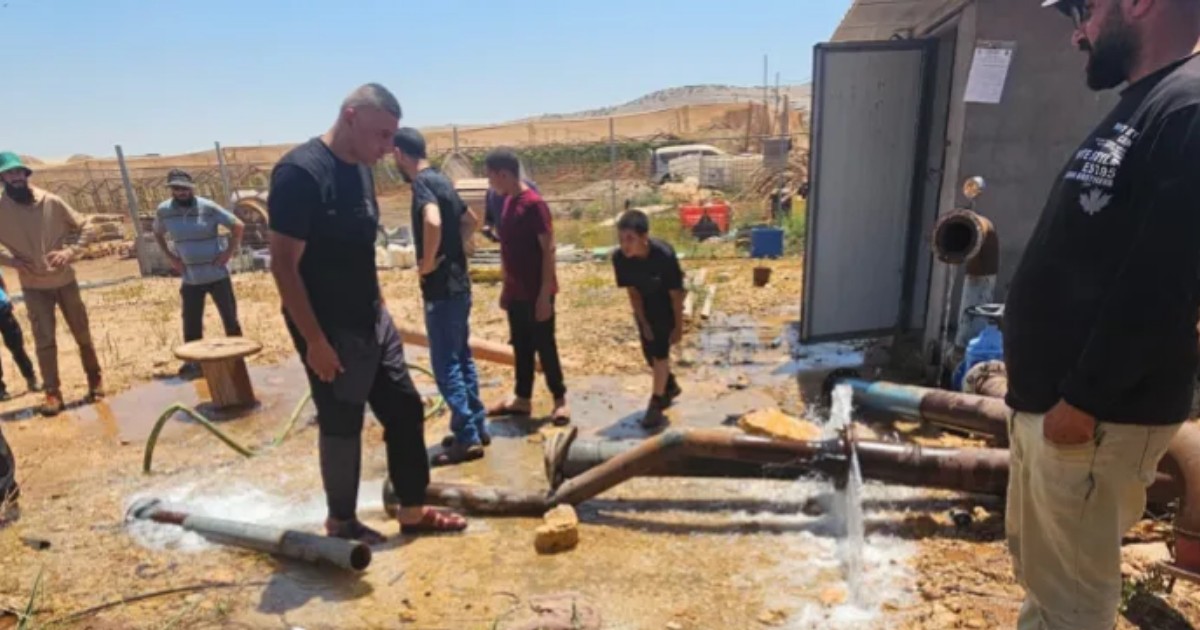
Since an Israeli Supreme Court ruling earlier this year, construction has moved aggressively. Excavators have already dug roughly three kilometers of trenches, destroying critical Palestinian infrastructure, including irrigation pipes, farmland, and greenhouses. According to data tracked by the Israeli NGO Kerem Navot, this development is part of a larger escalation in land policy. Israeli authorities issued 49 military land-seizure orders in the first half of 2026, already surpassing the 47 orders issued throughout the entirety of 2025.
For residents like Thaer, the impact has been immediate and devastating. Agricultural production in the area has reportedly collapsed by nearly 90 percent. Irrigation systems vital to the survival of crops have been cut off, and farmers are frequently denied access to their grazing lands. The environment created by the barrier and accompanying military raids has accelerated the displacement of local families, many of whom have been forced to abandon their homes due to intensifying pressure from settler violence and administrative restrictions.
Experts monitoring the situation note that the barrier serves a dual purpose: blocking Palestinian movement while linking illegal settlements to new outposts. The destruction of wells and water tanks has crippled the local economy, wiping out harvests and leaving thousands of dunams of agricultural land uncultivated. Community leaders fear that once the trench construction is finalized, the remaining Palestinian residents will be effectively cut off from emergency services, schools, and essential infrastructure.
The situation has left residents feeling completely abandoned by the international community. Thaer, looking out over the parched ground and abandoned farming equipment, described the reality of life under the new restrictions as being treated worse than animals. As construction continues, the presence of the Crimson Thread barrier is widely seen by human rights observers as the final step in a strategy designed to displace the remaining Palestinian population from this strategic agricultural region.