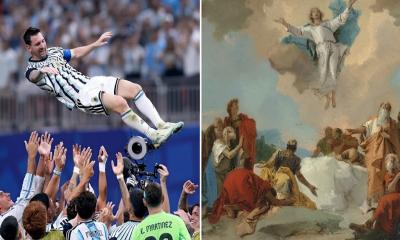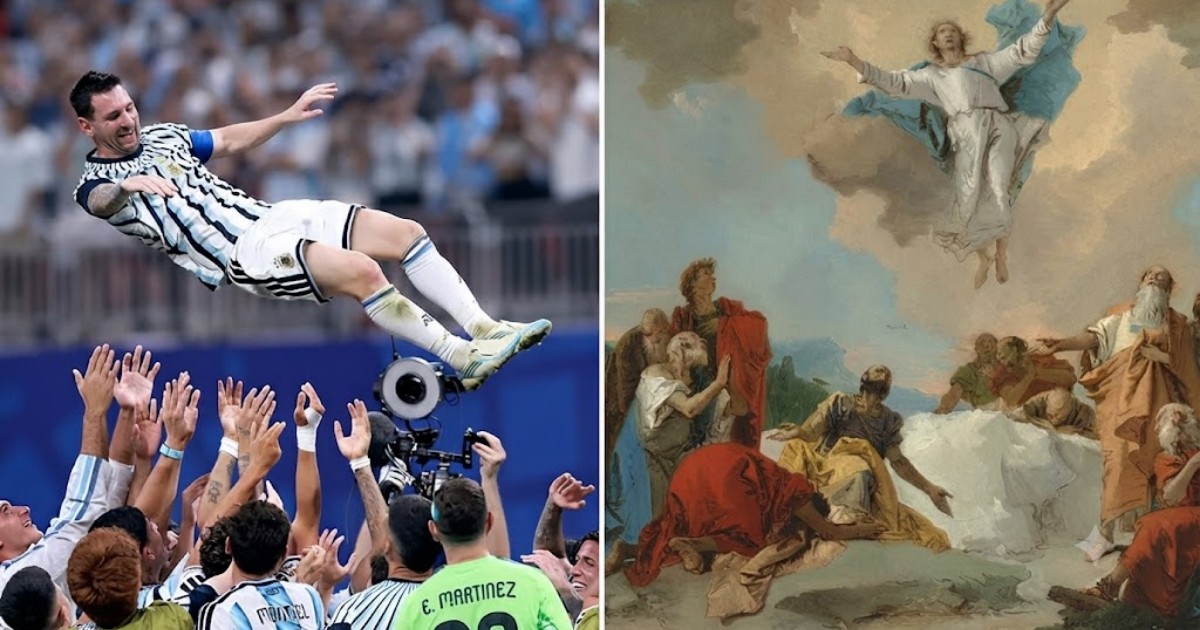
As the 2026 World Cup draws to a close, it is fitting to reflect on the tournament not just through goals and results, but through the lens of international photojournalists. Among the countless remarkable photographs captured since the tournament began, a select set has managed to sear itself into the cultural consciousness. These images endure because they echo patterns of posture and gesture long fixed in the popular imagination by artists from antiquity to modern times. Here, we examine the visual connections between these World Cup moments and classic works of art.
One of the most compelling examples captures the collective focus of a scramble between England and Mexico players, featuring Harry Kane and Jesus Gallardo, during the Round of 16 in Mexico City. The momentum captured by photographer Julian Finney appears almost choreographed. By suspending the static acceleration of the scrum, the photo recalls the velocity and vectors found in Umberto Boccioni’s Futurist masterpiece, The Charge of the Lancers, from 1916. It is a striking example of how modern sports photography can align with the principles of early 20th-century modernist art.
Similarly, the dramatic photograph of Ghana’s Ernest Nuamah colliding with Panama’s Cesar Blackman in Toronto earlier this tournament carries an unmistakably heavy, cinematic quality. The ball appears secondary to the climactic impact of the collision, as Blackman absorbs the full force of the body blow. The image blurs the line between the beautiful game of football and the raw, kinetic energy often seen in boxing art, echoing the cruciform collapse captured in George Bellows’ famous painting of Jack Dempsey falling through the ropes.
These visual parallels extend to the match between Bosnia-Herzegovina and the United States, where the composition of players often mirrors the structural harmony found in classical paintings. These photographs function as more than just records of athletic competition; they serve as windows into the emotional weight and human intensity of the tournament. The persistence of these images in our cultural memory suggests that football possesses an aesthetic depth that transcends the pitch, inviting us to view athletes as figures on a canvas.
Ultimately, these ten photographs demonstrate that photography is a crucial component of how we document history. By comparing these snapshots to masterpieces of the past, we gain a deeper appreciation for the artistry involved in capturing a split-second moment. As the 2026 World Cup concludes, these images will remain as a testament to the intersection of sport and art, proving that even the most fleeting moments of action can possess the timeless gravity of a classic work of art.